







news
Earth Sciences
Results 41 - 60 of 277.
Environment - Earth Sciences - 27.11.2024

A research team led by scientists has developed a system that provides key insight into the relationship between sea spray aerosols, sea state and atmospheric conditions. The system was mounted on an icebreaker and carried across vast regions of the Arctic to collect and analyze valuable data. Aerosols are tiny particles suspended in the air that play an important role in cloud formation, precipitation and the reflection of sunlight back into space.
Astronomy & Space - Earth Sciences - 24.11.2024

By analyzing a Martian meteorite, scientists from the University of Lausanne and Curtin University have discovered traces of water dating back 4.45 billion years in the crust of Mars, i.e. to the beginning of the Red Planet's formation. This new information reinforces the hypothesis that Mars may have been habitable at some point in its history.
Environment - Earth Sciences - 31.10.2024

Unlike oceans, lakes are major emitters of CO2. Why is this so, and what mechanisms are at work? Scientists at the University of Lausanne have succeeded in explaining the complete carbon cycle in Lake Geneva for the first time, generating a model that can be applied to several of the world's great lakes.
Environment - Earth Sciences - 16.10.2024

A new catalogue and database of over 17,000 European river catchments facilitates the work of researchers in the field of hydrology. The EStreams project, carried out at Eawag, provides hydrological and meteorological data as well as information on the landscape of the river regions. The records go back up to 120 years.
Earth Sciences - Environment - 08.10.2024

A team of scientists has provided insight into the mechanisms at work in geothermal reservoirs located deep underground, known as supercritical reservoirs. Through a combination of computer simulations and lab experiments, they showed that rocks located between five and eight kilometers deep in the Earth's crust are also permeable to fluids.
Astronomy & Space - Earth Sciences - 17.09.2024

An international team, including UNIGE, unveiled the "Neptunian Ridge", an overdensity of Neptunes nestled between the Neptunian Desert and the Neptunian Savanna. Astronomers have uncovered the ''Neptunian Ridge'', a newly identified feature in the distribution of exoplanets. This discovery, led by an international team including members of the University of Geneva, The NCCR PlanetS and the Centro de Astrobiología (CAB), highlights the complex dynamics within the Neptunian Desert, a region with a scarcity of hot Neptunes, and the Neptunian Savanna, where these planets are more commonly found.
Environment - Earth Sciences - 22.08.2024

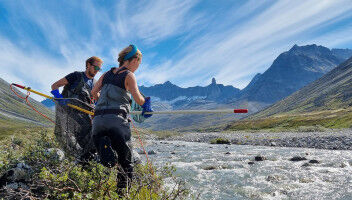
Climate change is particularly intense in the Arctic. To assess its consequences and determine what role this region plays in global warming, two teams of scientists from EPFL have visited the area. One to gain a better understanding of the region's air composition, the other to quantify the greenhouse gases sequestered in Greenland fjords sourced by glacial water.
Astronomy & Space - Earth Sciences - 20.08.2024

Most of a planet's water is generally not on its surface but hidden deep in its interior. This affects the potential habitability of distant worlds, as shown by model calculations of researchers at ETH Zurich and Princeton University. We know that the Earth has an iron core surrounded by a mantle of silicate bedrock and water (oceans) on its surface.
Environment - Earth Sciences - 08.08.2024

Catastrophic volcanic eruptions that warmed the planet millions of years ago shed new light on how plants evolve and regulate climate. Researchers reveal the long-term climate effects of disturbed natural ecosystems - its implications both in geological history and for today. Scientists often seek answers to humanity's most pressing challenges in nature.
Environment - Earth Sciences - 08.08.2024

As a journalist, do you have general questions about PSI? Are you looking for an expert on your topic? Get in touch with our Taking off with sustainable kerosene Researchers around the world are working to find and optimise new ways of producing climate-neutral aviation fuel. At PSI, together with industry, they're exploring a promising approach.
Earth Sciences - Environment - 10.07.2024

An international research team led by Silvia Spezzaferri from the University of Freiburg has discovered why the Antarctic polar ice cap is melting faster on the western side of the continent than on the eastern side. New drillings and sophisticated modeling have shown that this phenomenon can be traced back to the original formation of the ice sheet 34 million years ago .
Earth Sciences - Environment - 04.07.2024

As part of the GreenFjord project, prof. Samuel Jaccard from the University of Lausanne and five other scientists board the sailing vessel Forel to carry out a sampling and analysis campaign in SW Greenland.
Astronomy & Space - Earth Sciences - 28.06.2024

An international team of researchers combine orbital imagery with seismological data from NASA's Mars InSight lander to derive a new impact rate for meteorite strikes on Mars. Seismology also offers a new tool for determining the density of Mars' craters and the age of different regions of a planet.
Environment - Earth Sciences - 25.06.2024

By analysing 56-million-year-old sediments, a team from the University of Geneva has measured the increase in soil erosion caused by global warming, synonymous with major flooding. 56 million years ago, the Earth experienced a major and rapid climate warming due to greenhouse gas emissions, probably due to volcanic eruptions.
Astronomy & Space - Earth Sciences - 10.06.2024

For the first time, water frost has been detected on the colossal volcanoes on Mars, which are the largest mountains in the Solar System. The international team led by the University of Bern used high-resolution color images from the Bernese Mars camera, CaSSIS, onboard the European Space Agency's ExoMars Trace Gas Orbiter spacecraft.
History & Archeology - Earth Sciences - 21.05.2024

Researchers at the University of Bern have for the first time been able to pin down a prehistoric settlement of early farmers in northern Greece dating back more than 7,000 years to the year. For this they combined annual growth ring measurements on wooden building elements with the sudden spike of cosmogenic radiocarbon in 5259 BC.
Astronomy & Space - Earth Sciences - 08.05.2024

Researchers using NASA/ESA/CSA James Webb Space Telescope may have detected an atmosphere surrounding 55 Cancri e, a rocky exoplanet 41 light-years from Earth. This is the best evidence to date for a rocky planet atmosphere outside our solar system. Brice-Olivier Demory, Professor of Astrophysics at the University of Bern and member of the the National Centre of Competence in Research (NCCR) PlanetS, was part of the international research team that just published the results in Nature.
Environment - Earth Sciences - 30.04.2024

In order to understand the Earth's resilience, researchers at ETH Zurich are modelling climate changes from times long past. And they show: Plants are not simply victims of circumstances, but have helped to shape climate conditions on Earth. Over the course of hundreds of millions of years, Earth has lived through a series of climatic shifts, shaping the planet as we know it today.
Earth Sciences - History & Archeology - 22.04.2024
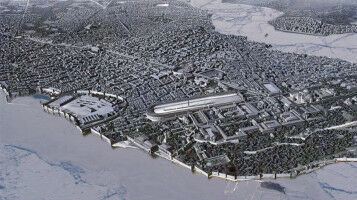
Icebergs on the Bosporus and a frozen Black Sea: an international study by the University of Bern with the participation of the Austrian Academy of Sciences shows how volcanic eruptions on Iceland influenced the European climate in the early Middle Ages and led to severe winter cooling anomalies. It was one of the coldest winters the region has ever experienced: In 763, large parts of the Black Sea froze over and icebergs were sighted on the Boporus.
Environment - Earth Sciences - 09.04.2024

Microplastic particles can be found in the most remote ocean regions on earth. In Antarctica, pollution levels are even higher than previously assumed. This is one finding of a recent study involving researchers from the University of Basel. It's not the first study on microplastics in Antarctica that researchers from the University of Basel and the Alfred-Wegener Institute (AWI) have conducted.


