






news
Earth Sciences
Results 1 - 20 of 277.
Physics - Earth Sciences - 12.02.2026
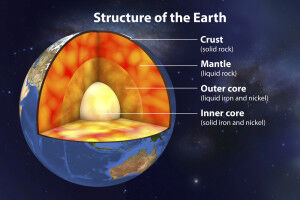
Recent research from ETH Zurich has revealed that the Earth's core contains significantly more hydrogen than previously believed. The analysis suggests that a substantial amount of hydrogen entered the core during the early stages of the Earth's formation. For decades, scientists have been debating the amount of hydrogen (H) present in the Earth's core and how it got there.
Astronomy & Space - Earth Sciences - 27.01.2026
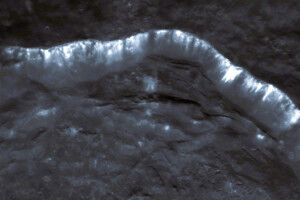
A new study led by the University of Bern has discovered a large number of bright streaks, also known as "lineae", on Mercury, which are presumably caused by the outgassing of volatile material from the planet's interior. This indicates that Mercury is not a dead planet, as previously assumed, but might in fact be geologically active.
Astronomy & Space - Earth Sciences - 12.01.2026
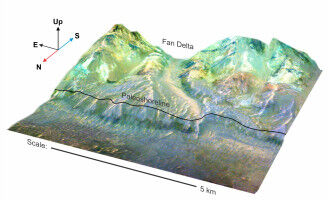
Using images from cameras on Mars orbiters, an international research team led by the University of Bern has discovered structures on Mars that are very similar to classic river deltas on Earth. These are traces of rivers that have deposited their sediments into an ocean. This shows that Mars was a "blue planet" around three billion years ago.
Environment - Earth Sciences - 09.12.2025

To date, CO2 emissions in urban areas were typically monitored using emissions inventories. In the city of Zurich, they can now also be determined reliably based on atmospheric measurements. As part of the Europe-wide research project ICOS Cities, researchers tested this new approach and achieved results that were very close to the values calculated beforehand.
Environment - Earth Sciences - 01.12.2025

Researchers are using machine learning to map nitrate pollution in Swiss groundwater. This allows gaps in the measurement network to be filled and the causes of excessive values to be identified. The study is part of a larger project analysing the nitrogen cycle in Switzerland. Nitrate levels in groundwater exceed the limit of 25 milligrams per litre at 15 percent of all measuring points in Switzerland.
Earth Sciences - 21.11.2025
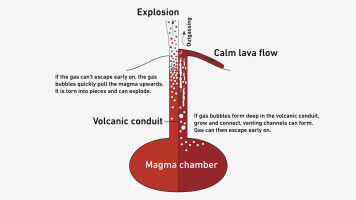
An international team of researchers including a scientist from ETH has shown that friction in magma leads to the formation of bubbles that influence whether a volcano erupts explosively or releases gently flowing lava. The explosiveness of a volcanic eruption depends on how many gas bubbles form in the magma - and when.
Earth Sciences - Chemistry - 25.09.2025

Researchers at ETH Zurich have been able to measure - for the first time - how the amount of dissolved organic carbon in the sea has changed over geological time. The results reveal that our explanations of how the ice ages and complex life forms came about are incomplete. Earth scientists often face huge challenges when researching the earth's history: many significant events occurred such a long time ago that there is little direct evidence available.
Astronomy & Space - Earth Sciences - 22.09.2025

The Bernese Mars camera CaSSIS aboard ESA's ExoMars Trace Gas Orbiter reveals the glowing atmosphere of Mars in unprecedented detail. Slices from the edge of Mars reveal a layered atmosphere of delicate complexity. A European spacecraft has captured a luminous mille-feuille of dust enveloping the Red Planet in unprecedented detail.
Astronomy & Space - Earth Sciences - 18.09.2025

There is much less water on the surfaces of distant planets outside our solar system than previously thought. These exoplanets do not have thick layers of water, as was often speculated. That's the conclusion of an international study led by ETH Zurich. An exoplanet orbiting a dwarf star 124 light-years from Earth made headlines around the world in April 2025.
Environment - Earth Sciences - 02.09.2025
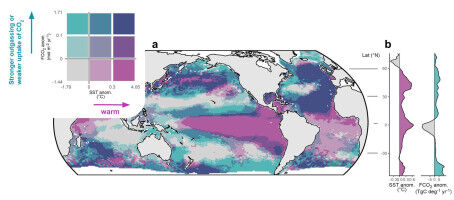
Measurements analysed by an international research team led by ETH Zurich show that the global ocean absorbed significantly less CO2 than anticipated during the unprecedented marine heatwave in 2023. The world's oceans act as an important sink for carbon dioxide (CO2). To date, they have absorbed around a quarter of human-induced CO2 emissions from the atmosphere, thereby stabilising the global climate system.
Astronomy & Space - Earth Sciences - 28.08.2025
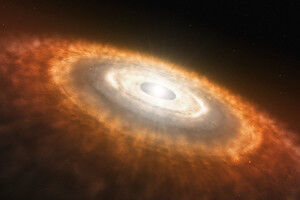
After the formation of the Solar System, it took a maximum of three million years for the chemical composition of the Earth's precursor to be completed. This is shown by a new study by the Institute of Geological Sciences at the University of Bern. At this time, however, there were hardly any elements necessary for life such as water or carbon compounds on the young planet.
Earth Sciences - Campus - 27.08.2025
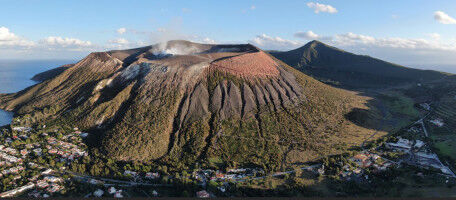
A team from the University of Geneva and INGV has created an unprecedentedly accurate 3D model of the internal structure of an active volcano, marking an advance in risk management. Volcanic eruptions can have dramatic consequences. But how can we anticipate this phenomenon, which unfolds up to tens of kilometres beneath the surface? A team from the University of Geneva , in collaboration with the National Institute of Geophysics and Volcanology (INGV) in Italy, has successfully recreated a 3D model of the interior of the Vulcano volcano, located in northern Sicily.
Earth Sciences - Environment - 13.08.2025
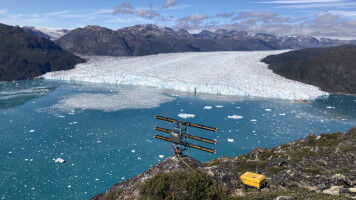
The Greenland ice sheet is melting at an increasing rate, a process accelerated by glacier calving, in which huge chunks of ice break free and crash into the sea, generating large waves that push warmer water to the surface. Researchers at the University of Zurich and the University of Washington have now shown that this mechanism is amplifying glacial melt.
Environment - Earth Sciences - 31.07.2025
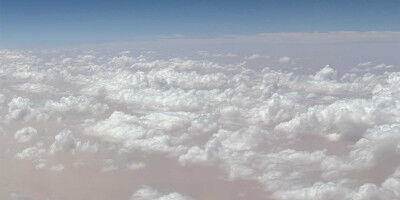
Dust particles from deserts promote ice formation in clouds. This discovery highlights the importance of aerosols for understanding cloud behaviour, predicting precipitation, and assessing the role of clouds in climate change. A new study shows that natural dust particles, swirling in from faraway deserts can cause clouds in Earth's Northern Hemisphere to form ice crystals (or to glaciate).
Environment - Earth Sciences - 16.07.2025

Time and again debris flows cause death and destruction. A research team has measured these flows of water, earth and debris with high precision. The study shows previously unexplained factors that determine the destructive force of debris flows - which allows appropriate protective measures to be put in place.
Environment - Earth Sciences - 15.07.2025

By the end of the century, water temperatures in Swiss rivers will rise by up to 3.5 degrees if no action to protect the climate is taken.
Environment - Earth Sciences - 07.07.2025
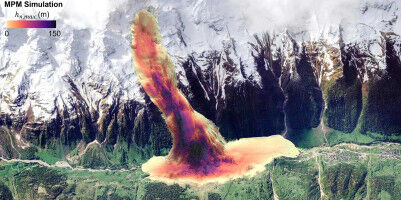
A new 3D simulation tool developed by ETH and SLF researchers now allows for significantly more accurate predictions of complex alpine mass movements, supporting alpine risk management. Recent major rock-ice avalanches in the Swiss Alps - especially the dramatic collapses near Brienz and Blatten - also indicate the need for even more advanced modelling approaches.
Astronomy & Space - Earth Sciences - 20.06.2025
Tidal forces from the Sun could have deformed cliffs on Mercury
A new study by researchers of the University of Bern shows that the hilly surface of Mercury could be influenced not only by the cooling and contraction of the planet, but also by the tidal forces of the Sun. Future analysis will draw on new data from the BepiColombo mission, which is currently on its way to Mercury.
Environment - Earth Sciences - 12.06.2025

Romania is one of the EU's largest methane emitters from oil and gas production facilities, but emissions have fallen sharply thanks to targeted information on leaks. An international research team led by Empa has shown that measurements not only reveal actual emissions, but also prompt companies to take action.
Earth Sciences - Environment - 11.06.2025

Trace metals such as iron or zinc that are stored in deep-sea sediments are lost forever to phytoplankton on the ocean surface. This is what geochemists believed for a long time about the cycle of micronutrients in seawater. Now, researchers at ETH Zurich have discovered that this is not the case. The oceans are full of living things, with microscopic algae (phytoplankton) at the base of the marine food chain.


