














news
Electroengineering
Results 1 - 20 of 100.
Physics - Electroengineering - 28.01.2026
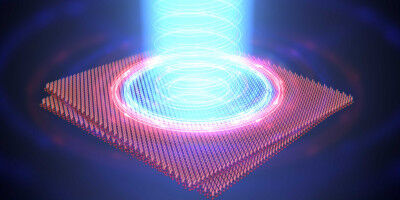
Researchers at ETH Zurich and the University of Basel have succeeded in changing the polarity of a special ferromagnet using a laser beam. In the future, this method could be used to create adaptable electronic circuits with light. In a ferromagnet, combined forces are at work. In order for a compass needle to point north or a fridge magnet to stick to the fridge door, countless electron spins inside them, each of which only creates a tiny magnetic field, all need to line up in the same direction.
Physics - Electroengineering - 09.12.2025
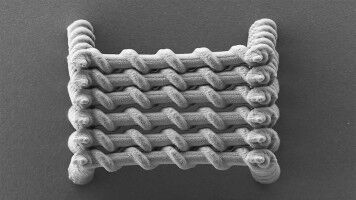
In collaboration with scientists in Germany, researchers have demonstrated that the spiral geometry of tiny, twisted magnetic tubes can be leveraged to transmit data based on quasiparticles called magnons, rather than electrons. Magnonics is an emerging engineering subfield that targets high-speed, high-efficiency information encoding without the energy loss that burdens electronics.
Physics - Electroengineering - 29.10.2025

Researchers have developed a method to calibrate electron spectrometers with extreme accuracy by linking microwave, optical, and free-electron frequencies. Frequency is one of the most precisely measurable quantities in science. Thanks to optical frequency combs, tools that generate a series of equally spaced, precise frequencies like the teeth of a ruler, researchers can connect frequencies across the electromagnetic spectrum, from microwaves to optical light, enabling breakthroughs in timekeeping, spectroscopy, and navigation .
Physics - Electroengineering - 23.07.2025

We're constantly surrounded by background electromagnetic noise from cell phones, Wi-Fi routers, power lines and natural sources. Noise we often regard as an unnecessary disturbance, or even as dangerous. But recently, a research team involving the University of Freiburg discovered a material that can convert it quite efficiently into electrical signals and currents capable of operating electronic devices without batteries, light sources or mechanical drives Imagine a device that, despite the failure of all traditional power sources, would continue to monitor and store data.
Physics - Electroengineering - 25.04.2025

Iron-rich hematite, commonly found in rocks and soil, turns out to have magnetic properties that make it a promising material for ultrafast next-generation computing. In 2023, researchers succeeded in sending and storing data using charge-free magnetic waves called spin waves, rather than traditional electron flows.
Health - Electroengineering - 09.01.2025

Thanks to new high-frequency electrical stimulation that blocks spasticity, two paralyzed patients suffering from muscle stiffness after spinal cord injury benefit from rehabilitation protocols for walking again.
Microtechnics - Electroengineering - 09.09.2024

Researchers at ETH Zurich and the Max Planck Institute for Intelligent Systems have developed a robotic leg with artificial muscles. Inspired by living creatures, it jumps across different terrains in an agile and energy-efficient manner. Inventors and researchers have been developing robots for almost 70 years.
Physics - Electroengineering - 06.09.2024

Researchers at ETH Zurich have managed to make sound waves travel only in one direction. In the future, this method could also be used in technical applications with electromagnetic waves. Be it water, light or sound: waves usually propagate in the same way forwards as in the backward direction. As a consequence, when we are speaking to someone standing some distance away from us, that person can hear us as well as we can hear them.
Physics - Electroengineering - 05.07.2024

EPFL engineers have created a device that can efficiently convert heat into electrical voltage at temperatures lower than that of outer space. The innovation could help overcome a significant obstacle to the advancement of quantum computing technologies, which require extremely low temperatures to function optimally.
Physics - Electroengineering - 01.07.2024

Researchers at EPFL have discovered that by shining different wavelengths of light on a material called magnetite, they can change its state, making it more or less conducive to electricity. This could lead to the development of innovative materials for electronics. Magnetite is the oldest and strongest natural magnet.
Physics - Electroengineering - 26.04.2024

Researchers have for the first time recorded X-rays being produced at the beginning of upward positive lightning flashes; an observation that gives important insight into the origins of this rare - and particularly dangerous - form of lightning. Globally, lightning is responsible for over 4,000 fatalities and billions of dollars in damage every year; Switzerland itself weathers up to 150,000 strikes annually.
Physics - Electroengineering - 13.03.2024

Researchers at ETH have managed to trap ions using static electric and magnetic fields and to perform quantum operations on them. In the future such traps could be used to realize quantum computers with far more quantum bits than have been possible up to now. The energy states of electrons in an atom follow the laws of quantum mechanics: they are not continuously distributed but restricted to certain well-defined values - this is also called quantisation.
Electroengineering - Microtechnics - 30.01.2024

Researchers at ETH Zurich have recently developed artificial muscles for robot motion. Their solution offers several advantages over previous technologies: it can be used wherever robots need to be soft rather than rigid or where they need more sensitivity when interacting with their environment. Many roboticists dream of building robots that are not just a combination of metal or other hard materials and motors but also softer and more adaptable.
Physics - Electroengineering - 24.01.2024

Scientists at EPFL break new ground in quantum physics, revealing a mysterious and unique behavior in a quantum magnetic material and hinting at future tech breakthroughs. In the mysterious world of quantum materials, things don't always behave as we expect. These materials have unique properties governed by the rules of quantum mechanics, which often means that they can perform tasks in ways traditional materials cannot - like conducting electricity without loss - or having magnetic properties that may prove useful in advanced technologies.
Physics - Electroengineering - 16.11.2023

Researchers have detected a new type of magnetism in an artificially produced material. The material becomes ferromagnetic through minimization of the kinetic energy of its electrons. For a magnet to stick to a fridge door, inside of it several physical effects need to work together perfectly. The magnetic moments of its electrons all point in the same direction, even if no external magnetic field forces them to do so.
Physics - Electroengineering - 01.11.2023

A research collaboration has uncovered a surprising magnetic property of an exotic material that might lead to computers that need less than one-millionth of the energy required to switch a single bit. The world of materials science is constantly discovering or fabricating materials with exotic properties.
Materials Science - Electroengineering - 04.07.2023

Is it possible to 3D print biodegradable sensors and displays? Researchers from Empa's Cellulose & Wood Materials laboratory have developed a cellulose-based material that allows just that. The mixture of hydroxpropyl cellulose with water, carbon nanotubes and cellulose nanofibrils changes color when heated or stretched - without the addition of any pigments.
Electroengineering - 02.05.2023

This doesn't happen often: For his final project, an electronics apprentice at ETH Zurich produced a test device that will save physicists a lot of time in developing a novel microscope. His work has been published in a scientific journal. Integrated into the research group Apprentices also have to prepare a detailed schedule for their IPA.
Physics - Electroengineering - 29.03.2023

Thanks to a breakthrough in the field of magnonics, researchers have sent and stored data using charge-free magnetic waves, rather than traditional electron flows. The discovery could solve the dilemma of energy-hungry computing technology in the age of big data. Like electronics or photonics, magnonics is an engineering subfield that aims to advance information technologies when it comes to speed, device architecture, and energy consumption.
Physics - Electroengineering - 20.03.2023

An international team led by the University of Geneva has developed a quantum material in which the fabric of space inhabited by electrons can be curved on-demand. Artistic view. Curvature of the space fabric due to the superposition of spin and orbital states at the interface between lanthanum aluminate (LaAlO3) and strontium titanate (SrTiO3).


