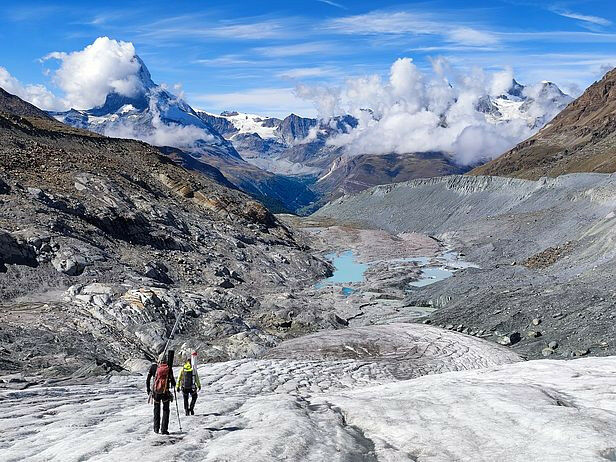
Glaziologen steigen über die zerfallende Zunge des Findelgletschers (VS) ab. Noch vor einem Jahrzehnt waren die leuchtend blauen Gletscherseen von Dutzenden Metern Eis bedeckt. (Foto: Matthias Huss)
Glaziologen steigen über die zerfallende Zunge des Findelgletschers (VS) ab. Noch vor einem Jahrzehnt waren die leuchtend blauen Gletscherseen von Dutzenden Metern Eis bedeckt. (Foto: Matthias Huss) With increasing temperatures, more heatwaves and less snowfall, glacier melt is accelerating. Whether we will still have water reserves in the form of frozen ice by 2100 depends heavily on efforts to contain the climate crisis. The retreat of the glaciers is probably the most noticeable consequence of global warming. For a while, the meltwater will continue to fill the rivers in summer - but by the end of the 21st century, most of the ice in the Alps will have melted. Water will become scarcer, especially in summer, which will pose challenges for drinking water supplies and agriculture.
TO READ THIS ARTICLE, CREATE YOUR ACCOUNT
And extend your reading, free of charge and with no commitment.