







news
Campus
Results 1 - 20 of 27.
Astronomy & Space - Campus - 08.12.2025

Key components of the new spectrograph designed at the University of Geneva have been successfully tested. They will enable analysis of light from the exoplanet Proxima b. The RISTRETTO project, dedicated to observing Proxima b -the closest exoplanet to the Solar System - is reaching a new milestone: several key components of this high-precision spectrograph have been prototyped and successfully tested by the workshops of the Department of Astronomy at the University of Geneva.
Astronomy & Space - Campus - 16.09.2025
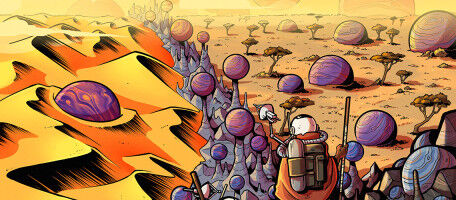
A team of astronomers led by UNIGE is launching a major research program on Neptunes to better understand the mechanisms of formation and evolution of planetary systems. An international team led by the University of Geneva , including scientists from the National Centre of Competence in Research PlanetS, the University of Warwick, and the Canary Islands Institute of Astrophysics, has launched an ambitious program to map exoplanets located around the Neptunian Desert.
Physics - Campus - 02.09.2025

A team from the University of Geneva reveals a once purely theoretical geometry at the heart of quantum materials, with major implications for future electronics. How can data be processed at lightning speed, or electricity conducted without loss? To achieve this, scientists and industry alike are turning to quantum materials, governed by the laws of the infinitesimal.
Earth Sciences - Campus - 27.08.2025
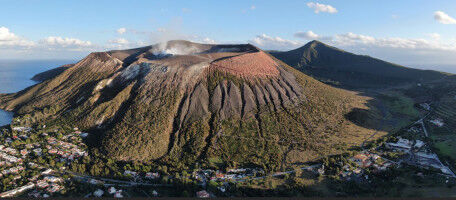
A team from the University of Geneva and INGV has created an unprecedentedly accurate 3D model of the internal structure of an active volcano, marking an advance in risk management. Volcanic eruptions can have dramatic consequences. But how can we anticipate this phenomenon, which unfolds up to tens of kilometres beneath the surface? A team from the University of Geneva , in collaboration with the National Institute of Geophysics and Volcanology (INGV) in Italy, has successfully recreated a 3D model of the interior of the Vulcano volcano, located in northern Sicily.
Psychology - Campus - 16.07.2025

A team from the University of Geneva has shown that hearing loss, combined with feelings of loneliness, accelerates cognitive decline in older adults. Isolation, communication difficulties, reduced alertness - hearing impairment or loss is a real challenge in daily life. Over time, it can also become a risk factor for cognitive decline.
Life Sciences - Campus - 26.05.2025

A team from the University of Geneva identifies a key brain region that abstracts spatial information from the senses, illuminating a fundamental pillar of intelligence. The brain has a remarkable capacity for abstraction. For example, it allows us to recognise an object in complete darkness through touch alone, even if we have previously only identified it by sight.
Astronomy & Space - Campus - 16.04.2025

An international team led by UNIGE has discovered a massive, Milky Way-like spiral galaxy that formed just 1 billion years after the Big Bang, revealing an unexpectedly mature structure in the An international team led by the University of Geneva has discovered the most distant spiral galaxy candidate known to date.
Astronomy & Space - Campus - 02.04.2025

An international team led by UNIGE shows that red and dead galaxies can be found only 700 million years after the Big Bang, indicating that galaxies stop forming stars earlier than predicted by models. For a long time, scientists thought that only actively star-forming galaxies should be observed in the very early Universe.
Life Sciences - Campus - 20.03.2025

Scientists have revealed the key role played by a form of actin in the mechanics of epithelial membranes and the dynamics of components of cell-cell junctions. Our skin and mucous membranes are protected by epithelial cells. This "barrier" tissue performs its function thanks to specialized structures called "junctions".
Astronomy & Space - Campus - 15.01.2025

A UNIGE study shows that Hot Jupiters do not systematically eject their planetary neighbours during migration. This discovery overturns our perception of the architecture of planetary systems. Hot Jupiters are giant planets initially known to orbit alone close to their star. During their migration towards their star, these planets were thought to accrete or eject any other planets present.
Earth Sciences - Campus - 16.12.2024

By studying sulphur in magmatic fluids at extreme pressures and temperatures, a team from the University of Geneva is revolutionising our understanding of gold transport and ore deposit formation. When one tectonic plate sinks beneath another, it generates magmas rich in volatiles such as water, sulphur and chlorine.
Astronomy & Space - Campus - 13.11.2024

An international team led by the University of Geneva has discovered three ultra-massive galaxies in the early Universe forming at unexpected speeds, challenging current models of galaxy formation. An international team led by the University of Geneva has identified three ultra-massive galaxies - nearly as massive as the Milky Way - already in place within the first billion years after the Big Bang.
Health - Campus - 12.11.2024
A technological shift unveils the impact of gestational diabetes
Using new wearable devices, a team from UNIGE, CHUV, HUG, UNIL and EPFL identifies persistent dysfunctions in glucose regulation in women who have had gestational diabetes. A common complication linked with pregnancy, gestational diabetes increases the risk of developing metabolic disorders, such as type 2 diabetes.
Life Sciences - Campus - 23.09.2024

A team from the University of Geneva has discovered the genetic programmes that allow motor neurons to retract from the spinal cord. This discovery opens up prospects for combating neurodegeneration. The motor cortex is made up of neurons responsible for muscle contraction. These neurons have cellular extensions called axons, which project from the cortex into the spinal cord.
Life Sciences - Campus - 17.09.2024

Scientists at the University of Geneva, Bern Inselpital and UNIBE have discovered that hidden mutations in non-coding DNA are responsible for the ageing of certain tissues, such as those in the liver. The accumulation of mutations in DNA is often mentioned as an explanation for the ageing process, but it remains just one hypothesis among many.
Life Sciences - Campus - 16.09.2024

A team from the University of Geneva and ETH Zurich has shown how the locus coeruleus, a small region of the brain, manages the transition from intense focus to heightened global awareness. What enables our brain to go from intense concentration to a heightened state of alertness? A study carried out by neuroscientists at the University of Geneva , in collaboration with ETH Zurich, shows that a brain region called locus coeruleus (LC) and the neurotransmitter noradrenaline act as conductors, reorganising brain functions according to the mental demands of the moment.
Astronomy & Space - Campus - 27.06.2024
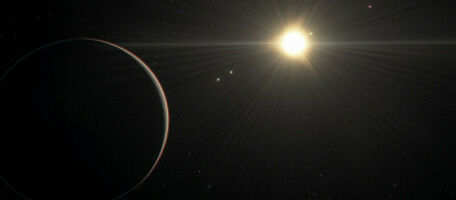
An international team has shown the existence of two distinct populations of sub-Neptunes, resolving a debate in the scientific community. The majority of stars in our galaxy are home to planets. The most abundant are the sub-Neptunes, planets between the size of Earth and Neptune. Calculating their density poses a problem for scientists: depending on the method used to measure their mass, two populations are highlighted, the dense and the less dense.
Campus - Health - 11.01.2024
How does social attention develop in autistic children?
A team from the University of Geneva shows how visual social skills develop in a unique way in children with autistic disorders. As they grow, children increasingly focus their attention on social elements in their environment, such as faces or social interactions. However, children with autism are often more interested in non-social stimuli, such as textures or geometric shapes.
Pedagogy - Campus - 05.12.2023

The SP80 team has just attached a kite to its sailboat, in another step towards its goal of breaking the current world record and reaching a speed of 150 km/h.
Astronomy & Space - Campus - 11.05.2023

Researchers have found strong evidence that supermassive stars can explain the anomalies observed in large clusters of stars. Globular clusters are the most massive and oldest star clusters in the Universe. They can contain up to 1 million of them. The chemical composition of these stars, born at the same time, shows anomalies that are not found in any other population of stars.


