







news
Swiss Federal Institute of Technology Lausanne, EPFL
Results 1361 - 1376 of 1376.
History & Archeology - 24.08.2011

Scientists have discovered a new wreck on the bottom of the Lake Geneva. Underwater archaeology is benefiting from scanners developed for scientific research. "It's always a memorable moment when you find an unknown shipwreck. It's not on the maps, and after having gone around it, I didn't see any inscription on its hull," explains Evgeny Chernyaev, who was piloting the submersible.
Life Sciences - Pharmacology - 17.08.2011
Holograms Reveal Brain’s Workings,
Like far away galaxies, powerful tools are required to bring the minute inner workings of neurons into focus. A team of scientists report how Digital Holographic Microscopy (DHM) can now be used to observe neuronal activity in real-time and in three dimensions—with up to 50 times greater resolution than ever before.
Mechanical Engineering - Electroengineering - 03.08.2011

An electromagnetic three-phase motor will enable the watchmaking industry to build watches that are three times more efficient and that can include more applications.
Life Sciences - Physics - 27.07.2011
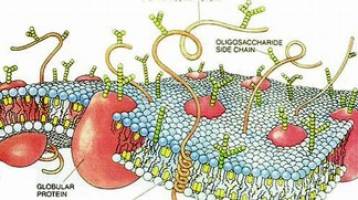
Many substances and nutrients are exchanged across the cell membrane. Scientists have developed a method to observe these exchanges, by taking a highly accurate count of the number of proteins found there. Proteins on the cell surface play an essential role in the survival of the cell. They govern the exchanges between the interior and the exterior.
Environment - Earth Sciences - 11.07.2011

Scientists are starting a new field campaign in the Val Ferret. They're collecting data to study how the environment influences flood rates in mountain valleys. Predicting natural disasters in order to inform and warn populations residing in risk zones is a major challenge today. "Mathematical models exist, but they still don't take into account all the data that are needed to establish reliable predictions, such as the influence of air temperature, the formation of thermal winds or the impact of precipitation," explains Professor Marc Parlange.
Physics - Environment - 07.07.2011
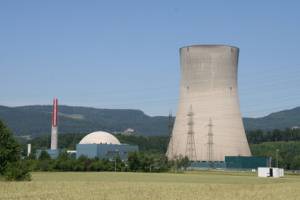
If Switzerland does indeed abandon nuclear energy within the time-frame announced by the Swiss Confederation, the question of the burial and disposal of the accumulated waste needs to be addressed.
Physics - Pharmacology - 01.07.2011
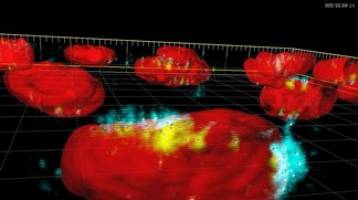
Detecting cancer cells and destroying them, injecting drugs with extreme precision into diseased cells in the human body - these are just two examples of what scientists are attempting to accomplish using iron oxide nanoparticles.
Environment - 27.06.2011
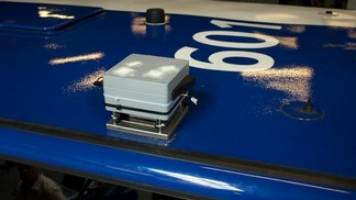
Rather than installing stations on fixed towers, why not use mobile sensors spread out over the whole city to get better air quality measurements?
Physics - 24.06.2011
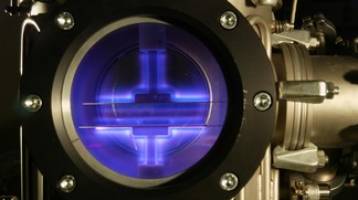
Controlling a boiling plasma at several million degrees Celsius - that's the challenge of nuclear fusion, our great energy hope for the future. Two research project advance the state of knowledge in the domain. If plasmas can be controlled, then it may one day be possible to use nuclear fusion as an energy source.
Innovation - 14.06.2011

Aelios is an application that was developed by Bachelor students. Two weeks after its launch, it topped download charts in Switzerland and Germany.
Environment - 09.06.2011
A Power Grid on a Chip
Researchers have developed a device only 4mm thick that can manage an urban power grid a thousand times faster than currently possible.
Mathematics - 08.06.2011

Health - 06.06.2011
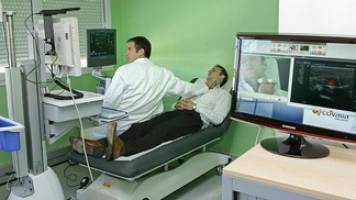
An ultrasound machine has been transformed into a telediagnosis tool. Specialists in other hospitals can see images in real time, pinpoint the exact zone they're coming from, and interact. Making a diagnosis using ultrasound images often requires advice from experts in other hospitals, particularly in neurology.
Physics - Electroengineering - 30.05.2011

The international ITER project is setting out to store the energy of stars in a reactor. To meet this challenge, scientists must be able to measure the properties of matter in fusion. Researchers have just successfully tested some sensors that are necessary for the ITER prototype. The scientists' ambition is to keep matter with a temperature of several million degrees contained here on Earth.
Environment - Administration - 27.05.2011

An experiment has demonstrated the role played by micro-organisms in the degradation - without oxygen - of a very common pollutant: vinyl chloride. The traces of human industrial activity persist deep inside the ground. And sometimes for a long time! In Switzerland alone, the Federal Office for the Environment records no less than 50,000 polluted sites, including 4000 that have been declared "contaminated" and require clean-up operations.
Computer Science - Microtechnics - 26.05.2011
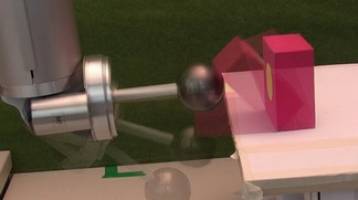
Robots typically acquire new capacities by imitation. Now, EPFL scientists are doing the inverse - developing machines that can learn more rapidly and outperform humans by starting from failed or inaccurate demonstrations. A robot, unblinking, impassive, observes. Its instructor wants it to learn how to put a balloon in a basket 20 meters away.


