








news
Swiss Federal Institute of Technology Lausanne, EPFL
Results 601 - 620 of 1376.
Life Sciences - Health - 16.02.2021
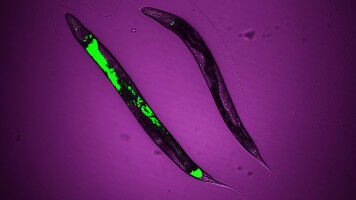
Scientists at EPFL have discovered certain enzymes that play a central role in the stress responses that defend mitochondria from stress, and promote health and longevity. Probably the most well-known organelle of the cell, mitochondria play a critical role in producing energy from food. So, it's no surprise that mitochondria can get stressed and damaged.
Health - Life Sciences - 15.02.2021
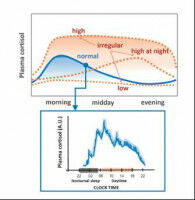
EPFL engineers, working in association with startup Xsensio, have developed a wearable system that can measure the concentration of cortisol - the stress hormone - in human sweat. Enabling future quasi-continuous monitoring, their device can eventually help doctors better understand and treat stress-related conditions like burnout and obesity.
Environment - Computer Science - 12.02.2021
Digital sobriety is now a top priority at EPFL
An independent report commissioned by EPFL's upper management recommends drastic measures and more comprehensive carbon accounting in order to reduce the substantial environmental impact caused by the use of digital technology at the School. A recent assessment of EPFL's digital-technology carbon footprint found that the use of computer equipment by staff and students accounts for 25% of the School's total greenhouse gas emissions.
Computer Science - 11.02.2021
FLeet: Putting Machine Learning in your pocket
New EPFL/INRIA research shows for the first time that it is possible for our mobile devices to conduct machine learning as part of a distributed network, without giving big global tech companies access to our data. Every time we read news online or search for somewhere to eat out, big tech collects huge amounts of our behavioral data.
Life Sciences - 10.02.2021
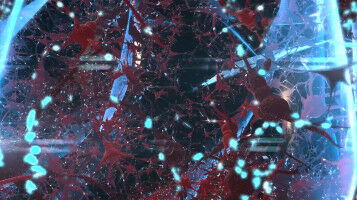
Researchers have identified specific neurons that help activate sensory processing in nearby nerve cells - a finding that could explain how the brain integrates signals necessary for tactile perception and learning. The ability to perceive touch sensations gives our brains a wealth of information about the environment, including the shape, texture and temperature of objects.
Life Sciences - Health - 09.02.2021

Scientists at EPFL have made breakthrough discoveries on the circadian clock and how it affects gene expression. Some of the findings suggest a biological underpinning for different behaviors in people, such as morning people, nappers, evening people, night owls etc. In 2017, the Nobel Prize in Physiology or Medicine went to three scientists who uncovered the molecular mechanisms that control the circadian rhythm, otherwise known as the "wake-sleep" cycle.
Materials Science - Physics - 08.02.2021
Droplets perform daredevil feats on gel surfaces
Scientists have succeeded in making droplets flow just as fast on soft surfaces as on hard ones by changing the surface texture. Welcome to the amazing world of soft substrates. These materials are made of silicon gels and have the same texture as panna cotta - but without the delicious flavor. They are used in a range of applications, especially in the pharmaceutical industry, because their biocompatible and antiadhesive properties make them resistant to corrosion and bacterial contamination.
Health - Environment - 04.02.2021

In a new paper, a team of EPFL spatial-analysis experts and neurologists from Geneva University Hospital (HUG) show that the probability of developing Parkinson's disease is higher in the canton of Geneva's urban centers than in its rural areas. This constitutes an important contribution to the study of the causes of this neurodegenerative disease, which are still poorly understood.
Health - Pharmacology - 03.02.2021

Engineers at EPFL's Center for Artificial Muscles have developed a silicone aorta that can reduce how hard patients' hearts have to pump. Their breakthrough could offer a promising alternative to heart transplants. "Over 23 million people around the world suffer from heart failure. The disease is usually treated with a transplant, but because donated hearts are hard to come by, there is an ongoing need for alternative therapies.
Pedagogy - 01.02.2021

Researchers from EPFL and Spain's IMDEA Software Institute and IMDEA Networks Institute , have found that many parental control applications collect and share data without consent, and fail to comply with regulatory requirements.
Pharmacology - Health - 28.01.2021
New treatment helps patients with a spinal cord injury
Spinal cord injuries disrupt the mechanism by which our bodies regulate blood pressure. A team of Swiss and Canadian scientists have developed a treatment that allows patients to regain control of their blood pressure, using targeted electrical spinal-cord stimulation. No medication is required. The team's findings were published today in Nature.
Environment - Life Sciences - 27.01.2021

An EPFL scientist has made a major breakthrough in the understanding of coral bleaching - a process that causes corals to lose their color and eventually leads to their death. The process is triggered by warmer ocean temperatures, and, according to the study, it begins much earlier than previously thought.
Physics - 26.01.2021
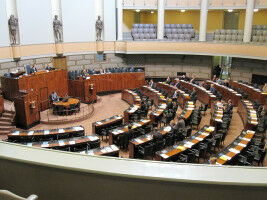
Analyzing a classic paper that has influenced the size of parliaments for almost half a century, an EPFL physicist discovers major flaws with its methodology, challenges its fundamental assumptions, and calls for a complete and careful re-think of its government-governing rule. What is the best size of a parliament? That is a question at the center of many countries today, including the 2020 referendum in Italy where almost 70% of voters selected to slash the number of members of parliament by about a third.
Physics - Computer Science - 25.01.2021

EPFL engineers teamed up with luxury watchmaker Vacheron Constantin to develop an innovative system that uses lasers to create 3D sculptures within sapphire watch crystals.
Health - 22.01.2021

Scientists at EPFL and the Universities of Geneva, Cape Town and Bochum have joined forces to investigate brain activity during sleep with the help of MRI scans. It turns out our brains are much more active than we thought. Our state of consciousness changes significantly during stages of deep sleep, just as it does in a coma or under general anesthesia.
Materials Science - Computer Science - 21.01.2021

Scientists have developed a metamaterial whose mechanical properties can be reprogrammed on demand and whose internal structure can be modified by applying a magnetic field. Over the past 20 years, scientists have been developing metamaterials, or materials that don't occur naturally and whose mechanical properties result from their designed structure rather than their chemical composition.
Life Sciences - Health - 20.01.2021
NAD+ can restore age-related muscle deterioration
Scientists at EPFL have discovered that Alzheimer's-like protein aggregates underly the muscle deterioration seen in aging. But the aggregates can be reversed by boosting the levels of nicotinamide adenine dinucleotide (NAD + ), which turns on the defense systems of mitochondria in cells and restores muscle function.
Music - Computer Science - 19.01.2021

Researchers in EPFL's Digital and Cognitive Musicology Lab in the College of Humanities used an unsupervised machine learning model to 'listen to' and categorize more than 13,000 pieces of Western classical music, revealing how modes - such as major and minor - have changed throughout history. Many people may not be able to define what a minor mode is in music, but most would almost certainly recognize a piece played in a minor key.
Life Sciences - 18.01.2021
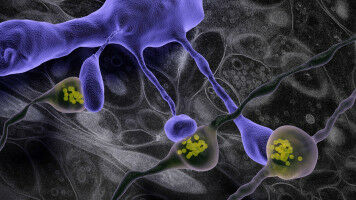
Scientists at EPFL have used a snap-freezing method to reveal the true structure of the connections that join neurons together in the adult brain. Most synaptic connections in the adult brain are situated on dendritic spines; small, micrometer-long, protrusions extending from the neurons' surface. The spines' exact size and shape determine how well signals are passed from one neuron to another.
Life Sciences - 14.01.2021

Scientists have carried out the first comprehensive study of how genes in the liver perform their metabolic functions in both space and time of day. Monitoring almost 5000 genes at the level of the individual cell across a 24-hour period, the researchers have modelled how the circadian clock and liver functions crosstalk throughout the day in sync with the feeding-fasting cycle.


