







news
Swiss Federal Institute of Technology Lausanne, EPFL
Results 641 - 660 of 1376.
Life Sciences - 06.11.2020

Salamanders have a unique superpower - they can regenerate their spinal cords and regain full functionality. Scientists are working under a cross-disciplinary research project to uncover the mechanisms behind this restorative capability. "Salamanders are unique because they are one of the only tetrapods able to regrow spinal cords with full functionality," says Auke Ijspeert, the head of EPFL's Biorobotics Laboratory.
Computer Science - Physics - 05.11.2020

EPFL engineers have developed a computer chip that combines two functions - logic operations and data storage - into a single architecture, paving the way to more efficient devices. Their technology is particularly promising for applications relying on artificial intelligence. It's a major breakthrough in the field of electronics.
Life Sciences - 26.10.2020
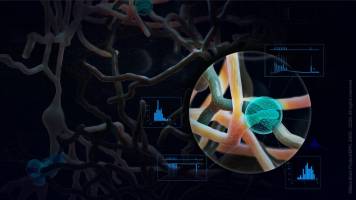
The rodent Hippocampal formation is one of the most exhaustively studied regions in the mammalian brain but until now, there has not been a comprehensive knowledge base of its synaptic physiology. In a front cover paper published in the journal Hippocampus , researchers at EPFL's Blue Brain Project present a data-driven approach to integrate the current knowledge on the hippocampal CA1 region using an open-access, comprehensive resource.
Physics - 15.10.2020

Scientists have developed a method for changing the physical properties of 2D materials permanently using a nanometric tip. Their approach, which involves deforming the materials, paves the way to using these materials in electronic and optoelectronic devices. Materials all come with their own set of properties - they can be insulating, semi-conducting, metallic, transparent or flexible, for example.
Life Sciences - Health - 14.10.2020

A new study by EPFL researchers shows how RNA species called TERRA muster at the tip of chromosomes, where they help to prevent telomere shortening and premature cell aging. Molecules that accumulate at the tip of chromosomes are known to play a key role in preventing damage to our DNA. Now, researchers at EPFL have unraveled how these molecules home in on specific sections of chromosomes-a finding that could help to better understand the processes that regulate cell survival in aging and cancer.
Earth Sciences - 14.10.2020
Scientist gains fresh insight into the origins of earthquakes
The speed and intensity with which seismic waves propagate after an earthquake depend mainly on forces occurring deep inside the rocks along a fault line, according to a study by EPFL scientist François Passelègue. His sophisticated models are giving us fresh insight into the factors that can trigger an earthquake.
Chemistry - Environment - 13.10.2020

Scientists have developed a new approach to stabilizing clay soils. The method involves using a battery-like system to apply electric current to carbonate and calcium ions in order to promote soil consolidation. Their findings were published yesterday in Scientific Reports. According to figures released by the UN yesterday, natural disasters have killed more than 1.2 million people since 2000 and cost nearly $ 3 trillion.These pressing threats bring into sharp focus the need for new answers to the problem of soil stabilization.
Health - Life Sciences - 12.10.2020
Mechanical forces of biofilms could play role in infections
Studying bacterial biofilms, EPFL scientists have discovered that mechanical forces within them are sufficient to deform the soft material they grow on, e.g. biological tissues, suggesting a -mechanical- mode of bacterial infection. The vast majority of bacteria in the world live on surfaces by forming structures called -biofilms-.
Health - 07.10.2020
Scientists at EPFL are using technology to better understand how coronavirus causes blood clots in some patients. They have developed a simplified model of a lung that lets them observe, for the first time, how the virus attacks the cells lining blood vessels. COVID-19 sometimes causes blood clots, although the exact incidence remains a mystery.
Materials Science - Physics - 05.10.2020

EPFL chemical engineers have developed a new way to manufacture zeolitic membranes, state-of-the-art materials used for gas separation in harsh conditions. Zeolites are porous minerals that occur both naturally but also are being synthesized artificially. Because they are stable and durable, zeolites are used for chemical catalysis, purification of gases and liquids, and even in medical applications such as drug delivery and blood-clotting powders, e.g. the QuickClot trauma bandages used in the US military.
Physics - 02.10.2020

Optical frequency combs can link frequencies in the microwave domain to high-purity laser emissions, yielding unprecedented precision in time-keeping and metrology. Now EPFL scientists and their colleagues have generated variable low-noise microwave signals by building variable microwave gears with two compact optical frequency combs.
Chemistry - Materials Science - 01.10.2020

Researchers have successfully overcome a limiting problem with stabilizing the best-performing formulation of metal-halide perovskite films, a key player in a range of applications, including solar cells. Perovskites are a class of materials made up of organic materials bound to a metal. Their fascinating structure and properties have propelled perovskites into the forefront of materials' research, where they are studied for use in a wide range of applications.
Environment - Physics - 01.10.2020

An international team of scientists from EPFL, the Paul Scherrer Institute and Stockholm University has identified a novel driver of new aerosol particle formation in the Arctic during the summer to fall transition. The authors show that iodic acid is important for forming new particles which subsequently influence the formation of clouds and their radiative effect over the Arctic pack ice.
Life Sciences - 29.09.2020
Understanding the effect of aging on the genome
Scientists have measured the molecular footprint that aging leaves on various mouse and human tissues. Using the data, they have identified likely regulators of this central process. Time may be our worst enemy, and aging its most powerful weapon. Our hair turns grey, our strength wanes, and a slew of age-related diseases represent what is happening at the cellular and molecular levels.
Life Sciences - 28.09.2020
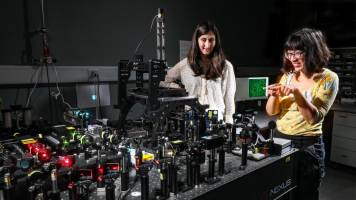
Scientists have observed - for the first time in living cells - the way mitochondria distribute their transcriptome throughout the cell, and it involves RNA granules that turn out to be highly fluid. Mitochondria are present in all eukaryotic cells: in our cells, in mammalian cells, in the cells of plants and even of fungi.
Life Sciences - Health - 24.09.2020
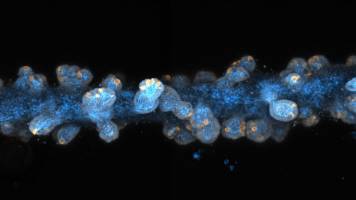
Researchers at EPFL have developed an approach to print tiny tissues that look and function almost like their full-sized counterpart. Measuring just a few centimeters across, the mini-tissues could allow scientists to study biological processes-and even test new treatment approaches-in ways that were previously not possible.
Environment - Health - 23.09.2020
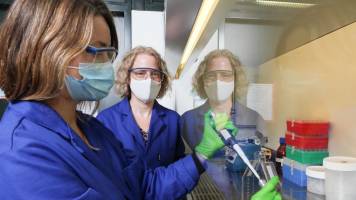
A recent EPFL study shows that pathogenic viruses may be able to develop resistance to warm temperatures and some types of disinfectant. That - combined with global warming and more frequent and longer heat waves - could make it even harder to keep them from spreading. We could soon see the day when people have to think twice before taking a swim in lakes hitherto considered healthy.
Computer Science - 22.09.2020
EPFL's Predikon: predicting voting results with machine learning
On September 27 Switzerland votes for the first time since the COVID-19 pandemic began, including on a contentious initiative to end the free movement of workers with the European Union. Predikon will be predicting the final outcome within minutes of the release of the first partial municipal results from the Swiss Federal Statistical Office.
Environment - 22.09.2020
Optical Wi-Fi allows for ultrafast underwater communications
EPFL spin-off Hydromea has developed a miniature optical modem that can operate down to 6,000 meters below the ocean's surface. It is sensitive enough to collect data at very high speeds from sources more than 50 meters away. If you want to use a connected device underwater, you don't have many options.
Life Sciences - Health - 21.09.2020

Scientists at EPFL, ETH Zurich and Harvard Medical School/Boston Children's Hospital have developed an implantable technology that enabled the discovery of an interaction between sensory neurons and immune cells. Pain is a protective mechanism, alerting us to danger by generating an unpleasant sensation.


