

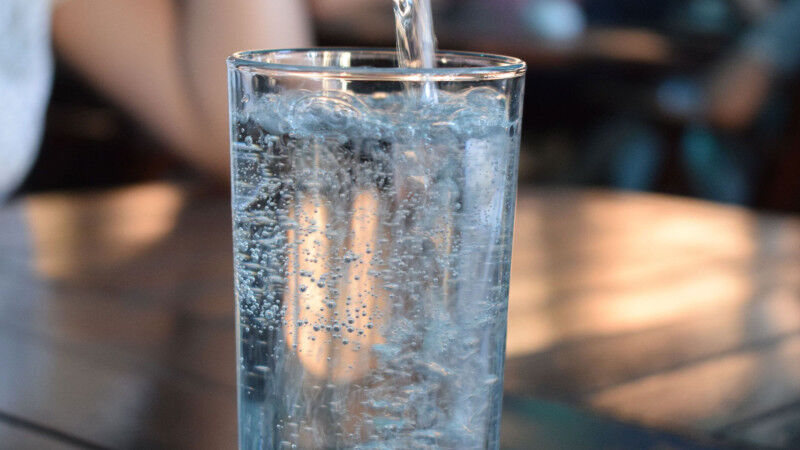
Large quantities of carbon dioxide are released into the air every year during the fermentation of wine and beer, as well as in biomethane plants. Circea, a BFH-HAFL spin-off, wants to change this: with an innovative concept that captures the CO2 directly on site and makes it usable for industry.
Two challenges - one solution: According to the Climate Protection Act, greenhouse gases must be reduced. In 25 years, Switzerland should only emit as much as can be absorbed by natural and technical reservoirs. At the same time, there are repeated shortages of CO2 - for example for carbon dioxide in drinks or, in future, for the production of synthetic fuels and chemicals. Circea, a spin-off from the BFH-HAFL School of Agricultural, Forest and Food Sciences, has come up with an innovative idea to capture CO2 and use it where it is needed.
Collecting instead of wasting
The key to the solution lies in capturing the pure CO2 right where it is produced: In wineries or breweries, for example, the carbon dioxide produced during fermentation can be captured and recycled immediately without it escaping into the air. Any surplus can be filled into pressurized containers and recycled externally - this is the aim of Circea.
How it works
The principle is simple: the CO2 recovery systems are modular and can be installed quickly and directly at wineries or breweries. The gases produced during fermentation are fed into the system via pipes, where the CO2 is separated from the water vapor, purified and compressed for storage. This creates regional value chains and avoids long transportation routes. ’With our process, we can recover up to 85% of the CO2 produced during fermentation - and turn it into a valuable raw material,’ says Jean Valentin De Saussure, research associate at BFH-HAFL and founder of Circea.
From project to spin-off
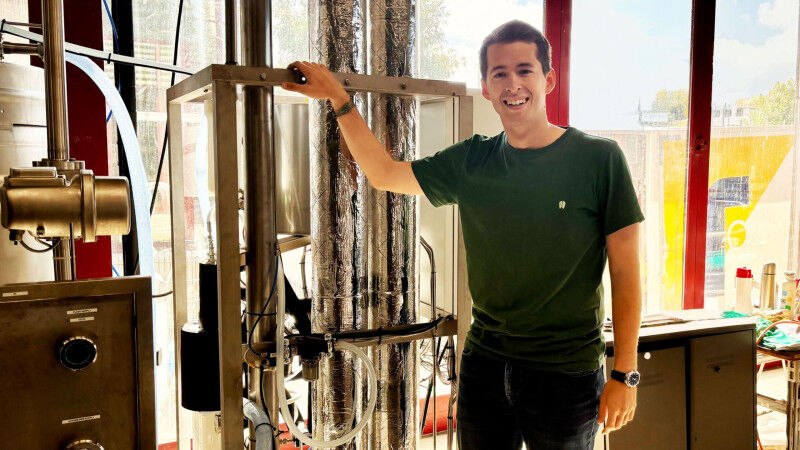
’The circular economy makes a significant contribution to a sustainable future. By capturing CO2 where it is produced, we create a valuable resource and actively contribute to reducing greenhouse gas emissions,’ explains De Saussure. He developed his idea as part of his Master’s degree in ’Circular Innovation and Sustainability’ at Bern University of Applied Sciences. Today, the spin-off Circea is docked to Michael Studer’s Laboratory for Bioenergy and Biochemicals at BFH-HAFL. ’The spin-off shows how our applied research produces concrete solutions for practical applications - with benefits for both the economy and the climate,’ says Studer, who is researching new technologies for the material use of biomass; he recently opened newly converted biomass laboratories for this purpose.
Great potential
According to De Saussure, the first project partners are convinced by the approach: ’Recovering and reusing our own CO2 saves costs, protects the environment and makes a significant contribution to our own sustainability goals.
The next step is to apply the technology more widely. Interested breweries and wineries can already have CO2 recovery systems installed. Pilot projects in biogas plants are testing how CO2 emissions can be put to good use. Whether as fertilizer in greenhouses or in the long term for the production of fuels and chemicals: ’We want to use applied research to drive forward the circular economy of carbon,’ say De Saussure and Studer. Circea won first place in the ’Bern Upcycling Challenge 2025’ for its innovative strength.