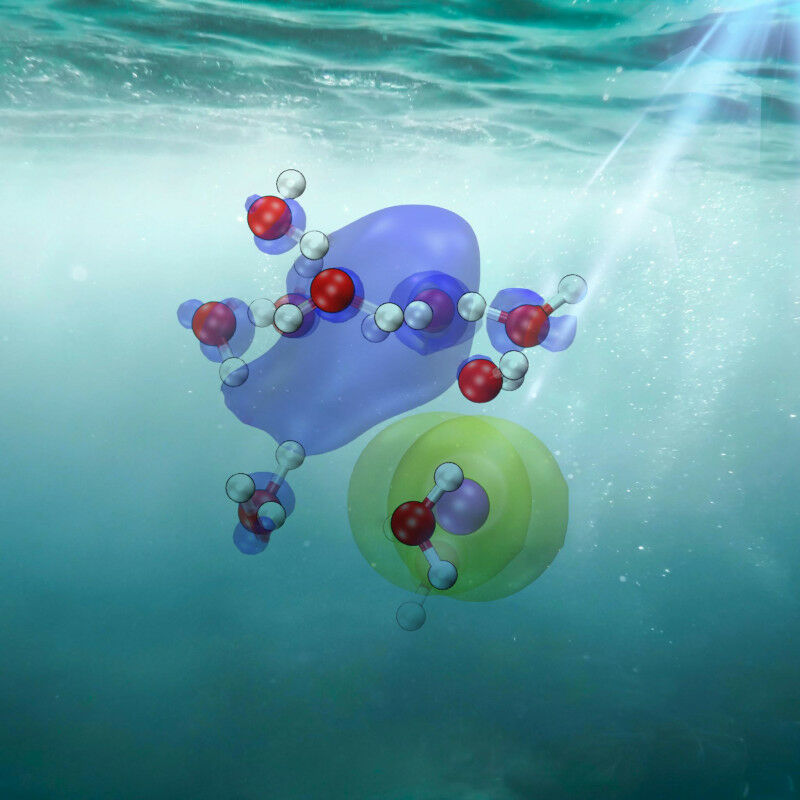
CTTS dynamics illustrating the electron density (blue) and the hole density of aqueous iodine (yellow). Credit: Jinggang Lan/EPFL
CTTS dynamics illustrating the electron density ( blue ) and the hole density of aqueous iodine ( yellow ). Credit: Jinggang Lan/EPFL A research project at EPFL succeeded in decoding the complex dance of electrons in water, a major step in understanding a critical process of many chemical phenomena, and that might be the first step to improving energy conversion technologies. Water, the cradle of life on Earth, is not just a passive backdrop but actively participates in the chemical ballet of life. Central to this dance is the behavior of electrons, particularly during a process known as charge transfer to solvent (CTTS). CTTS is like a microscopic dance where an electron from something dissolved in water, like salt, leaps out and joins the water itself. The process creates a now "hydrated" electron, which is a key element of many aqueous reactions, like the ones underlying life itself. Consequently, CTTS is essential for understanding how electrons move in solutions.
TO READ THIS ARTICLE, CREATE YOUR ACCOUNT
And extend your reading, free of charge and with no commitment.