









news
University of Geneva
Results 201 - 220 of 449.
Health - Life Sciences - 27.10.2022

A team from the UNIGE and the HUG has developed a promising method for treating people whose negative dreams are pathological. Oppressive, frightening, nerve-wracking: nightmares are particularly disturbing dreams. They are considered pathological when they occur frequently (>1 episode per week) and cause daytime fatigue, mood alteration and anxiety.
Life Sciences - Health - 26.10.2022

A team from the University of Geneva has identified the structure of a protein complex controlling the activity of the major regulator of cell growth. The mTOR protein plays a central role in cell growth, proliferation and survival. Its activity varies according to the availability of nutrients and some growth factors, including hormones.
Life Sciences - Pharmacology - 24.10.2022

A team from the University of Geneva, in collaboration with the UZH, has developed an innovative strategy for studying membrane proteins, the targets of many drugs. Membrane proteins are key targets for many drugs. They are located between the outside and inside of our cells. Some of them, called ''transporters'', move certain substances in and out of the cellular environment.
Astronomy & Space - 13.10.2022

The spectrograph developed by the UNIGE has enabled the discovery of the heaviest element ever detected in the atmosphere of a planet outside the solar system. An international team including researchers from the University of Geneva and the National Centre of Competence in Research (NCCR) PlanetS has detected the heaviest element ever found in the atmosphere of an exoplanet: barium.
Environment - Agronomy & Food Science - 10.10.2022

A team of scientists makes the case for reevaluating maligned non-native species. Awareness of non-native species - often called ''invasive'' - has vastly increased over the past fifty years, to the point where anyone with green conscience has heard of them and their negative effects, whether it is the zebra mussel or ragweed.
Life Sciences - Health - 07.10.2022

By deciphering mutations in the GNAO1 gene, which cause severe mental and motor disabilities, a team from the University of Geneva is showing how zinc could improve the brain defects at stake. Paediatric encephalopathies of genetic origin cause severe motor and intellectual disabilities from birth. One of these diseases, first identified in 2013, is caused by mutations in the GNAO1 gene.
Life Sciences - Health - 04.10.2022

A team from the University of Geneva deciphers the three-step mechanism that allows our body to defend itself against hepatitis B. Confocal microscopy images showing in the cell nucleus (blue), the recruitment of Smc5/6 (green) by SLF2 (red) into PML bodies. UNIGE - Laboratory of Professor Michel Strubin - Regulation of hepatitis B virus gene expression - Department of Microbiology and Molecular Medicine.
Health - 19.09.2022
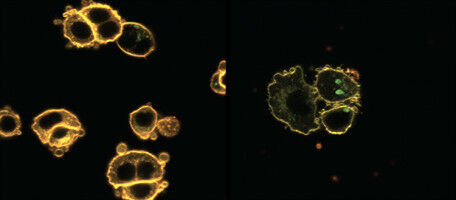
A team from Geneva, Switzerland, shows that the disruption of lipid temporal profiles in type 2 diabetes stiffens the membrane of pancreatic endocrine cells, which could alter their function. Like all living beings, human physiological processes are influenced by circadian rhythms. The disruption of our internal clocks due to an increasingly unbalanced lifestyle is directly linked to the explosion in cases of type 2 diabetes.
Health - Innovation - 19.09.2022

A new device for diagnosing bone fragility invented by the HUG and the UNIGE has been approved for marketing in the European Economic Area and Switzerland. A new device for diagnosing bone fragility invented by the University Hospitals of Geneva (HUG) and the University of Geneva has been approved for marketing in the European Economic Area and Switzerland.
Health - Life Sciences - 19.09.2022

A team from the UNIGE and the HUG has succeeded in identifying a drug-targetable mechanism whose blockage reduces the capacity of melanoma cells to adapt and resist to treatment. The advent of small-molecule targeted therapies, a decade ago, revolutionized the treatment of metastatic melanoma, provided that the tumors carry the mutations to respond to these treatments.
Astronomy & Space - 09.09.2022

The Swiss space telescope CHEOPS will celebrate its 1000th day in orbit around the Earth on Tuesday 13 September. Its excellent condition will allow it to remain active for several more years. After 1000 days in orbit around the Earth, the CHEOPS space telescope shows almost no signs of wear. Under these conditions, it could continue to reveal the fascinating details of many exoplanets for many years to come.
Astronomy & Space - Environment - 25.08.2022

The new space telescope has revealed the presence of carbon dioxide on the gas giant WASP-39b. A first in which the UNIGE and UNIBE participated. Launched at the end of 2021 by NASA, with the collaboration of the European Space Agency (ESA) and the Canadian Space Agency (CSA), the James-Webb Space Telescope has delivered an exceptional first scientific result: for the first time, CO2 has been clearly detected in the atmosphere of WASP-39b, a planet located outside the solar system.
Health - 16.08.2022
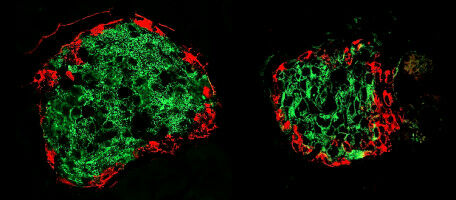
A team from the UNIGE in collaboration with the HUG has discovered a molecule that can identify the development of diabetes before the first symptoms appear. Diabetes is a severe and growing metabolic disorder. It already affects hundreds of thousands of people in Switzerland. A sedentary lifestyle and an excessively rich diet damage the beta cells of the pancreas, promoting the onset of this disease.
Life Sciences - Health - 03.08.2022

By demonstrating that ketamine induces only a brief increase in dopamine and does not alter neuronal communication, a team from the UNIGE suggests that its therapeutic use may be safe. Commonly used in medicine as an anaesthetic, ketamine is also increasingly prescribed to relieve depressive symptoms.
Health - Campus - 28.07.2022

A study by the HUG, the UNIGE and the EPFL shows that almost all Genevans (93.8%) have antibodies against SARS-CoV 2 but less than one in two (46.7%) have them against the BA.4/BA. Omicron sub-variants. A study by the Geneva University Hospitals (HUG), the Faculty of Medicine of the University of Geneva and the EPFL shows that almost all Genevans (93.8%) have antibodies against SARS-CoV 2, almost three quarters of whom acquired them through an infection.
Health - Life Sciences - 15.07.2022

A team from the University of Geneva reveals how the S100A9 protein improves metabolism of insulin-dependent diabetics by avoiding the deleterious effects of insulin. People with a severe form of diabetes, where the beta cells of the pancreas do not produce or no longer produce enough insulin, have no choice but to inject themselves regularly with artificial insulin in order to survive.
Astronomy & Space - 13.07.2022

An international research team reveals for the first time the origin of neutrinos, elementary particles that reach our planet from the depths of the Universe. Highly energetic and difficult to detect, neutrinos travel billions of light years before reaching our planet. Although it is known that these elementary particles come from the depths of our Universe, their precise origin is still unknown.
Health - Pharmacology - 05.07.2022

By comparing the neutralisation capacity induced by the different variants of SARS-CoV-2, a team from the UNIGE and the HUG reveals the exceptional capacity of Omicron to evade our immunity. The current wave of COVID-19 highlights a particularly high risk of reinfection by the Omicron variant of SARS-CoV-2.
Social Sciences - Health - 20.06.2022

A study conducted by the UNIGE and the consulting firm EBP reveals that the entire Cannabis system in Switzerland generates an annual turnover of one billion francs. Cannabis generates an annual turnover of around one billion Swiss Francs. This sum does not only contain production, import and trade in the shadow economy but also legal economic activity such as policing, the judicial system, social work and healthcare.
Health - Life Sciences - 17.06.2022

A team led by the UNIGE has identified a molecular mechanism that causes degeneration of the eye's photoreceptors, which can lead to blindness. Retinitis pigmentosa , a degenerative genetic disease of the eye, is characterized by progressive vision loss, usually leading to blindness. In some patients, structural defects in the photoreceptor cells have been observed, but the molecular mechanisms involved are not understood.


