






news
University of Geneva
Results 41 - 60 of 449.
Health - Life Sciences - 14.08.2025
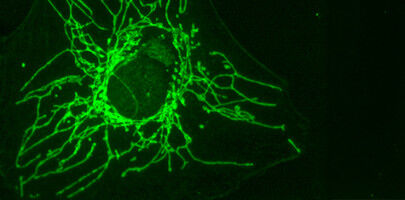
Researchers from the University of Geneva and Marburg show that D-cysteine, the "mirror" form of cysteine, selectively targets certain cancer cells. Most anticancer treatments also damage healthy cells, causing sometimes severe side effects. To limit these adverse effects, scientists are striving to develop therapies that can target only cancer cells.
Health - Life Sciences - 14.08.2025
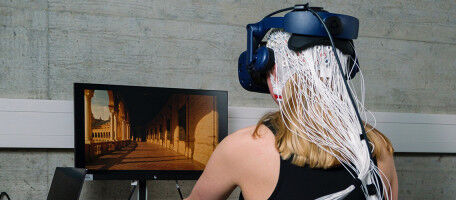
Scientists at CHUV and UNIGE demonstrate that it is possible to activate the immune system through virtual reality. The mere fact of being exposed to a sick avatar in a virtual reality environment triggers a measurable immune response in humans.This discovery was made by a multidisciplinary research team from the CHUV and the University of Geneva.
Life Sciences - 12.08.2025
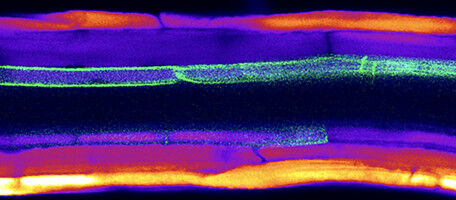
Scientists reveal unidirectional nutrient transport in roots, opening new avenues to enhance plant resistance to drought stress. Plants transport water and nutrients from their environment through specialised pores. Researchers at the University of Geneva have shed light on a little-known but essential mechanism for proper plant function: the directionality of nutrient transport in roots.
Life Sciences - Health - 30.07.2025
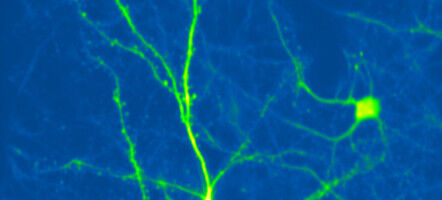
A team from the University of Geneva has discovered a new brain mechanism responsible for modulating sensory signals. It could be involved in the perception threshold of our senses. The cerebral cortex processes sensory information via a complex network of neural connections. How are these signals modulated to refine perception? A team from the University of Geneva has identified a mechanism by which certain thalamic projections target neurons and modify their excitability.
Astronomy & Space - Physics - 24.07.2025

An international team of scientists, including UNIGE astronomers, publishes the first results from the new NIRPS near-infrared spectrograph. An international team led by the Universities of Geneva (UNIGE) and Montreal published the first results today from the NIRPS spectrograph installed on the European Southern Observatory's (ESO) 3.6-meter telescope in La Silla, Chile.
Psychology - Campus - 16.07.2025

A team from the University of Geneva has shown that hearing loss, combined with feelings of loneliness, accelerates cognitive decline in older adults. Isolation, communication difficulties, reduced alertness - hearing impairment or loss is a real challenge in daily life. Over time, it can also become a risk factor for cognitive decline.
Chemistry - Physics - 15.07.2025

A team from the University of Geneva and the University of Pisa has designed surprisingly stable molecular assemblies, paving the way for new drug constructs and geometrically controlled materials. Can you imagine a life-saving molecule whose "twin" is a deadly poison? As surprising as it may seem, this chemical reality is known as "chirality".
Health - Life Sciences - 30.06.2025
Cancer: ’forgotten’ cells go on the offensive
UNIGE Immunologists have discovered the yet unsuspected anti-tumour potential of CD4 T lymphocytes, an important step towards a new kind of immunotherapy. In the fight against cancer, immunotherapy - which aims to boost the body's natural defences against cancer - is experiencing remarkable growth. Most of these treatments are based on CD8 T lymphocytes, ''killer cells'' able to eliminate diseased cells.
Life Sciences - Health - 26.06.2025
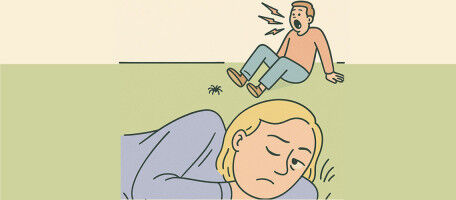
Even when sleeping, the brain detects sounds - particularly those signaling danger - and can react to them, say scientists from the University of Geneva and the Institut Pasteur. During sleep, the brain must achieve a delicate balance: disconnecting from sensory input to allow restorative functions, while remaining alert enough to wake if danger arises.
Life Sciences - Health - 24.06.2025
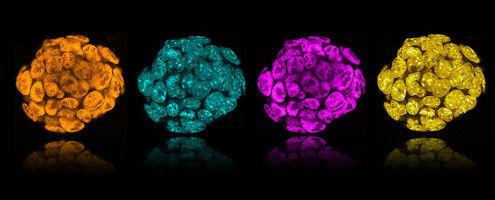
A team from the University of Geneva has identified two new proteins that regulate gene expression, a discovery that could pave the way for new cancer and brain disorder treatments. Cells depend on the precise reading of DNA sequences to function correctly. This process, known as gene expression, determines which genetic instructions are activated.
Life Sciences - Environment - 10.06.2025

A study from the University of Geneva reveals that turtles use both genetic signals and mechanical forces to develop the scales on their heads, highlighting a shared evolutionary heritage with crocodiles and dinosaurs. In vertebrates, the formation of feathers, hair, and scales is typically governed by molecular genetic factors.
Health - Pharmacology - 05.06.2025

A team from the University of Geneva, the HUG and the UniBE suggests that the perception of sleep and wakefulness, as well as the related regulatory systems, are often intact in people with insomnia disorders. Research led by the Geneva University Hospitals (HUG), the University of Geneva and the Universitäre Psychiatrische Dienste Bern (UPD) at the University of Bern (UNIBE) suggests that direct sleep-wake perception and regulatory systems are often intact in patients with insomnia disorder.
Life Sciences - Computer Science - 05.06.2025

By crossing AI and neuroscience, a team from UNIGE, Harvard and McGill has revealed the computational potential of a brain area at the heart of motivation. A small region of the brain, known as the ventral tegmental area (VTA), plays a key role in how we process rewards. It produces dopamine, a neuromodulator that helps predict future rewards based on contextual cues.
Life Sciences - Campus - 26.05.2025

A team from the University of Geneva identifies a key brain region that abstracts spatial information from the senses, illuminating a fundamental pillar of intelligence. The brain has a remarkable capacity for abstraction. For example, it allows us to recognise an object in complete darkness through touch alone, even if we have previously only identified it by sight.
Physics - Computer Science - 13.05.2025

A team from the University of Geneva has shown that particles can be measured jointly without bringing them together - a key advance for quantum communication and computing. Quantum physics keeps challenging our intuition. Researchers at the University of Geneva have shown that joint measurements can be carried out on distant particles, without the need to bring them together.
Health - Life Sciences - 29.04.2025

Scientists discovered a new mechanism involved in blood pressure regulation, opening the door to novel therapeutic approaches. Hypertension affects nearly one in three adults worldwide and is one of the major risk factors for cardiovascular disease. Previous studies suggest that the junctional protein paracingulin plays a role in the development of hypertension, but the underlying mechanisms remain poorly understood.
Life Sciences - 24.04.2025

A team from the University of Geneva has identified a single gene behind the corn snake's skin pattern diversity. In many animals, skin colouration and its patterns play a crucial role in camouflage, communication, or thermoregulation. In the corn snake, some morphs display red, yellow, or pink blotches, and their dorsal spots can merge or turn into stripes.
Astronomy & Space - Campus - 16.04.2025

An international team led by UNIGE has discovered a massive, Milky Way-like spiral galaxy that formed just 1 billion years after the Big Bang, revealing an unexpectedly mature structure in the An international team led by the University of Geneva has discovered the most distant spiral galaxy candidate known to date.
Life Sciences - Psychology - 14.04.2025
Autism: the neural origin of the social bound
Scientists identified a brain circuit where lies the origin the social difficulties experienced by people with autism spectrum disorders. From birth, human survival depends on the ability to engage with others. This ability, which is essential for development, seems to be impaired very early on in children with autism spectrum disorders (ASD), who show limited interest in social stimuli from their first year of life.
Social Sciences - Psychology - 10.04.2025

A team from the University of Geneva has shown that customized training can reveal and enhance the socio-emotional skills of individuals with multiple disabilities.


