








news
University of Geneva
Results 421 - 440 of 449.
Environment - 19.06.2019
What role can households play in the energy transition?
Researchers set up the ENERGISE project designed to help households reduce their energy consumption without compromising their levels of comfort. What role can households play in the energy transition? Can changes to everyday practices make a difference? The European ENERGISE project, led by the University of Geneva (UNIGE), in Switzerland, carried out an experiment to reduce energy consumption in 300 households in eight countries.
Health - Life Sciences - 17.06.2019

Researchers at UNIGE have discovered that the development of the hippocampus, the area of the brain responsible for memory and emotions, is severely impacted in adolescence following the onset of the first psychotic symptoms. Schizophrenia causes hallucinations and memory or cognition problems inter alia.
Health - Life Sciences - 13.06.2019

By identifying the genetic causes of susceptibility to endocrine disruptors, researchers from UNIGE and the HUG highlight a fundamental inequity towards the toxicity induced by these products that are found everywhere in our environment. Phthalates, one of the most common endocrine disruptors, are commonly used by industry in many plastic products - toys, clothing, baby bottles or even medical equipment - as well as in cosmetics.
Life Sciences - 07.06.2019
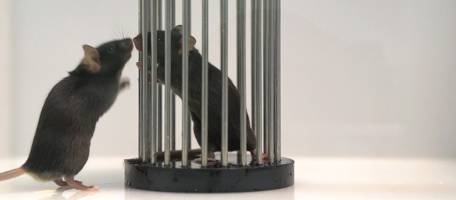
By deciphering the neural mechanisms involved in food consumption, UNIGE scientists demonstrate the importance of social interactions when choosing food and, more broadly, when adapting to the environment. How do we choose our food? By studying the neurobiological mechanisms involved in food choices of rodents, neuroscientists at the University of Geneva (UNIGE), Switzerland, have identified the important and lasting influence that peers can have on eating habits.
Environment - 05.06.2019

An international team of researchers has combined demographic projections and climate scenarios across Africa for the first time. Their results reveal the number of people who will potentially be exposed to extreme temperatures. Climate change, population growth and urbanisation are instrumental in increasing exposure to extreme temperatures.
Life Sciences - Health - 27.05.2019

Researchers from UNIGE and HUG demonstrate how music specially composed for premature infants strengthens the development of their brain networks and could limit the neurodevelopmental delays that often affect these children. In Switzerland, as in most industrialized countries, nearly 1% of children are born "very prematurely", i.e. before the 32nd week of pregnancy, which represents about 800 children yearly.
Health - Social Sciences - 22.05.2019

Researchers at UNIGE have carried out the first nationwide study on semen quality of young Swiss men. And their verdict? Only 38% of men have semen parameter values above the norms set by World Health Organization for fertile men. Over the last fifty years, a marked decrease in sperm count has been observed in the Western World.
Health - Life Sciences - 21.05.2019
The insulin under the influence of light
By understanding how day-night alternation affects the effect of insulin in tissues, researchers at UNIGE are highlighting the role of circadian rhythms in diabetes. The disruption of our internal clocks seems to play a significant role in the explosion of metabolic diseases observed in recent decades, and particularly of diabetes.
Pharmacology - Health - 21.05.2019

UNIGE researchers have developed a cell co-culture platform that can reproduce a patient's tumour in 3D and test the best treatment combinations for its specific case in just five days. Why doesn't the same treatment work in the same way for every patient? How can a drug's performance be optimised without causing side effects due to an excessive dosage? In an attempt to answer these questions, researchers at the University of Geneva (UNIGE), Switzerland, have devised a cell co-culture platform that reproduces a patient's tumour structure in 3D.
Life Sciences - Health - 09.05.2019

By deciphering the genetic programmes of neurons of the cerebral cortex, Swiss and Belgian researchers unravel the mechanisms controlling the genesis of cells in one of the most essential parts of our brain. The cortex is a complex brain region that allows us to perceive the world and interact with objects and beings around us.
Life Sciences - Health - 02.05.2019

Scientist at the Universities of Geneva and Lausanne, Switzerland, designed a framework to analyse gene regulation, and offer a model to better understand the role of the non-coding portion of the genome in disease risk. More than genes themselves, how, where and when they are expressed determine our biological traits - our phenotypes.
Politics - Social Sciences - 02.05.2019

The number of immigrants the Swiss are willing to take in on an annual basis depends greatly on the quantified proposal (i.e. high or low) put forward to them - as recently revealed by a team of UNIGE researchers.
Astronomy & Space - 17.04.2019

A team of astronomers led by the UNIGE has discovered five new planets with periods of revolution between 15 and 40 years. It took 20 years of regular observations to achieve this result. Over 4000 exoplanets have been discovered since the first one in 1995, but the vast majority of them orbit their stars with relatively short periods of revolution.
Economics - 16.04.2019

UNIGE researchers have found that we are more confident in our decisions - and execute our choices more quickly - if we're chasing a reward.. but we're more flexible when trying to avoid being punished. Does the potential to win or lose money influence the confidence one has in one's own decisions' Does either of them help learn more quickly? Researchers from the University of Geneva (UNIGE), Switzerland, in collaboration with the University of Amsterdam and ENS Paris, investigated confidence bias in a learning context through a system of monetary punishment and reward.
Life Sciences - Earth Sciences - 15.04.2019

UNIGE researchers have found that bacteria can survive in the sediments of the Dead Sea at a depth of over 400 metres in spite of extreme conditions. Studying organic matter in sediments helps shed light on the distant past. What was the climate like? What organisms populated the Earth? What conditions did they live in? Researchers from the University of Geneva (UNIGE), Switzerland, and the University of Lyon, France, have examined the sediments in the Dead Sea, where the salinity is without compare, making it one of the most hostile environments on the planet.
Health - Pharmacology - 28.03.2019

Researchers from UNIGE and UNIL demonstrate the efficacy of a well-known antibiotic in treating a particularly fatal form of breast cancer, offering hope for targeted therapy. Of the three major subtypes of breast cancer, the «triple negative» is the most lethal: half of all breast cancer deaths are attributed to it, whereas it accounts for only about 15% of incidences of breast cancer.
Life Sciences - Environment - 26.03.2019
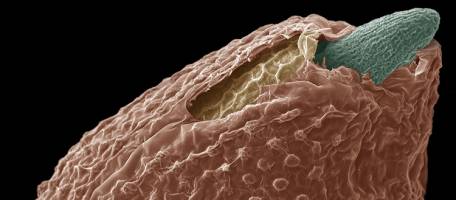
UNIGE researchers demonstrate that maternal and environmental control of seed dormancy is carried out through novel epigenetic mechanisms. Seeds remain in a dormant state - a temporary blockage of their germination - as long as environmental conditions are not ideal for germination. The depth of this sleep, which is influenced by various factors, is inherited from their mother, as researchers from the University of Geneva (UNIGE), Switzerland, had previously shown.
Life Sciences - 20.03.2019

UNIGE researchers show that, for the brain, sounds and vibrations are ultimately quite similar. This would explain why vibrations are sometimes as unpleasant as noise pollution. We all know the feeling of a mobile phone vibrating in our hands when announcing an incoming call. If we perceive these vibrations so clearly, it is due to specialized receptors that transduce them into neural signals sent to our brain.
Health - Life Sciences - 27.02.2019

Researchers at UNIGE have successfully demonstrated that electroencephalography can be used to accurately study activity in the deep areas of the brain. The way is now open to understanding how these regions interact with other parts of the brain for developing appropriate treatments following dysfunction.
Health - Life Sciences - 13.02.2019

UNIGE researchers demonstrate the ease of some human pancreatic cells to make insulin. In diabetes, this type of cell conversion could compensate for the loss or dysfunction of cells that naturally produce this hormone. A world first. Biology textbooks teach us that adult cell types remain fixed in the identity they have acquired upon differentiation.


