

Resilient healthcare infrastructure
In 2020, the ICRC, ETH Zurich and EPFL launched Engineering for Humanitarian Action (EHA), an initiative that uses innovative tech and scientific expertise to help those in need. Here we highlight 6 of the roughly 30 projects - some completed, others just getting underway.
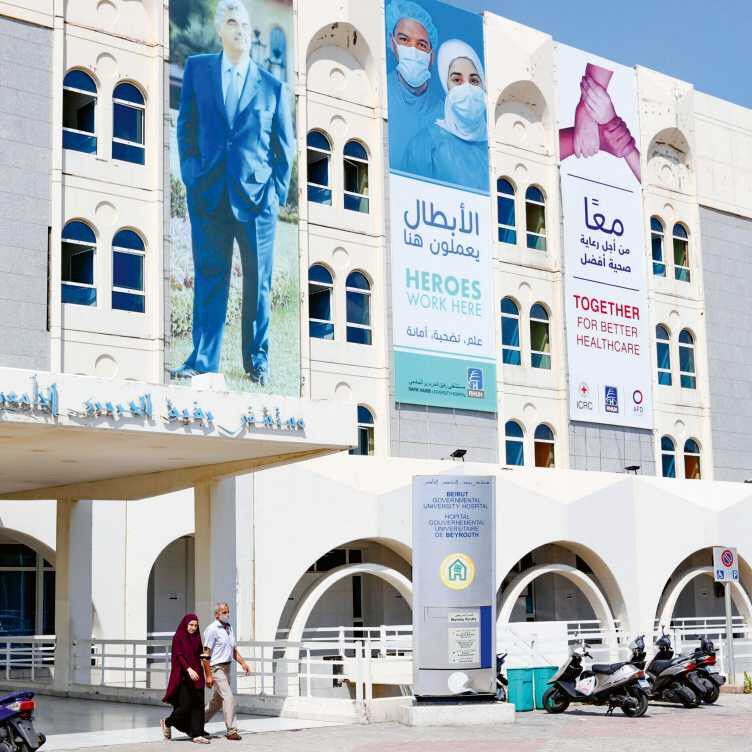
Medical facilities are frequent targets of attacks in conflict regions. Rather than focusing solely on traditional risk analysis, Building Resilience in Health Infrastructure aims to strengthen the ability of healthcare infrastructure to recover after disruption. With Rafik Hariri University Hospital in Beirut as a case study, the team examined the resilience of various health infrastructure components, including building services, supporting structures, and social and technical processes. A rapid resilience assessment measured the system’s adaptive capacity before simulating potential responses. By improving communication, planning and decision-making, this approach secures better patient outcomes and can also be adapted for broader use in other ICRC-run facilities.
Early warning for earthquakes
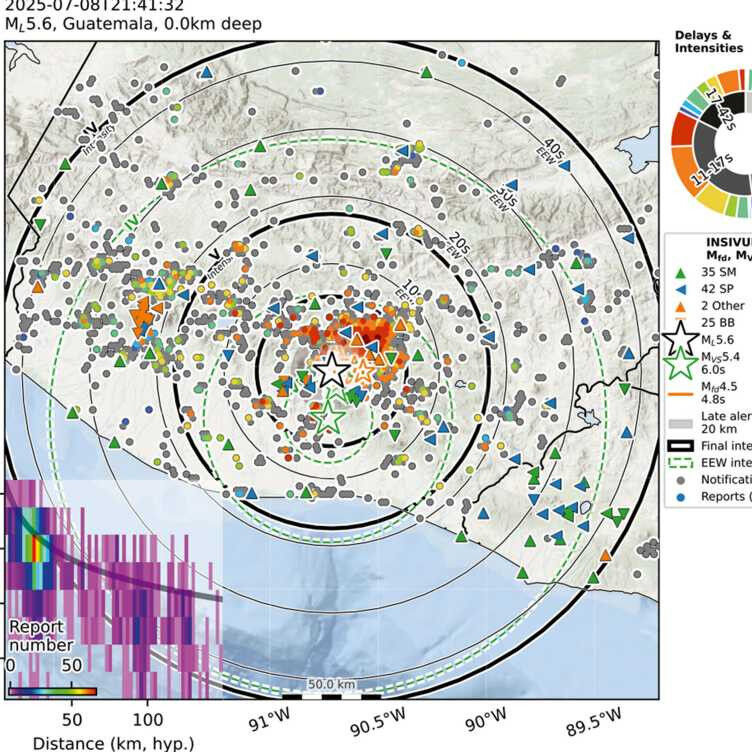
With its shaky infrastructure and frequent seismic activity, Guatemala is extremely vulnerable to earthquake damage. Working in tandem with the National Monitoring Agency, the Earthquake Early Warning in Guatemala project has helped develop the country’s first public earthquake early-warning (EEW) system. The EEW system sends alerts to mobile phones shortly before the first tremors are felt, giving people time to take cover and thereby reducing casualties. It also includes new tools for reporting damage, enabling a more rapid assessment of an earthquake’s impact. As well as raising public awareness, the system helps authorities make EEW part of their emergency and disaster planning.
Detecting crises with nightlight
Planning medical supplies with AI
Early detection of humanitarian crises can be challenging, especially in remote or inaccessible regions, where traditional monitoring methods often fall short. To tackle this problem, the Humanitarian Crisis Detection with Nightlight project uses satellite-based nighttime light data, which is available in near real time and at no cost. Changes in nighttime light reveal shifts in living conditions and human activity. The project combines this data with deep-learning techniques and qualitative research methods to automatically identify unusual patterns. This enables faster crisis detection and more timely planning of relief measures.
Helping malnourished children

In 2023, an AI-based tool for planning the supply of medical products helped the ICRC save over 4 million US dollars. The follow-up project, AI for Forecasting and Demand Planning, aims to unlock further benefits for humanitarian organisations through the deployment of AI tools that have already proven effective in commercial supply chains. Researchers will analyse historical order data from ICRC health programmes in order to better forecast its need for medical supplies. Using machine learning, the project partners will then build a predictive model to improve the accuracy of future forecasts - a vital asset for the work of humanitarian organisations, which work in fragile contexts where resources are scarce and lives are at stake.
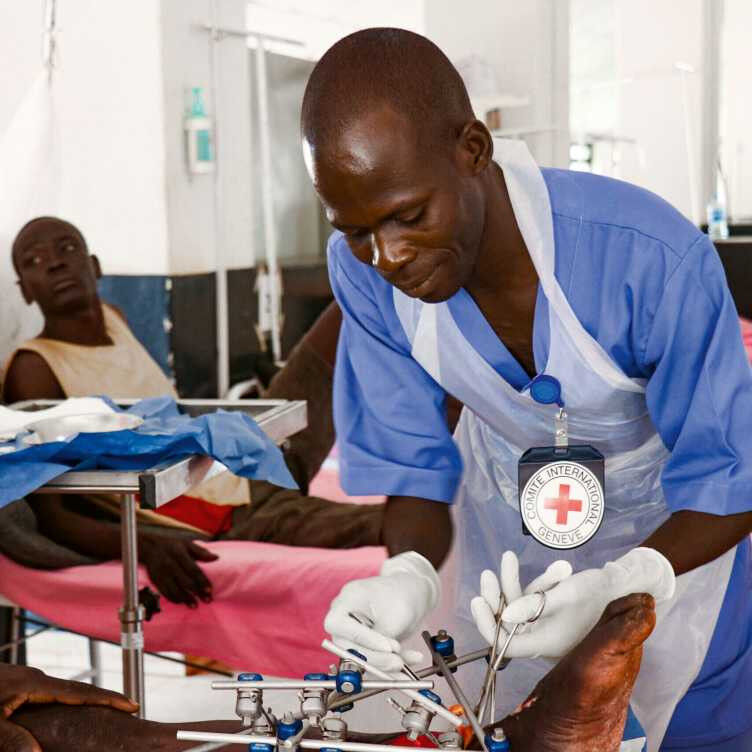
Large swathes of Africa are facing a severe food crisis, with the prospect of a rise in malnutrition and anaemia. Humanitarian organisations are responding by distributing ready-to-use therapeutic foods (RUTFs) - yet awareness and acceptance of these products remain limited. Maximizing RUTF Benefits for Malnourished Children aims to boost RUTF acceptance in Kenya by means of information and education campaigns. It also addresses concerns regarding iron accumulation and the risks of excess iron for undernourished children. This dual approach seeks to improve the safety, effectiveness and uptake of RUTFs, thereby helping to combat malnutrition and anaemia.
Protecting sensitive data
Secure Infrastructure for Humanitarian Organisations focuses on safeguarding highly sensitive data. As digitalisation increases, the data held by humanitarian organisations is becoming a target of state-sponsored cyberattacks. With trust the key to gaining access to war zones and affected populations, confidentiality is essential for humanitarian organisations. This project will create a cloud environment that is more resilient to cyberattacks, enabling the ICRC to continue to play its legally protected role and fulfil its mandate of neutrality and independence.