


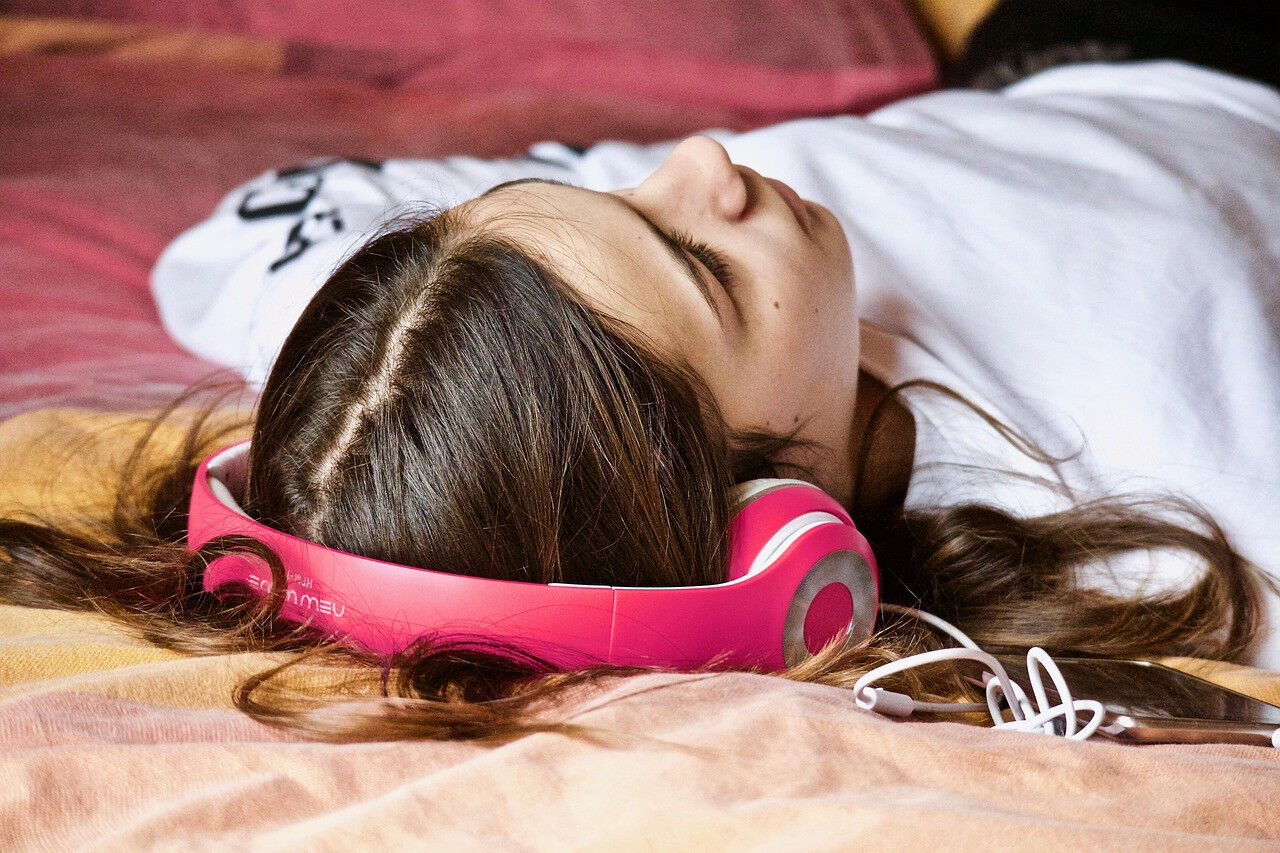
Even during sleep, the brain does not simply switch off, but continues to process external stimuli - albeit to a lesser extent. Listening to music can trigger strong emotional reactions, but whether this is also the case during sleep was previously unclear. Researchers have now taken an important first step and shown that the sleeping brain can indeed distinguish between different musical chords
In the sleep lab
Professor Björn Rasch and his team at the University of Fribourg investigated this question in a recently published study funded by the Swiss National Science Foundation (SNSF) in the journal Sleep Advances. In this so-called proof-of-concept study, the researchers tested whether the sleeping brain can distinguish between different categories of musical chords.47 young adults participated While they slept, the research team played major, minor and dissonant chords while an EEG recorded the participants’ electrical brain activity
Musical chords are perceived differently during sleep
The analysis of brain responses to the chords (event-related potentials; ERPs) revealed clear and significant differences between the three chord categories. Major chords generated the strongest amplitudes around 800 milliseconds after the start of the chord. Minor chords elicited medium amplitudes, while dissonant chords elicited the lowest amplitudes. It is noteworthy that people with experience in playing a musical instrument showed a stronger distinction between the chord categories during sleep than participants without musical training.The researchers conclude that the different processing of individual musical chords is maintained during sleep and is shaped by both harmonic characteristics and a person’s musical expertise within the framework of Western musical conventions. Future studies should investigate whether longer and more complex harmonic structures - such as chord progressions or entire pieces of music - are processed in a similarly differentiated way by the sleeping brain and whether the presentation of emotionally positive musical elements during sleep can contribute to improving sleep quality