





news
Swiss Federal Institute of Technology Lausanne, EPFL
Results 741 - 760 of 1376.
Social Sciences - 20.03.2020
How digital humanities can help in a pandemic
With the onset of the COVID-19 outbreak, there is a race against the clock to implement science-based measures to protect society's most vulnerable populations. Public engagement with data has never been more urgent, and as EPFL professor Robert West explains, digital humanities research has a key role to play.
Environment - Innovation - 20.03.2020

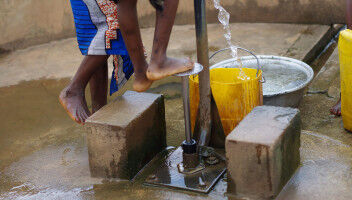
The Tech4Dev program connects EPFL researchers with NGOs in order to develop technologies able to address specific needs in the global South and withstand local conditions. Four projects have been awarded grants following the first call for proposals. The global North and South have differing climates, economies and infrastructure.
Health - Life Sciences - 12.03.2020
Gold nanoparticles uncover amyloid fibrils
EPFL scientists have developed powerful tools to unmask the diversity of amyloid fibrils, which are associated with Alzheimer's disease and other neurodegenerative disorders. The scientists made the breakthrough by developing gold nanoparticles that combine with cryogenic transmission electron microscopy, to provide rapid and unprecedented images of fibrils.
Computer Science - Physics - 10.03.2020

What do you get when you place a thin film of perovkite material used in solar cells on top of a magnetic substrate? More efficient hard drive technology. EPFL physicist László Forró and his team pave the way for the future of data storage. "The key was to get the technology to work at room temperature," explains László Forró, EPFL physicist.
Computer Science - Physics - 03.03.2020

An EPFL student has shown how deep learning can be used to analytically connect digital simulations and experimental results more quickly and reliably than conventional methods. This work, which the student carried out for his semester project, was recently published in Physical Review Letters. It's not unusual for scientists to compare experimental results with the predictions made by theoretical models.
Chemistry - Mechanical Engineering - 28.02.2020

Researchers at EPFL have developed a novel way to increase fuel-cell efficiency and lifespan, using a recirculation fan driven by a steam turbine that runs on steam-lubricated bearings. Solid oxide fuel cells, or SOFCs, are devices that produce both electricity and heat by oxidizing a fuel such as natural gas or biogas.
Physics - Health - 26.02.2020
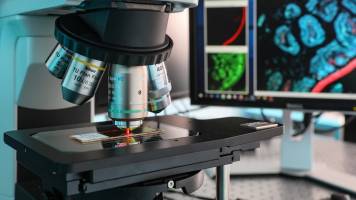
EPFL scientists have developed a new type of microscope slide that can boost the amount of light in fluorescence microscopy by a factor of up to 25. These new slides can both amplify and direct light, making them ideal for applications ranging from early-stage diagnosis to the rapid archiving of pathology samples.
Mechanical Engineering - 21.02.2020
Scientists finally confirm a 50-year-old theory in mechanics
An experiment by EPFL researchers has confirmed a theory that has been used in mechanics for over half a century - despite never having been fully validated. The team could now use the theory in bolder and more innovative ways in their quest to develop ever better energy systems. Some theories are widely used even though they have never been experimentally validated.
Life Sciences - Health - 20.02.2020
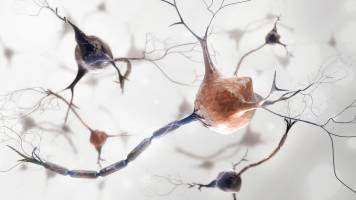
In a breakthrough for Parkinson's disease, scientists at EPFL have reconstructing the process by which Lewy bodies form in the brain of patients. The study offers new insights into how Parkinson's disease begins and evolves, and opens up a set of potential new treatment targets. The brains of patients with Parkinson's disease contain distinct, characteristic structures called 'Lewy bodies', after Friedrich Heinrich Lewy who first reported their discovery in 1912.
Life Sciences - Computer Science - 19.02.2020

Scientists from EPFL (Switzerland) have extended performance modelling techniques to the field of computational brain science. In a paper published in Neuroinformatics, they provide a quantitative appraisal of the performance landscape of brain tissue simulations, and analyze in detail the relationship between an in silico experiment, the underlying neuron and connectivity model, the simulation algorithm and the hardware platform being used.
Health - Life Sciences - 18.02.2020
Fruit flies have a radical strategy for dealing with free radicals
Flies belonging to the genus Drosophila combat oxidative stress by removing excess fat from their blood. This remarkable mechanism proves that evolution has no shortage of answers to a problem that affects all life on Earth. Oxidative stress affects all living organisms, and the damage it causes is believed to play a part in cancer, diabetes, Alzheimer's disease and a number of other health conditions.
Environment - 18.02.2020
Climate change will disrupt existing energy systems
As climate changes and extreme weather events become more commonplace, we will need to fundamentally rethink how we produce renewable energy. Researchers at EPFL have developed a simulation method to reduce the adverse influences due to climate-related uncertainties in the energy sector and guarantee robust operation of energy infrastructure during extreme climate events.
Life Sciences - Health - 13.02.2020
Printing tiny, high-precision objects in a matter of seconds
Researchers at EPFL have developed a new, high-precision method for 3D-printing small, soft objects. The process, which takes less than 30 seconds from start to finish, has potential applications in a wide range of fields, including 3D bioprinting. It all starts with a translucent liquid. Then, as if by magic, darker spots begin to form in the small, spinning container until, barely half a minute later, the finished product takes shape.
Physics - Materials Science - 12.02.2020

Physicists from Switzerland and Germany have unveiled fingerprints of the long-sought particle known as Mahan exciton in the room temperature optical response of the popular methylammonium lead halide perovskites. The optical properties of semiconductors are governed by the so-called 'excitons', which are bound pairs of negative electrons and positive holes.
Health - Physics - 11.02.2020

New research has shed light on how mycobacteria grow. This discovery could explain why some members of this family of single-celled organisms, which includes the bacillus that causes tuberculosis, can develop resistance to antibiotics For centuries, scientists have peered down the lens of a microscope and watched as bacteria - some circular, others rod-shaped - multiply before their eyes.
Pharmacology - Health - 10.02.2020
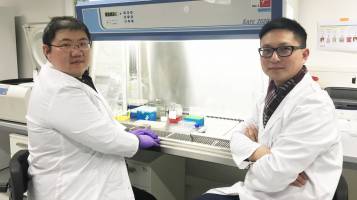
The only therapeutic cancer vaccine available on the market has so far showed very limited efficacy in clinical trials. EPFL researchers are currently working on an alternative. They have developed a platform that allows a cancer vaccine to be delivered to a precise location and stimulate the immune system in a safe way - thereby overcoming one of the two obstacles to creating an effective vaccine.
Physics - Materials Science - 07.02.2020

Researchers at EPFL and MARVEL have developed a novel formulation that describes how heat spreads within crystalline materials. This can explain why and under which conditions heat propagation becomes fluid-like rather than diffusive. Their equations will make it easier to design next-generation electronic devices at the nanoscale, in which these phenomena can become prevalent.
Life Sciences - Health - 06.02.2020
Breathing may change your mind about free will
Is free will just an illusion? For decades, a signal from the brain called the "readiness potential" has been interpreted to mean that free will may be an illusion. Backed by signals from the brain and lungs, EPFL scientists have discovered that the readiness potential is in fact coupled to breathing and that acts of free will happen as you exhale - providing an unexpected perspective on free will.
Environment - 05.02.2020
Our carbon footprint is highly impacted by how we live
Swiss households have excessively large carbon footprints. However, that footprint depends more on socio-economic status than location - whether the household is in the countryside or the city - because people travel more in the country but consume more in cities. Swiss households enjoy a high standard of living, but this results in a large carbon footprint.
Pharmacology - Health - 03.02.2020
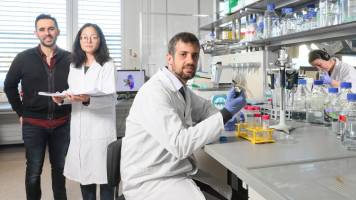
CAR T-cell therapy is a highly promising treatment strategy for tumors, but is associated with life-threatening side effects. Researchers at EPFL, UNIL and CHUV have developed a new way to "switch off" the therapy when a cancer patient's life is in danger, paving the way for safer immunotherapy approaches to target solid tumors.


