












news
History & Archeology
Results 1 - 20 of 53.
Agronomy & Food Science - History & Archeology - 21.01.2026
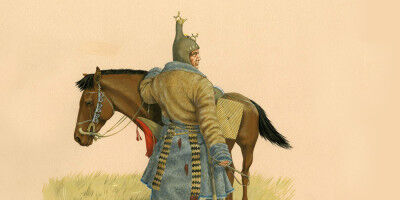
Researchers have deciphered the diet of an important nomadic people in Eastern European history. By analyzing dental calculus, they have provided the first direct evidence that the diet of the Scythians included milk from various ruminants and horses. For centuries, the Scythians have been regarded as a nomadic horsemen people who roamed the vast steppes of Eurasia during the Iron Age.
Environment - History & Archeology - 04.09.2025
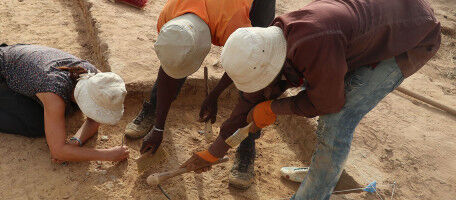
A team from the University of Geneva's discovery of a prehistoric workshop in Senegal sheds light on the little-known hunter-gatherer presence in West Africa. What do we know about the last hunter-gatherers who lived in West Africa? While these prehistoric populations have been extensively studied in Europe and Asia, their presence in this vast region - covering 6 million square kilometres, more than ten times the size of France - remains poorly documented.
Agronomy & Food Science - History & Archeology - 20.08.2025
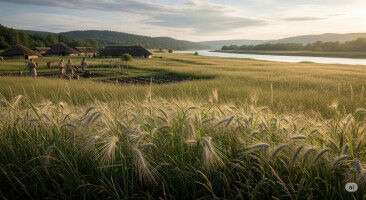
A study from the University of Geneva shows that European hunter-gatherers and Anatolian farmers coexisted and gradually interbred. The transition to agriculture in Europe involved the coexistence of hunter-gatherers and early farmers migrating from Anatolia. To better understand their dynamics of interaction, a team from the University of Geneva , in collaboration with the University of Fribourg and Johannes Gutenberg University, Mainz, combined computer simulations with ancient genetic data.
History & Archeology - 31.07.2025
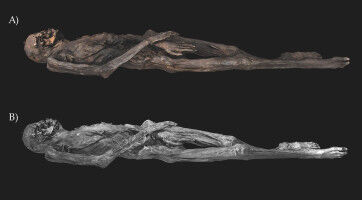
An international research team led by Gino Caspari from the University of Bern has analyzed tattoos on a Siberian ice mummy that is over 2000 years old. For the study, the team used high-resolution near-infrared photography and collaborated with a contemporary tattoo artist. The results suggest that tattooing was a similar craft in prehistoric Siberian society as it is today.
Health - History & Archeology - 11.03.2025
Swiss Women Had More Children at Start of Coronavirus Pandemic
Researchers at UZH have studied the impact of pandemics on the birth rate in Switzerland for the first time. While the number of births unexpectedly rose initially during COVID-19, it fell significantly during previous pandemics in history. Birth rates are currently declining in Switzerland, just like they are in other European countries.
Environment - History & Archeology - 19.08.2024
Dangerous demand: how humans threaten biodiversity
The shark has survived numerous environmental disasters, but now it may be losing the battle against its most dangerous rival: the human being. A new economic analysis shows the conditions under which high demand can lead not only to the extinction of a single species, but also to a progressive, accelerating mass extinction.
History & Archeology - Research Management - 02.07.2024

A team of Swiss and Greek archaeologists has completed the fourth season of excavations on the wreck of Antikythera, uncovering part of the ship's hull. The 2024 expedition to the Antikythera wreck, carried out from 17 May to 20 June 2024, has led to a breakthrough in the 2021-2025 research program orchestrated by the Swiss School of Archaeology in Greece (ESAG) and supervised by the Ephorate of Underwater Antiquities of the Hellenic Ministry of Culture and Sports.
History & Archeology - 13.06.2024
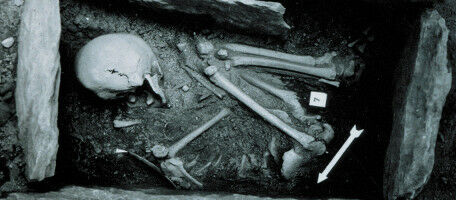
A team from the University of Geneva shows that all the people who lived and were buried in Barmaz necropolises (Switzerland) during the Neolithic period had the same access to food resources. Using isotope geochemistry, a team from the University of Geneva has uncovered new information about the Barmaz necropolis in Valais (Switzerland): 14% of the people buried 6,000 years ago at this site were not locals.
History & Archeology - 05.06.2024
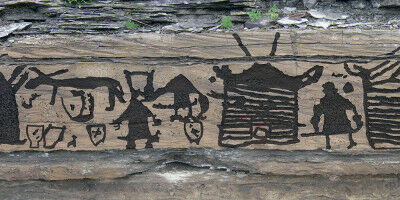
Bronze cauldrons were used by the inhabitants of the Mongolian steppe around 2,700 years ago to process animal blood and milk. This is shown by a protein analysis of archaeological finds from this period. Scattered across the Eurasian steppe, archaeologists repeatedly come across metal cauldrons from the Bronze Age during excavations.
History & Archeology - Chemistry - 30.05.2024
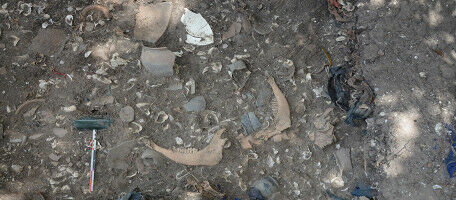
Thanks to a new multidisciplinary approach, a team from the University of Geneva and the CNRS has traced the dietary practices of a Senegalese village. This method will be used for other archaeological digs. Food is more than just a biological need. A veritable marker of culture and identity, it encompasses a wide range of practices that allow us to "read" a region, a country or a social group.
History & Archeology - Earth Sciences - 21.05.2024

Researchers at the University of Bern have for the first time been able to pin down a prehistoric settlement of early farmers in northern Greece dating back more than 7,000 years to the year. For this they combined annual growth ring measurements on wooden building elements with the sudden spike of cosmogenic radiocarbon in 5259 BC.
Life Sciences - History & Archeology - 03.05.2024
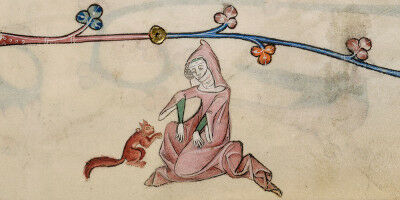
Researchers at the University of Basel and the University of Zurich have been able to prove that British squirrels carried leprosy bacteria as early as the Middle Ages. Further results revealed a link between the pathogens found in the medieval rodents and those in the local human population during that period.
Environment - History & Archeology - 24.04.2024

A team of researchers from EPFL, UNIL, and Unisanté have published a report that goes through about the legacy of pollution from a trash incinerator that burned in the Lausanne Vallon neighborhood from 1958 to 2005.
Earth Sciences - History & Archeology - 22.04.2024
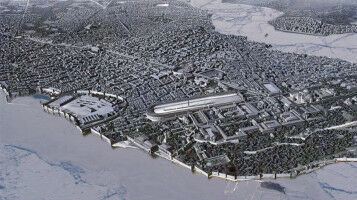
Icebergs on the Bosporus and a frozen Black Sea: an international study by the University of Bern with the participation of the Austrian Academy of Sciences shows how volcanic eruptions on Iceland influenced the European climate in the early Middle Ages and led to severe winter cooling anomalies. It was one of the coldest winters the region has ever experienced: In 763, large parts of the Black Sea froze over and icebergs were sighted on the Boporus.
History & Archeology - Religions - 18.04.2024

On behalf of Raiffeisen Switzerland Cooperative, researchers examined the beginnings of the Raiffeisen movement in Switzerland. Their focus was on antisemitism as well as Raiffeisen during National Socialism. Raiffeisen Group in Switzerland today has 219 cooperative Raiffeisen banks. It is based on the cooperative movement started by F.W. Raiffeisen in Germany around 1860.
Environment - History & Archeology - 26.01.2024

Ozone causes visible damage to the foliage of European deciduous trees, as shown by a large-scale study led by the Swiss Federal Institute for Forest, Snow and Landscape Research WSL. The researchers found that some plants under certain environmental condition react particularly sensitively to ozone, which is toxic at ground level.
Health - History & Archeology - 24.01.2024

Researchers at the Universities of Basel and Zurich have discovered the genetic material of the pathogen Treponema pallidum in the bones of people who died in Brazil 2,000 years ago. This is the oldest verified discovery of this pathogen thus far, and it proves that humans were suffering from diseases akin to syphilis - known as treponematoses - long before Columbus's discovery of America.
Health - History & Archeology - 12.12.2023

Many reports from antiquity about outbreaks of plague mention Egypt as the source of pestilences that reached the Mediterranean. But was this really the case? Researchers from the University of Basel are conducting a critical analysis of the ancient written and documentary evidence combined with archaeogenetic findings to add some context to the traditional view.
History & Archeology - 21.11.2023

Recent research has shown that engravings in a cave in La Roche-Cotard (France), which has been sealed for thousands of years, were actually made by Neanderthals. This research was performed by Basel archaeologist Dorota Wojtczak together with a team of researchers from France and Denmark, whose findings reveal that the Neanderthals were in fact the first humans with an appreciation of art.
History & Archeology - Life Sciences - 18.10.2023

By analyzing genomes up to 40,000 years old, a team from the University of Geneva has traced the history of migrations between Sapiens and Neanderthals. About 40,000 years ago, Neanderthals, who had lived for hundreds of thousands of years in the western part of the Eurasian continent, gave way to Homo sapiens, who had arrived from Africa.


