






news
University of Bern
Results 21 - 40 of 341.
Astronomy & Space - Environment - 08.10.2025

On Mars, dust devils and winds reach speeds of up to 160 km/h and are therefore faster than previously assumed: This shows a study by an international research team led by the University of Bern. The researchers analyzed images taken by the Bernese Mars camera CaSSIS and the stereo camera HRSC with the help of machine learning.
Astronomy & Space - Earth Sciences - 22.09.2025

The Bernese Mars camera CaSSIS aboard ESA's ExoMars Trace Gas Orbiter reveals the glowing atmosphere of Mars in unprecedented detail. Slices from the edge of Mars reveal a layered atmosphere of delicate complexity. A European spacecraft has captured a luminous mille-feuille of dust enveloping the Red Planet in unprecedented detail.
Astronomy & Space - Innovation - 09.09.2025
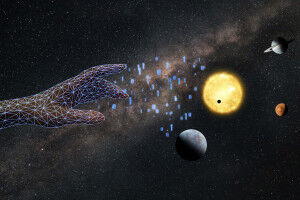
Researchers from the University of Bern have developed an Artificial Intelligence (AI) model capable of predicting the architecture of planetary systems and subsequently inferring the presence of yet-to-be-discovered planets. They use the so-called Transformer architecture which is the basis of the Large Language Models powering tools like the recently launched Swiss model Apertus or chatbots such as ChatGPT.
Astronomy & Space - Earth Sciences - 28.08.2025
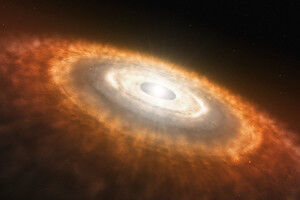
After the formation of the Solar System, it took a maximum of three million years for the chemical composition of the Earth's precursor to be completed. This is shown by a new study by the Institute of Geological Sciences at the University of Bern. At this time, however, there were hardly any elements necessary for life such as water or carbon compounds on the young planet.
History & Archeology - 31.07.2025
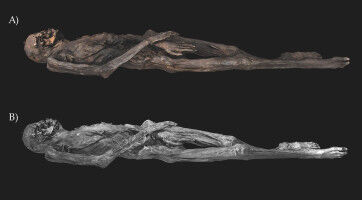
An international research team led by Gino Caspari from the University of Bern has analyzed tattoos on a Siberian ice mummy that is over 2000 years old. For the study, the team used high-resolution near-infrared photography and collaborated with a contemporary tattoo artist. The results suggest that tattooing was a similar craft in prehistoric Siberian society as it is today.
Environment - Life Sciences - 30.07.2025

An international research group involving the University of Bern has discovered that soil microorganisms shift their seasonal rhythm more than plants in response to climate warming. The resulting discrepancy between plants and microorganisms could disrupt essential ecosystem processes and jeopardize their functionality.
Life Sciences - Chemistry - 25.07.2025

Researchers from the University of Bern, in collaboration with researchers from Australia and New Zealand, have recreated an important process in the laboratory that enables organisms to obtain energy directly from components found in air. This confirms that certain organisms such as bacteria can actually live on air alone, without relying on sunlight or other energy sources.
Astronomy & Space - Physics - 23.07.2025

Where does the moon's exosphere come from? A study by the Vienna University of Technology, in which the University of Bern is involved and which was carried out on real moon rock, shows that the effect of charged solar wind particles on the moon has been massively overestimated: The effect of charged solar wind particles on the moon has so far been massively overestimated.
Life Sciences - Health - 30.06.2025

A new study led by researchers from the Institute of Virology and Immunology (IVI) and the University of Bern in collaboration with the Lausanne University Hospital and the Spiez Federal Laboratory shows that the monkeypox virus can spread efficiently in brain organoids, causing neuronal cell death.
Health - Life Sciences - 27.06.2025

Researchers from the University of Bern, Inselspital, Bern University Hospital and Charité - Universitätsmedizin Berlin have discovered that the composition of our diet in early life can strengthen the immune system. Using a mouse model, the researchers showed that certain food components increase the production and diversity of antibodies in the intestine, regardless of the existing intestinal microbiota.
Astronomy & Space - Earth Sciences - 20.06.2025
Tidal forces from the Sun could have deformed cliffs on Mercury
A new study by researchers of the University of Bern shows that the hilly surface of Mercury could be influenced not only by the cooling and contraction of the planet, but also by the tidal forces of the Sun. Future analysis will draw on new data from the BepiColombo mission, which is currently on its way to Mercury.
Physics - 10.06.2025

The US research center for particle physics "Fermilab" recently published the results of a groundbreaking experiment with muons - particles that play a central role in the so-called standard model of particle physics - for the third time. At the same time, a new study on complex theoretical calculations of the so-called magnetic dipole moment of the muon was published under the leadership of researchers from the University of Bern.
Health - 27.05.2025
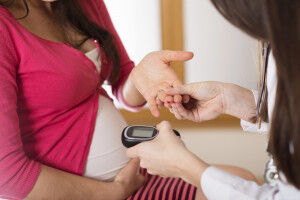
In a recent study, researchers from the University Gynecology Clinic at the Inselspital, the University Hospital of Berne and the University of Berne investigated whether continuous real-time blood glucose measurement using a sensor could be used as an alternative to conventional finger-prick blood glucose measurement in patients with gestational diabetes.
Astronomy & Space - Computer Science - 19.05.2025

A new study led by the University of Bern and Brown University in the U.S. casts doubt on one of the most tantalizing clues that water might be flowing on present-day Mars. Researchers analyzed a global database of 500,000 enigmatic streaks that occur on steep Martian slopes, concluding that they're most likely caused by dry processes rather than liquid flow.
Astronomy & Space - Earth Sciences - 14.05.2025

Several tectonic processes are occurring beneath the surface of Venus, according to a new study led by researchers from the University of Bern's Center for Space and Habitability (CSH) and NASA. They found that many of the numerous "coronae" scattered all'over Venus' globe are associated with gravity field perturbations, hinting at the sub-surface tectonic processes.
Health - Life Sciences - 09.05.2025
How disrupted cell processes promote cancer
Researchers at the University of Bern, together with scientists from Stanford University and the European Molecular Biology Laboratory (EMBL), have discovered a new cellular mechanism that controls the stability of messenger RNA (mRNA) in cells. When this mechanism is disrupted, tumors can grow more quickly.
Health - Innovation - 29.04.2025
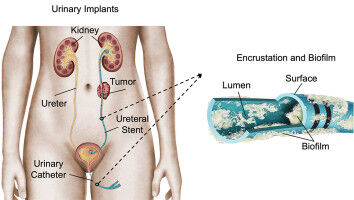
Researchers from the University of Bern, Inselspital, Bern University Hospital, and ETH Zurich have developed an innovative technology which can clean implanted medical devices such as ureteral stents and catheters non-invasively, using ultrasound activation through the skin. This could significantly improve the quality of life of patients and at the same time reduce the financial burden on the healthcare system.
Astronomy & Space - 09.04.2025

A team from the University of Bern and the National Centre of Competence in Research (NCCR) PlanetS has developed a machine learning model that predicts potential planetary systems with Earth-like planets. The model could significantly accelerate and thus revolutionize the future search for habitable planets in the universe.
Health - Pharmacology - 03.04.2025
AI-supported detection of cardiac abnormalities
Researchers at the Inselspital, Bern University Hospital and the University of Bern have developed an AI-based tool that detects and classifies abnormalities of the coronary arteries in CT images with high precision. This could significantly improve the diagnosis and treatment of rare heart diseases.
Life Sciences - Health - 01.04.2025

Researchers at the University of Bern have analyzed a mechanism by which the coronavirus manipulates human cells to replicate itself. They show that a coronavirus protein, which is central to infection, has two independent functions. Only one function however occurs in several species of coronaviruses.


