









news
University of Bern
Results 61 - 80 of 341.
Pharmacology - 26.09.2024
Kidney stones are often excreted without pain
A research team led by Inselspital, Bern University Hospital, and the University of Bern has shown that a high percentage of kidney stones are excreted without symptoms. This finding should be incorporated into the future treatment of patients with recurrent kidney stones. Kidney stones are caused by the deposition of minerals and salts in the kidneys and can lead to severe pain when passing through the urinary tract.
Physics - Innovation - 14.08.2024

In the USA, the world's most extensive neutrino experiment, DUNE, is being built at Fermilab. The University of Bern is playing a key role in this by developing the "ND-LAr" detector, which features new technology and an innovative design to observe neutrinos. The prototype of the "ND-LAr" has now been successfully tested and has detected its first neutrinos.
Astronomy & Space - Chemistry - 30.07.2024

An international team of researchers led by the University of Bern has used observation-based computer modelling to find an explanation for how macromolecules can form in a short time in disks of gas and dust around young stars. These findings could be crucial for understanding how habitability develops around different types of exoplanets and stars.
Physics - Astronomy & Space - 16.07.2024

A team including researchers from the Laboratory for High Energy Physics at the University of Bern has successfully measured the interaction rates of neutrinos at unprecedented energies using the Large Hadron Collider (LHC) at CERN. A better understanding of these elusive elementary particles can help answer the question of why there is more matter than antimatter in the universe.
Life Sciences - Environment - 11.07.2024

Cichlids living in groups tend to turn a blind eye to their relatives shirking their duty to help as desired in various tasks in the group, such as caring for the brood. Animals that are not related to them don't seem to be offered the same lenient treatment. Researchers at the University of Bern have now been able to prove the existence of this form of "nepotism" in fish for the first time in experiments.
Astronomy & Space - Earth Sciences - 10.06.2024

For the first time, water frost has been detected on the colossal volcanoes on Mars, which are the largest mountains in the Solar System. The international team led by the University of Bern used high-resolution color images from the Bernese Mars camera, CaSSIS, onboard the European Space Agency's ExoMars Trace Gas Orbiter spacecraft.
History & Archeology - Earth Sciences - 21.05.2024

Researchers at the University of Bern have for the first time been able to pin down a prehistoric settlement of early farmers in northern Greece dating back more than 7,000 years to the year. For this they combined annual growth ring measurements on wooden building elements with the sudden spike of cosmogenic radiocarbon in 5259 BC.
Astronomy & Space - Earth Sciences - 08.05.2024

Researchers using NASA/ESA/CSA James Webb Space Telescope may have detected an atmosphere surrounding 55 Cancri e, a rocky exoplanet 41 light-years from Earth. This is the best evidence to date for a rocky planet atmosphere outside our solar system. Brice-Olivier Demory, Professor of Astrophysics at the University of Bern and member of the the National Centre of Competence in Research (NCCR) PlanetS, was part of the international research team that just published the results in Nature.
Life Sciences - Environment - 26.04.2024

Cichlid fishes exhibit differing degrees of curiosity. The cause for this lies in their genes, as reported by researchers from the Universities of Bern and Basel in the journal Science. This trait influences the cichlids' ability to adapt to new habitats. Exploratory behavior is one of the fundamental personality traits of animals - and these traits influence their probability of survival, among other things.
Earth Sciences - History & Archeology - 22.04.2024
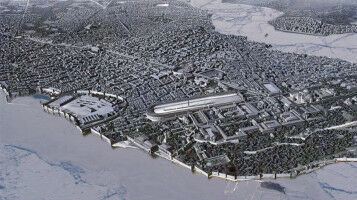
Icebergs on the Bosporus and a frozen Black Sea: an international study by the University of Bern with the participation of the Austrian Academy of Sciences shows how volcanic eruptions on Iceland influenced the European climate in the early Middle Ages and led to severe winter cooling anomalies. It was one of the coldest winters the region has ever experienced: In 763, large parts of the Black Sea froze over and icebergs were sighted on the Boporus.
Astronomy & Space - 15.04.2024
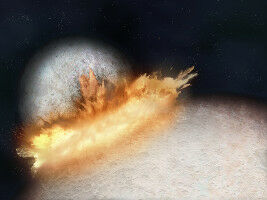
The mystery of how Pluto got a giant heart-shaped feature on its surface has finally been solved by an international team of astrophysicists led by the University of Bern. The team is the first to successfully reproduce the unusual shape with numerical simulations, attributing it to a giant and slow oblique-angle impact.
Health - Pharmacology - 19.03.2024
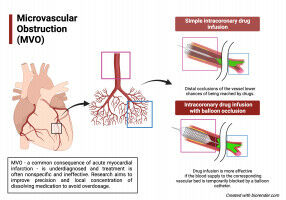
Researchers in Bern have co-developed and tested a new method to combat the blockage of tiny coronary arteries after a heart attack. The new approach, born from a cooperation of engineers, clinicians, and industry, offers a treatment option to prevent the death of heart tissue after a heart attack, responsible for poor long-term patient health.
Life Sciences - 11.03.2024

Each person has their own sleep profile, which can be identified by the electrical brain activity during sleep. Now, researchers from the University of Bern show that brain waves during periods of deep sleep in a specific area of the brain can be used to determine how cooperative and prosocial a person is in their everyday life.
Forensic Science - 06.03.2024

Researchers at the University of Bern have investigated the process of decomposition on pig carcasses left in nature. The researchers discovered that the previous standard method for assessing decomposition in Switzerland needs to be adapted - with an impact on forensic analysis. The method presented by the researchers aims to better determine the post-mortem interval.
Astronomy & Space - 26.02.2024

Thanks to simulations with a software system developed at the University of Bern, an international team under Bernese leadership has provided important insights into the impact of NASA's DART space probe on the asteroid Dimorphos: it is very likely that not just a crater was created, but the entire asteroid was reshaped.
Astronomy & Space - Physics - 18.01.2024
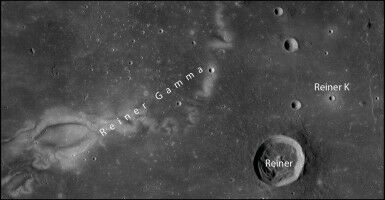
A research team from the University of Münster has discovered for the first time meter-sized rocks on the surface of the moon that are covered in dust and presumably have unique properties - magnetic anomalies, for example. The findings help to understand the processes that form and change the lunar crust.
Astronomy & Space - 29.11.2023

An international collaboration between astronomers using the CHEOPS and TESS space satellites, including NCCR PlanetS members from the University of Bern and the University of Geneva, have found a key new system of six transiting planets orbiting a bright star in a harmonic rhythm. This rare property enabled the team to determine the planetary orbits which initially appeared as an unsolvable riddle.
Astronomy & Space - Economics - 09.11.2023

Following the success of the Bern solar wind sail on the Apollo Moon missions of the U.S. space agency NASA in the 1960s, the Physics Institute at the University of Bern is to return to the Moon as early as 2027 with the LIMS mass spectrometer as part of the NASA Commercial Lunar Payoad A highly sensitive instrument for measurements on the lunar surface LIMS is a powerful instrument for the examination of a wide variety of samples which meets scientific lunar objectives.
Environment - Life Sciences - 08.11.2023

Unlike their relatives, individuals of the poison frog Allobates femoralis are not poisonous but are captivating due to their different behavioral profiles: They successfully reproduce with different strategies depending on whether they are bold, aggressive or explorative. In addition, certain character traits are already present in this species at the tadpole stage.
Pharmacology - Health - 24.10.2023

Treatment of the chronic inflammatory bowel disease ulcerative colitis often produces unsatisfactory results. Researchers at the University of Bern have now developed a lipid gel that is administered directly to the inflamed part of the intestine, where it remains and releases its active substance evenly.


