







news
University of Geneva
Results 301 - 320 of 449.
Astronomy & Space - 25.05.2021

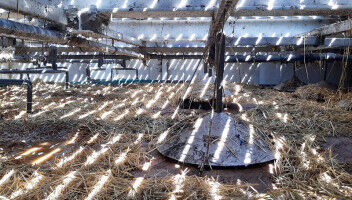
Researchers at the University of Geneva have succeeded in reconciling cosmological theory and observations of the Universe by considering that it is hotter than previously thought. Astrophysicists still encounter various inconsistencies between cosmological theory and measurements made with various research instruments.
Environment - Earth Sciences - 06.05.2021

A team of Swiss and international climate scientists has shown that the risk of glacial lake outburst floods in the Himalayan region and the Tibetan plateau could triple in the coming decades. The "Third Pole" of the Earth, the high mountain ranges of Asia, bears the largest number of glaciers outside the polar regions.
Health - Pharmacology - 03.05.2021

Antibody testing can be a powerful tool for tracking the spread of SARS-CoV2 infections, the virus responsible for the COVID-19 pandemic. A group of scientists from EPFL, UNIGE and HUG have now developed a reliable and cheap antibody test that can analyze more than 1,000 samples at once and requires a small drop of blood, such as that from a finger prick.
Physics - Health - 03.05.2021

Scientists from the University of Geneva and UZH have used a statistical physics approach to identify the lengthscales of key intercellular interactions which govern tissue healing. In material physics understanding how systems interact across the interfaces separating them is of central interest. But can physical models clarify similar concepts in living systems, such as cells?
Life Sciences - Chemistry - 29.04.2021

Two UNIGE teams have discovered a new mechanism for regulating RNA maturation that depends on diet. Particularly sensitive to chemical modifications, messenger RNAs (mRNAs) are molecules responsible for transmitting the information encoded in our genome, allowing for the synthesis of proteins, which are necessary for the functioning of our cells.
Physics - Health - 28.04.2021

Scientists at the UNIGE have shown that the response of the retina to light depends not only on the intensity of the light perceived by the eye, but also on its temporal shape and the order in which the colours are organized. Vision is a complex process that has been successfully deciphered by many disciplines -physics, biochemistry, physiology, neurology, etc.
Pharmacology - Health - 22.04.2021

Silica nanoparticles developed by a team from the UNIGE and Ludwig-Maximilian University of Munich have significantly increased the effectiveness and precision of immunotherapies. Immunotherapies are increasingly used to fight cancer and aim to stimulate the immune system to defend itself by destroying tumour cells.
Psychology - 20.04.2021

Scientists have shown that when we look at each other, our attention is focused on the social interaction, disrupting our perception of time. Eyes play an important role in social communication by expressing the intentions of our interlocutors, and even more so in times of pandemic when half of the face is hidden.
Life Sciences - 06.04.2021
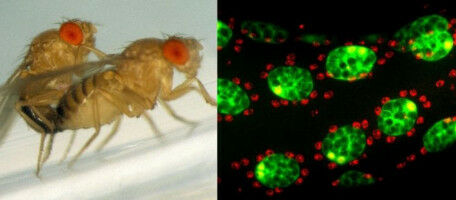
Researchers from the University of Geneva have discovered a very small protein in Drosophila that plays a key role in how females select the semen that will fertilize its eggs when it mates with several males. Even a well-characterized genome, such as that of the Drosophila the so-called fruit fly, still holds surprises.
Psychology - Campus - 30.03.2021

By confirming the link between children's cardiorespiratory fitness and their school results, researchers at the UNIGE underline the importance of physical education classes at school. Recent studies indicate a link between children's cardiorespiratory fitness and their school performance: the more athletic they are, the better their marks in the main subjects - French and mathematics.
Health - Life Sciences - 29.03.2021
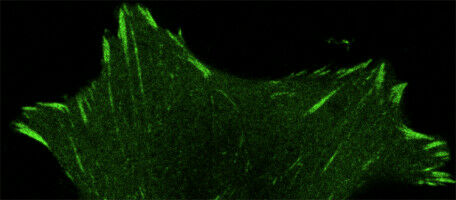
Researchers from the University of Geneva identified a new function for a protein that helps cells to sense their environment and dock at their proper place in the body. Each human being is made of billions of cells. In order to ensure his survival, cells must coordinate with each other and attach in the right place to perform their tasks.
Health - Social Sciences - 23.03.2021

An international team of scientists has drawn up a report on the resilience capacity needed by our societies to prevent, react to and recover from the COVID-19 crisis. The authors propose a path forward to shape resilient, inclusive, and sustainable societies. The COVID-19 pandemic triggered a global systemic crisis.
Life Sciences - 18.03.2021
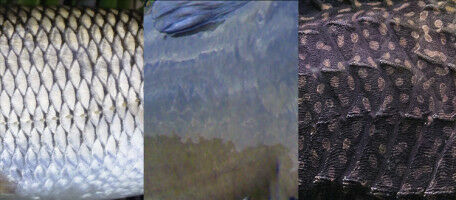
Researchers at the UNIGE have traced the family tree of ray-finned fish in order to reconstruct the evolution of the protective structures of their skin. Usually scaled, the skin of fish can also be naked or made up of bony plates that form an armour, sometimes even covered with teeth. But how has this skin evolved over the ages? To answer this question, researchers at the University of Geneva , Switzerland, have reconstructed the evolution of the protective skin structures in fish, going back to the common ancestor of ray-finned fish, more than 420 million years ago.
Physics - Health - 11.03.2021

Research teams from UNIGE have discovered that the cytoskeleton of the malaria parasite comprises a vestigial form of an organelle called conoid, initially thought to be absent from this species and which could play a role in host invasion. Plasmodium is the parasite causing malaria, one of the deadliest parasitic diseases.
Physics - Electroengineering - 09.03.2021

Scientists at EPFL and the University of Geneva have combined two powerful, cutting-edge techniques to uncover the physics behind an exotic phase transition that turns a metal into an insulator. The materials they looked at are rare-earth nickelates, which are of great interest for innovating new approaches in electronics.
Chemistry - Life Sciences - 05.03.2021
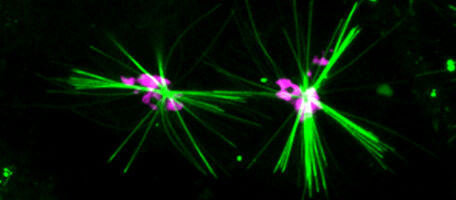
For the first time, a team from the University of Geneva has been able to follow precisely the path taken by a protein within the cell, paving the way for the study of the transport and distribution network of vital elements necessary for its survival. In order to stay alive, the cell must provide its various organelles with all the energy elements they need, which are formed in the Golgi apparatus, its centre of maturation and redistribution of lipids and proteins.
Earth Sciences - Transport - 04.03.2021

A team from the University of Geneva studied the ash from volcanic eruptions and discovered two effects of ash sedimentation that will improve our ability to predict the danger posed by volcanic ash clouds. When the Eyjafjallajökull volcano in Iceland erupted in April 2010, air traffic was interrupted for six days and then disrupted until May.
Environment - Psychology - 02.03.2021

A researcher from the University of Geneva has compiled the scientific literature of the last five years linking emotion and climate change, highlighting the main levers that will make it possible to strengthen behaviour in favour of sustainable development. Emotions are often the victim of their bad reputation, as they are considered "irrational", but they play a major role in helping us assess the world and guide our behaviour.
Health - Life Sciences - 26.02.2021
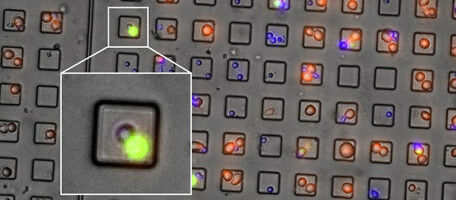
A team from SCCL has discovered that CD4 T lymphocytes, which usually play a supporting role in fighting cancer cells, also have the power to destroy them. Treatments for beating tumours are mainly based on CD8 T lymphocytes, which specialise in detecting and eliminating intracellular infections and in killing cancer cells.
Agronomy & Food Science - Social Sciences - 02.02.2021

Scientists from the University of Geneva and UPF have analysed the skeletons of several Bronze Age communities that lived in Western Switzerland in order to reconstruct the evolution of their diet. The Bronze Age (2200 to 800 BC) marked a decisive step in the technological and economic development of ancient societies.


