








news
University of Geneva
Results 321 - 340 of 449.
Life Sciences - Health - 25.01.2021

A team from UNIGE, the University of Munich and the Technical Institute of Munich has discovered that the destruction of synapses in the brain's grey matter reduces the activity of neurons in the cerebral cortex and is a major factor in the progression of multiple sclerosis. Multiple sclerosis (MS) is a chronic inflammatory disease that affects the central nervous system, in which nerve cells are attacked by the patient's own immune system.
Astronomy & Space - 25.01.2021

The CHEOPS space telescope detects six planets orbiting the star TOI-178. Five of the planets are in a harmonic rhythm despite very different compositions. This result challenges our understanding of the formation and evolution of planetary systems. Musical notes that sound pleasant together can form a harmony.
Life Sciences - Chemistry - 06.01.2021
The wings of a “genetic bird” protect us against viruses
Researchers have demonstrated that every population can protect itself against a broad range of viruses thanks to the two most diverse HLA immune genes in humans. Do populations from different geographic regions have the same potential for defending themselves against pathogens and against viruses in particular? An analysis of human genomes, especially the HLA genes responsible for the so-called "adaptive" immune system, provide some possible answers to this question.
Social Sciences - 30.12.2020

Contrary to earlier concerns, a UNIGE study has shown that people who met their partners on dating applications have often stronger long-term relationship goals, and that these new ways of meeting people encourage socio-educational and geographical mixing. Mobile apps have revolutionised the way people meet in Switzerland and elsewhere in recent years.
Health - Life Sciences - 08.12.2020

Commensal bacteria confer a prominent protective role against invading bacterial in mucosal surfaces, the major entry port for microbial pathogens. A research team of UNIGE shows that probiotics could be an alternative to antibiotics for treating respiratory illnesses. In healthy organisms, commensal bacteria, which live inside the host without harming it, provide a competitive barrier against invading bacterial pathogens.
Life Sciences - Health - 07.12.2020

By studying the genomes of hundreds of thousands of people, scientists from UNIGE, HUG and the University of Utrecht discovered the genetic basis of intracranial aneurysms. Nearly three percent of the world's population is at risk of developing an intracranial aneurysm, a localized dilation of a blood vessel forming a fragile pocket.
Life Sciences - Psychology - 04.12.2020

Characterising our emotions is the subject of much debate, as is the identification of their neural substrates. A team from the University of Geneva has been examining the brain components of emotions, confirming that they are the brain's synchronised response to events. Emotions are complex phenomena that influence our minds, bodies and behaviour.
Life Sciences - Mathematics - 03.12.2020

The world's smallest primate reveals the incredible preservation of our visual system through millions of years of evolution. Primates process visual information in front of their eyes, similar to pixels in a digital camera, using small computing units located in the visual cortex of their brains.
History & Archeology - Chemistry - 02.12.2020
African trade routes sketched out by mediaeval beads
An analysis of archaeological glass beads discovered in sub-Saharan West Africa brings to light the full extent of the region's international trade routes between the 7th and 13th centuries. The origin of glass beads dates back to early ancient times. The chemical composition of the beads and their morphological and technical characteristics can reveal where they come from; this information can then be used to reconstruct the trade channels between glass production areas and the sites where the beads were used at different times.
Physics - Materials Science - 25.11.2020

Due to its antibacterial properties, nanosilver is used in a wide range of products from textiles to cosmetics. But nanosilver if present at high concentrations also disrupts the metabolism of algae that are essential for the aquatic food web dynamics and the production of terrestrial oxygen. Products derived from nanotechnology are efficient and highly sought-after, yet their effects on the environment are still poorly understood.
Health - Environment - 24.11.2020

Temperature inversions or Saharan dust intrusions can favor the presence of fine particles in the air. Their high concentration can aggravate the consequences of COVID-19. The correlation between the high concentration of fine particles and the severity of influenza waves is well known to epidemiologists.
Chemistry - Physics - 18.11.2020

Some viruses can get inside cells via a mechanism that involves sulfur organic molecules. Chemists at UNIGE have discovered effective inhibitors and blocked the uptake of SARS-CoV-2. The cell membrane is impermeable to viruses: to get inside and infect a cell, they use a range of strategies to exploit the cellular and biochemical properties of the membranes.
Life Sciences - Health - 16.11.2020

Swiss and Italian scientists prove a correlation between gut microbiota and the appearance of amyloid plaques in the brain, typical of Alzheimer's disease. Alzheimer's disease is the most common cause of dementia. Still incurable, it directly affects nearly one million people in Europe, and indirectly millions of family members as well as society as a whole.
Health - Life Sciences - 11.11.2020

Scientists from the University of Geneva and HUG identify the essential role of circadian clocks in the regeneration of insulin-producing cells. Certain parts of our body, such as the skin or liver, can repair themselves after a damage. Known as cell regeneration, this phenomenon describes how cells that are still functional start to proliferate to compensate for the loss.
Life Sciences - Health - 10.11.2020

Research can now target metastases more effectively thanks to a new approach that takes into account the enormous heterogeneity and phenotypes of tumour cells, with a team from the University of Geneva pinpointing a gene that prevents their development. Before an effective treatment can be devised, we have to be able to understand the specific effect of an anti-cancer substance on the cell type, or even the cell, that produces metastases in the enormous cellular heterogeneity of tumours.
Earth Sciences - 05.11.2020

A new method shows that it's now possible to estimate the volume of magma stored below volcanoes providing essential information about the potential size of future eruptions. Most active volcanoes on Earth are dormant, meaning that they have not erupted for hundreds or even thousands of years, and are normally not considered hazardous by the local population.
Life Sciences - Health - 02.11.2020

People born without a corpus callosum do not have a bridge between the two cerebral hemispheres. Neuroscientists from the University of Geneva have shown how the brain manages to adapt. One in 4,000 people is born without a corpus callosum, a brain structure consisting of neural fibres that are used to transfer information from one hemisphere to the other.
Life Sciences - Health - 27.10.2020
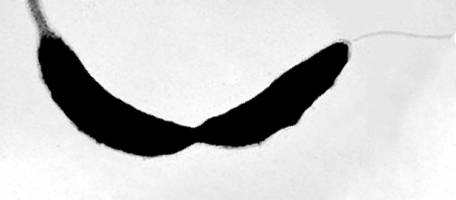
Building the driving machinery of bacteria, the flagella, requires numerous proteins to be assembled. Adding sugar and the presence of a control point are two key steps identified by UNIGE scientists. To build the machinery that enables bacteria to swim, over 50 proteins have to be assembled according to a logic and well-defined order to form the flagellum, the cellular equivalent of an offshore engine of a boat.
Astronomy & Space - 27.10.2020

The galaxies in the early universe are much more mature than astrophysicists first thought: their existence at such an early stage is due to their interactions with the cosmos. The first galaxies were formed 200 million years after the birth of the universe. These galaxies accumulated the vast majority of the stars, dust particles and metals they consist of between one and three billion years after the Big Bang, a crucial period for our understanding of how the galaxies were formed.
Life Sciences - Psychology - 18.10.2020

Bad attitudes lead to moral judgments rooted in our basic survival mechanisms. And scientists from the University of Geneva have demonstrated that they are linked to foul smells. Unhealthy behaviours trigger moral judgments that are similar to the basic emotions that contribute to our ability to survive.


