








news
Swiss Federal Institute of Technology Lausanne, EPFL
Results 501 - 520 of 1376.
Health - Life Sciences - 11.10.2021
A cryptography game-changer for biomedical research at scale
Personalized medicine is set to revolutionize healthcare, yet large-scale research studies towards better diagnoses and targeted therapies are currently hampered by data privacy and security concerns. New global collaborative research has developed a solution to these challenges, described. Predictive, preventive, personalized and participatory medicine, known as P4, is the healthcare of the future.
Life Sciences - Health - 06.10.2021

Bacteria in the human gut go to war in order to protect themselves against attacks of the "spear-wielding" cholera bacterium Vibrio cholerae or other pathogens, an EPFL study has found. Image: V. cholerae's growth and competition on natural surfaces (left). The framed area is zoomed-in on the right and shows the killing of a bacterium (indicated by the red arrow) by the two V. cholerae cells.
Health - Physics - 05.10.2021

Scientists at EPFL and Dartmouth College in the US have developed a system that can, for the first time, both pinpoint the exact location of a tumor and measure its depth. Their technology employs a high-tech camera developed at EPFL's Advanced Quantum Architecture Laboratory. A few years ago, Edoardo Charbon, an EPFL professor and head of the Advanced Quantum Architecture Laboratory, unveiled a new, ultra-high-power camera called SwissSPAD2.
Physics - Chemistry - 01.10.2021

Scientists at EPFL have shown that the powerful transient absorption spectroscopy technique can unravel ultrafast motion of electrons and nuclei in a molecule in real time and with atomic spatial resolution. The last few decades have seen impressive progress in laser-based technologies, which have led to significant advancements in atomic and molecular physics.
Computer Science - Life Sciences - 01.10.2021

Under an initiative by EPFL's Center for Imaging, a team of engineers from EPFL and Universidad Carlos III de Madrid have developed a plugin that makes it easier to incorporate artificial intelligence into image analysis for life-science research. The plugin, called deepImageJ, is described in a paper appearing today.
Pharmacology - Life Sciences - 01.10.2021
A tool to interrogate a new class of drugs
Reactive electrophilic drugs like Tecfidera, approved for the treatment of relapsing multiple sclerosis, show a lot of potential but are also mystery. Their effects are notoriously difficult to study, which hampers progress testing and approving them. scientists have now used an innovative chemical method to uncover the biological mechanisms of Tecfidera, providing a powerful tool for exploring other reactive electrophilic drugs.
Life Sciences - Health - 30.09.2021

A revolutionary implant developed at EPFL allows neuroscientists to activate or inhibit specific spinal-cord neurons by applying light at a specific wavelength. It will give researchers insight into how the nervous system works and the chance to develop new ways of treating neurological disorders. Grégoire Courtine doesn't hesitate to use the word "revolutionary" when describing the emerging field of optogenetics - a technology that uses pulses of light to control individual neural activity - and what it could mean for neuroscience.
Pharmacology - Health - 28.09.2021

A new assay developed by EPFL spin-off Nanolive opens up promising avenues of research for immuno-oncology treatments. It allows scientists to directly see and quantify how T cells find, bind, stress and kill cancer cells. Immuno-oncology is a promising new field of research that involves boosting the capacity of a patient's own immune system to attack cancer cells.
Pharmacology - Chemistry - 13.09.2021

Scientists have developed a chemical method for targeting the effects of cancer-fighting immunotherapy drugs only to the tumor tissue, making the drugs less toxic to the rest of the human body. Immunotherapy drugs are promising new weapons in the fight against cancer, but they are so strong that they can be toxic to the rest of the human body.
Physics - Materials Science - 02.09.2021

A simple and cheap device for detecting neutrons has been developed by a team of researchers and their collaborators. The device, based on a special class of crystalline compounds called perovskites, could be used to quickly detect neutrons coming from radioactive materials, e.g. a nuclear reactor that has been damaged or that is being transported nefariously, the researchers say.
Chemistry - Physics - 30.08.2021

Scientists have developed a new system that addresses two top priorities of the energy transition: clean hydrogen production and large-scale energy storage. Their technology could be particularly useful in transportation applications. The need for reliable renewable energy is growing fast, as countries around the world - including Switzerland - step up their efforts to fight climate change, find alternatives to fossil fuels and reach the energy-transition targets set by their governments.
Health - Mathematics - 26.08.2021

An international collaboration with EPFL has developed a method to improve the performance of COVID-19 contact-tracing apps by taking into account a user's recent contacts, risk levels and shared information about tests and symptoms. Contact-tracing apps like SwissCovid have enormous potential to mitigate the spread of the COVID-19 pandemic.
Physics - Chemistry - 26.08.2021

Physicists at EPFL have found a way to get photons to interact with pairs of atoms for the first time. The breakthrough is important for the field of cavity quantum electrodynamics (QED), a cutting-edge field leading the way to quantum technologies. Image: A collection of atom pairs inside an optical cavity formed by a pair of mirrors facing each other.
Computer Science - Physics - 25.08.2021

EPFL engineers are pioneering an energy-saving technology that uses fiber optics to boost the performance of supercomputers. Optical technology is used for transmitting, storing, displaying and identifying data. It provides the processing speed that data centers need by offering efficient means for communication and analysis operations.
Life Sciences - 23.08.2021

Researchers found that, if expressed too early during embryonic development, one of the genes that orchestrate the formation of limbs can lead to a rare disorder of bone growth. Mesomelic dysplasias are a group of rare genetic conditions characterized by extreme shortening of the long bones in the arms and legs.
Life Sciences - Computer Science - 20.08.2021

Scientists have developed a deep learning-based method called LiftPose3D, which can reconstruct 3D animal poses using only 2D poses from one camera. This method will have impact in neuroscience and bioinspired robotics. "When people perform experiments in neuroscience they have to make precise measurements of behavior," says Professor Pavan Ramdya at EPFL's School of Life Sciences, who led the study.
Physics - 17.08.2021
Scientific reasoning requires the irrationality of intuition
SUMMER SERIE: HOW SCIENCE WORKS Science is based on coherent reasoning, while intuition follows a more disjointed path. But scientific research couldn't succeed if scientists didn't listen to their gut feelings every once in a while. Science by definition relies on logic, reasoning and rigor. But we've all heard about Archimedes' famous Eureka! moment when, while taking a bath, he suddenly understood what came to be known as Archimedes' principle.
Health - Pharmacology - 16.08.2021

A "paradox and setback" forced scientists to dig deeper when seeking a means to boost the power of immunotherapy in lung cancer. Understanding the problem - and finding the solution - has led to a promising potential therapy for some patients. Lung cancer is the leading cause of cancer-related death.
Pharmacology - Health - 12.08.2021

NICEdrug.ch, a new database developed by a group of researchers from EPFL, may help scientists assess potential drugs more quickly, including how they are metabolized by the body and their potential side effects. Researchers from EPFL have created a new open-access database of information on drug candidates and how they are metabolized by the body, which could help speed up the repurposing of old drugs as new treatments.
Life Sciences - 12.08.2021
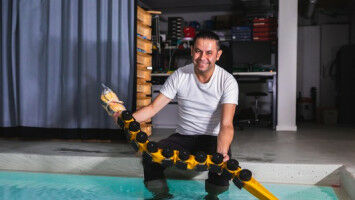
Thanks to their swimming robot modeled after a lamprey, scientists may have discovered why some vertebrates are able to retain their locomotor capabilities after a spinal cord lesion. The finding could also help improve the performance of swimming robots used for search and rescue missions and for environmental monitoring.


