




news
Swiss Federal Institute of Technology Lausanne, EPFL
Results 521 - 540 of 1376.
Computer Science - Media - 10.08.2021

Taking a novel perspective, researchers have studied political polarization in online news consumption rather than content production, looking at whether the backlink structure of online news networks alone, or users' explicit reading choices contribute to the partisan divide. In the past decade it seems political polarization has been on the rise, as measured by voting behavior and general affect towards opposing partisans and their parties.
Innovation - Economics - 06.08.2021

Enabled by Design is a joint EPFL-ECAL program that forges ties between researchers and designers to make it easier to bring new technology to market. Researchers are often the first to see a device's innovative potential. But investors, users and end customers will look not only at its functionality, but also its ergonomics and aesthetics.
Health - Life Sciences - 04.08.2021
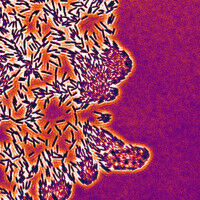
Researchers have characterized a mechanism that allows bacteria to direct their movement in response to the mechanical properties of the surfaces the microbes move on - a finding that could help fight certain pathogens. Many disease-causing bacteria such as Pseudomonasaeruginosa crawl on surfaces through a walk-like motility known as "twitching".
Computer Science - 03.08.2021
Running quantum software on a classical computer
Two physicists, from EPFL and Columbia University, have introduced an approach for simulating the quantum approximate optimization algorithm using a traditional computer. Instead of running the algorithm on advanced quantum processors, the new approach uses a classical machine-learning algorithm that closely mimics the behavior of near-term quantum computers.
Health - Life Sciences - 02.08.2021
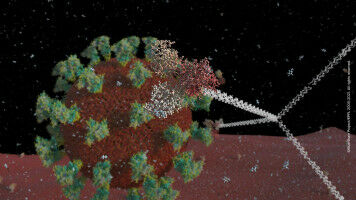
Why do some people get sick and die from COVID-19 while others seem to be completely unaffected? EPFL's Blue Brain Project deployed its powerful brain simulation technology and expertise in cellular and molecular biology to try and answer this question. A group in the Blue Brain assembled an AI tool that could read hundreds of thousands of scientific papers, extract the knowledge and assemble the answer - A machine-generated view of the role of blood glucose levels in the severity of COVID-19 was published today by Frontiers in Public Health, Clinical Diabetes.
Life Sciences - Health - 29.07.2021
Molecular atlas reveals how brain cells develop
Using a combination of powerful sequencing techniques and mathematical methods, researchers have traced the genetic programs that direct the development of each cell in the brain. This molecular map could help researchers to understand how the brain develops and provide insights into a range of conditions, including brain tumors and neurodevelopmental disorders.
Environment - Innovation - 28.07.2021

Scientists have developed a new method for chemical analysis of fine particles that they plan to extend on a large scale - including in developing countries - through an Innosuisse innovation grant award and a new startup. Satoshi Takahama and Nikunj Dudani, two scientists at EPFL's Laboratory of Atmospheric Processes and their Impacts (LAPI), have developed an innovative system that could replace the array of instruments typically used to measure air quality by a single device small enough to fit in a carry-on bag.
Life Sciences - Health - 27.07.2021
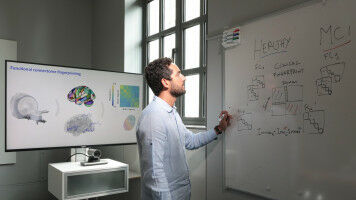
An EPFL scientist has found that brain fingerprints - or maps of the neural connections within our brain - can be used to detect a decline in cognitive ability. That's because the fingerprints are harder to detect in people who already have mild cognitive impairment. Just like our fingertips, our brains contain an embedded pattern that's different for every individual.
Life Sciences - 22.07.2021
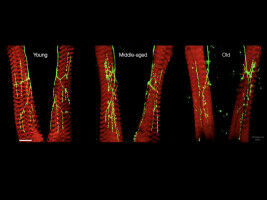
Researchers have found that a form of neuron-to-neuron communication that has long been dismissed as 'background noise' is required to keep nerve junctions intact as animals age. The finding suggests that defects in this type of neural communication could contribute to neurodegenerative disorders and other brain conditions.
Physics - Chemistry - 20.07.2021
Laser improves the time resolution of CryoEM
Scientists have devised a new method that can speed up the real-time observation capabilities of cryo-electron microscopy. In 2017, Jacques Dubochet, Joachim Frank, and Richard Henderson won the Nobel Prize in Chemistry for their contributions to cryo-electron microscopy (cryoEM), an imaging technique that can capture pictures of biomolecules such as proteins with atomic precision.
Health - Pharmacology - 15.07.2021

SUMMER SERIES: HOW SCIENCE WORKS For scientists, the path from bright idea to finished product is a long one. Prototypes must go through an extensive testing and approval process before they are ready for the market. Let's have a look. The results of scientific research can often bring considerable societal and economic benefits.
Health - Pharmacology - 15.07.2021

SUMMER SERIES: HOW SCIENCE WORKS For scientists, the path from bright idea to finished product is a long one. Prototypes must go through an extensive testing and approval process before they are ready for the market. Let's have a look. The results of scientific research can often bring considerable societal and economic benefits.
Environment - 14.07.2021

A team of scientists turned Bois-Chamblard park in Buchillon, on Lake Geneva, into a temporary research station for collecting experimental data. Their goal is to better understand how anthropogenic air pollution affects plant growth. What role does air pollution play in plant growth? That's the question a cross-disciplinary team of scientists has set out to answer.
Health - Life Sciences - 14.07.2021
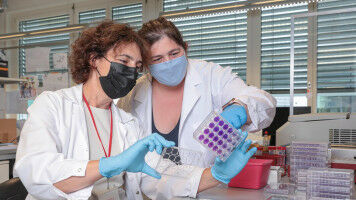
The Lausanne University Hospital (CHUV) and EPFL teamed up to develop a new test that's sensitive enough to measure the amount of SARS-CoV-2 neutralizing antibodies present in the bloodstream. The scientists' discovery, published in the prestigious Science Translational Medicine , opens promising new avenues for tracking immunity acquired by infection or vaccination.
Life Sciences - Health - 09.07.2021
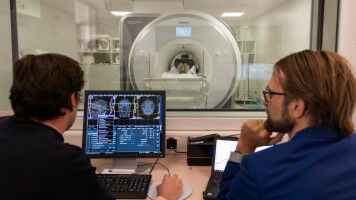
An international team of scientists led by EPFL has developed a system that combines information from the brain's connectome - the "wiring" between neurons - and machine learning to assess and predict the outcome of stroke victims. When blood flow to the brain is somehow reduced or restricted, a person can suffer what we know as a stroke (from "ischemic stroke" in medical jargon).
Chemistry - Physics - 05.07.2021

Chemical engineers at EPFL have developed a machine-learning model that can predict a compound's oxidation state, a property that is so essential that many chemists argue it must be included in the periodic table. Chemical elements make up pretty much everything in the physical world. As of 2016, we know of 118 elements, all of which can be found categorized in the famous periodic table that hangs in every chemistry lab and classroom.
Civil Engineering - Environment - 02.07.2021

In his PhD thesis, EPFL researcher Martí Bosch proposes a method for spatially quantifying the impact of mitigation measures - planting green spaces and using different building materials - on the urban heat island effect. During hot weather, cities are warmer than the surrounding rural areas. This well-known phenomenon - known as the urban heat island effect - is particularly acute at night when concrete and asphalt release the heat stored up during the day.
Computer Science - Physics - 01.07.2021
A new collaboration points to the future of data
EPFL and the Paul Scherrer Institute (PSI) join forces to establish a new PSI research division: Scientific Computing, Theory, and Data. In collaboration with EPFL, the Paul Scherrer Institute (PSI) is officially expanding its own focus areas and establishing a new research division: Scientific Computing, Theory, and Data.
Physics - 01.07.2021

A collaboration between EPFL and UCSB has developed a long-anticipated breakthrough, and demonstrated CMOS technology - used for building microprocessors and memory chips - that allows wafer-scale manufacturing of chip-scale optical frequency combs. Optical frequency combs consist of light frequencies made of equidistant laser lines.
Environment - 28.06.2021

A team of scientists has developed a new model for simulating both iceberg calving and the tsunamis that are triggered as a result. Their method can help improve hazard assessment in coastal areas and refine the empirical calving models used to evaluate rising sea levels. Johan Gaume, an EPFL expert in avalanches and geomechanics, has turned his attention to ice.


