








news
Swiss Federal Institute of Technology Lausanne, EPFL
Results 541 - 560 of 1376.
Environment - Materials Science - 25.06.2021

Scientists have used an unprecedented method with multimodal host-guest complexation to greatly improve the stability of perovskite solar cells while also reducing the release of lead into the environment. Perovskites are hybrid compounds made from metal halides and organic constituents, and show great potential in a range of applications, e.g. LED lights, lasers, and photodetectors.
Chemistry - 24.06.2021

Scientists are generating oxygen from sunlight, water and semiconducting polymers. They present a promising way towards economical and scalable solar fuel production. Natural photosynthesis evolved to covert water and sunlight into oxygen (O2) and stored chemical energy. In plants this process is not very efficient, however the possibility to convert sunlight into chemical fuel in an economical and globally scalable manner is a very attractive method for reducing our dependence on fossil fuels.
Life Sciences - 24.06.2021
Scientists at EPFL and the University of Warwick have used a virus to identify a peptide that can serve the same function as antifreeze proteins. By preventing ice formation, the compound could play a key role in preserving cells and organ transplants and in food conservation. Some organisms have developed special "antifreeze" proteins that let them survive in sub-zero temperatures.
Life Sciences - 21.06.2021
’On your marks. Get set. Go!’ Mapping delayed responses in the brain
Neuroscientists at EPFL identify the brain mechanism that we use to prepare a timely action while suppressing premature execution. In some ways, we can think of the brain as an input/output machine; it receives signals from the environment and the body through peripheral and sends back appropriate responses.
Campus - 18.06.2021

While it is important for students to work in groups during their studies, that is not enough for them to acquire many of the transversal skills needed in the professional world. A recent EPFL study highlights the need for engineering courses to explicitly address professional skills through a combination of theory and feedback.
Health - Life Sciences - 18.06.2021
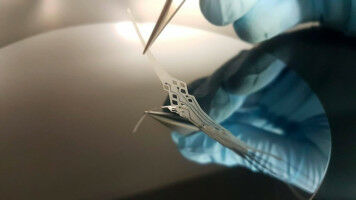
EPFL engineers have developed a neural interface that disappears harmlessly in the body after several months and allows natural tissue to grow back. What's more, it can be implanted in a patient's blood vessel rather than inside the brain, thereby avoiding the need for invasive surgery. Some implants like pacemakers can last for years, while others wear out quickly due to technical weaknesses.
Life Sciences - Health - 17.06.2021
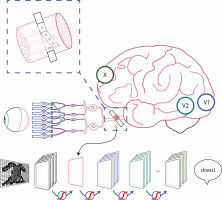
Scientists in a European collaboration propose a personalized protocol for optimizing stimulation of optic nerve fibers, for the blind, which takes into account feedback from the viewer's brain. The protocol has been tested on artificial neural networks known to simulate the physiology of the entire visual system, from the eye to the visual cortex.
Mathematics - 14.06.2021

Engineers at EPFL and École Polytechnique in France analyzed the friction between pages in a book and the mechanical force needed to bend them. Drawing on their experiments, they developed a new theoretical model for predicting the elasto-frictional behavior of stacked layers. It all started with a shaky washing machine.
Physics - 09.06.2021

Scientists have made an important discovery about the structure of barium titanate, a material used in everyday objects. Their findings refute existing theories on the displacement of the material's atoms. Barium titanate is a ferroelectric material used in nearly all electronic devices - computers, smartphones and even electric cars.
Health - Physics - 08.06.2021

Researchers at EPFL have developed a technology based on nanophotonics and data science to detect and monitor cancer biomarkers at an early stage. Their research is published. Medical doctors examine body fluids of their patients, such as blood, urine, saliva, or nasal swabs, for diagnostics. This is because substances in such biofluids may provide vital information about one's health state.
Computer Science - 02.06.2021

New EPFL research has found that almost half of local Twitter trending topics in Turkey are fake, a scale of manipulation previously unheard of. It also proves for the first time that many trends are created solely by bots due to a vulnerability in Twitter's Trends algorithm. Social media has become ubiquitous in our modern, daily lives.
Physics - Chemistry - 01.06.2021

Scientists at EPFL discover that laser-driven rearrangement of just a few gold atoms inside nanoscale antennas can be observed by the naked eye. Image: Plasmonic nano-antennas fabricated at EPFL: gold nanoparticles are deposited on a gold film covered with a layer of molecules. Light emission from defects near the film surface is strongly enhanced by the antenna effect, enabling its detection. Credit: Nicolas Antille (www.nicolasantille.com).
Health - Pharmacology - 31.05.2021

Researchers have developed a device that can continuously measure the blood concentration of propofol - one of the main compounds used in anesthetics - in patients as they're being operated on. That will help anesthesiologists deliver more personalized doses. Anesthesia may be an exact science, but it's not yet fully personalized.
Innovation - Materials Science - 28.05.2021

Health - Life Sciences - 26.05.2021
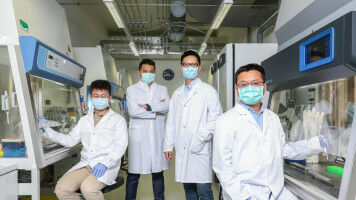
Scientists have discovered that an engineered interleukin-10-Fc fusion protein can boost the effectiveness of exhausted T lymphocytes - our body's immune cells for fighting cancer, by reprograming their metabolism. One of the many treatment options available for cancer today is immunotherapy, which involves stimulating a patient's immune system to produce lymphocytes (such as T cells) that go on to kill the tumor.
Life Sciences - Health - 24.05.2021
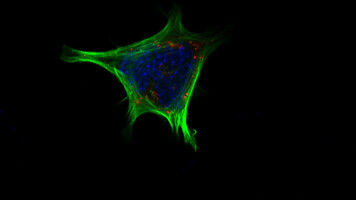
Scientists have discovered a new role for bile acids: they curb appetite by entering the brain. Their findings provide new insights into the signals and mechanisms by which satiety is controlled and may have implications for treating obesity. Our brain is usually well protected from uncontrolled influx of molecules from the periphery thanks to the blood-brain barrier, a physical seal of cells lining the blood vessel walls.
Life Sciences - 21.05.2021
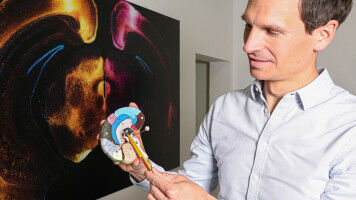
Older traumatic experiences are harder to get over compared to recent ones, and scientists have started to understand why - at the level of brain circuits. The results point the way for treating long-term trauma. How the brain deals with trauma is complex, and it's intuitive to say that we, as humans, get over trauma differently depending on if it happened a long time ago or if it was recent.
Microtechnics - 18.05.2021
Helping drone swarms avoid obstacles without hitting each other
Engineers at EPFL have developed a predictive control model that allows swarms of drones to fly in cluttered environments quickly and safely. It works by enabling individual drones to predict their own behavior and that of their neighbors in the swarm. There is strength in numbers. That's true not only for humans, but for drones too.
Computer Science - 17.05.2021

A cryogenic controller chip opens the door to solving the 'wiring bottleneck' and subsequently to realize a fully integrated, scalable quantum computer. A research from QuTech in the Netherlands, from Intel Corp and from EPFL. A specially designed chip to control qubits can operate at extremely low temperatures, and opens the door to solving the 'wiring bottleneck'.
Health - 14.05.2021
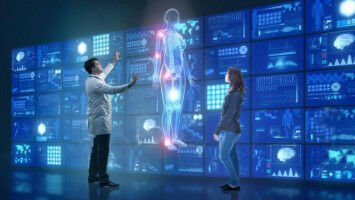
Digital twins - a savvy combination of artificial intelligence and personal data - have already begun to revolutionize the way healthcare is provided. But they raise a lot of ethical and legal questions, especially given the vast amounts of medical data that must be collected to train artificial intelligence algorithms.


