










news
University of Bern
Results 41 - 60 of 341.
Health - Pharmacology - 31.03.2025
More effective treatment for atrial fibrillation: new inter-vention method shows promising results
Atrial fibrillation is the most common cardiac arrhythmia worldwide. While exist-ing interventional treatment methods, such as catheter ablation, work better than medication, they still have their limitations and risks.
Chemistry - Environment - 25.03.2025

Researchers from the University of Bern and the RIKEN research institute in Japan have made a significant advance in sustainable chemistry. They have succeeded in producing organic molecules through a chemical reaction based on the sustainable metals sodium and iron. This represents a more environmentally friendly alternative to conventional methods and has the potential to fundamentally change the production of pharmaceuticals and other fine chemicals.
Life Sciences - Environment - 20.03.2025

A new special volume, initiated and edited by researchers from the University of Bern, examines the biological roots of the division of labor - from microorganisms to humans.
Health - 18.03.2025
When inflammation attacks your nerves: new insights into the role of nerve cells in gastrointestinal complaints
Gastrointestinal inflammation can cause long-term gastrointestinal disorders. An international research team led by the Charité - Universitätsmedizin Berlin, the Inselspital, Bern University Hospital, and the University of Bern has shown for the first time that inflammation damages nerve cells in the intestine.
Environment - 12.03.2025

Two years ago, global sea surface temperatures rose sharply, considerably exceeding previous highs. A study by the University of Bern shows that such extreme temperature jumps would not be possible without the influence of climate change. The study also confirms that climate models simulate such events realistically.
Environment - Earth Sciences - 27.02.2025

Extreme weather and climate events such as droughts and floods in Europe can be linked to shifts in the jet stream over the Atlantic.
Astronomy & Space - Earth Sciences - 25.02.2025

An international research team led by the University of Bern and Brown University in the US state of Rhode Island may have solved the mystery of the reddish color of Mars. The team identified the water-rich iron mineral ferrihydrite as the main culprit of the characteristic reddish Martian dust. This discovery could not only explain the planet's color, but also point to a wetter, potentially habitable Martian past.
Astronomy & Space - Earth Sciences - 25.02.2025

Researchers from the University of Bern, in collaboration with the University of Science and Technology Houari Boumediene in Algeria, have made significant progress in astrobiology. In a recently published study, they were able to detect fossil microorganisms in Messinian gypsum, which is found in Algeria, using the Bernese mass spectrometer LIMS.
Astronomy & Space - Earth Sciences - 03.02.2025

Meteoroid impacts create seismic waves that cause Mars to shake stronger and deeper than previously thought: This is shown by an investigation using artificial intelligence carried out by an international research team led by the University of Bern. Similarities were found between numerous meteoroid impacts on the surface of Mars and marsquakes recorded by NASA's Mars lander InSight.
Health - 03.02.2025
AI cannot prevent misdiagnoses
Around one in ten diagnoses is wrong. In an extensive study, a research team led by Inselspital, Bern University Hospital, and the University of Bern has investigated whether an AI-based diagnostic system could improve diagnostic quality. The result is surprising: despite high expectations, the system that was tested showed no measurable advantage over conventional diagnostic processes.
Earth Sciences - Environment - 15.01.2025

A study by the University of Bern and the Woods Hole Oceanographic Institution in the USA concludes that ocean circulation in the North Atlantic, which includes the Gulf Stream, has not weakened over the past 60 years. These results contradict previous assumptions. We owe the mild climate in Europe to the ocean circulation in the North Atlantic, which not only transports heat northwards from the equator, but also distributes oxygen and nutrients in the ocean.
Environment - Earth Sciences - 19.12.2024

The search for the world's oldest ice in Antarctica is entering a decisive phase. In this major European project, researchers in Antarctica are attempting to extract drill cores containing climate information from the past 1.5 million years. The University of Bern is playing an important role in this.
Life Sciences - 11.12.2024

Rats release trapped companions, subsequently enabling them to collaborate for acquiring food. Experiments conducted at the University of Bern established this connection between obliging liberation behaviour and coordinated cooperation. These results may point towards a biological basis for empathy, presenting new perspectives on the evolutionary origins of compassionate behaviour.
Environment - Life Sciences - 10.12.2024

An international team of researchers involving the University of Bern has investigated the consequences of deforestation and degradation of tropical forests. They were able to show that there are "winner" and "loser" species, whereby the displacement of the "losers" can lead to a decline in the ecological functions of tropical forests.
Health - Life Sciences - 06.12.2024

An interdisciplinary study from the University of Bern reveals that gut bacteria play a crucial role in converting arsenobetaine into toxic arsenic compounds. Results show that arsenobetaine, commonly found in seafood and previously considered harmless, is partly transformed into toxic arsenic compounds by the action of gut bacteria in the mammalian body.
Health - Life Sciences - 06.11.2024

Researchers at the University of Bern, in collaboration with international partners, have discovered that a 'gene desert' section of the genome plays an important role in the development of the embryo and the heart in both mice and humans. The study provides further evidence for the significance of gene-free DNA segments in gene regulation and offers approaches for early detection of cardiac diseases.
Environment - 24.10.2024

Large parts of the potential habitats of freshwater fish in Switzerland are negatively affected by human activities. Researchers at the University of Bern have shown this in a new study using explainable artificial intelligence methods. Measures to protect biodiversity and potential fish habitats will be developed based on the study.
Life Sciences - Psychology - 17.10.2024
AI with consciousness - but pain-free?
Researchers at the University of Bern have developed a new model for the emergence of consciousness. The model suggests that one day artificial agents, i.e. systems which imitate human thought, could gain consciousness. To regulate our interaction with such systems, the researchers propose an agreement between humans and machines: the 'Human-AI Deal'.
Health - Pharmacology - 15.10.2024
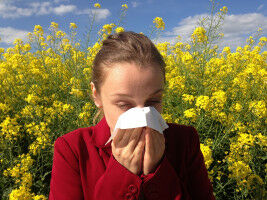
Researchers at the University of Bern and Bern University Hospital have developed a test to simplify the diagnosis of allergies. Its effectiveness has now been confirmed in clinical samples from children and adolescents suffering from a peanut allergy. The results could fundamentally improve the clinical diagnosis of allergies in future.
Astronomy & Space - 01.10.2024

A team of scientists including researchers from the University of Bern, the University of Geneva and the NCCR PlanetS used the ESPRESSO Spectrograph to discover a sub-Earth mass exoplanet orbiting Barnard's star, the second-closest star system to the Sun. This discovery helps to understand planetary formation around red dwarfs and provides insights into the diversity of planetary systems in our cosmic neighbourhood.


