







news
Swiss Federal Institute of Technology Lausanne, EPFL
Results 441 - 460 of 1376.
Physics - Health - 12.04.2022

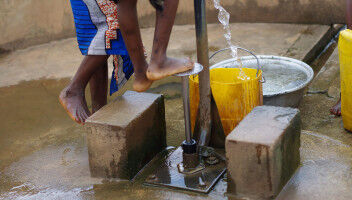
Scientists at EPFL have developed a highly efficient water purification filter that uses only solar power. The prototype can supply clean drinking water even at remote places to small populations and can be easily scaled-up. Even today, clean water is a privilege for many people across the world. According to the World Health Organization (WHO), at least 1.8 billion people consume water contaminated with feces, and by 2040, a large portion of the world will endure water stress because of insufficient resources of drinking water.
Life Sciences - Health - 08.04.2022
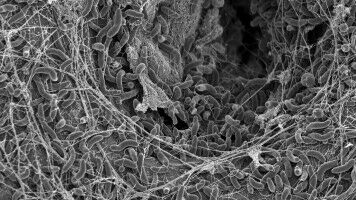
Two DNA defense systems protect the bacterial strains responsible for the ongoing seventh cholera pandemic from potentially harmful genetic material and viruses, scientists have found. Their study also shows that the defense systems may have been key in the evolution and success of these strains. Cholera is caused by the bacterium Vibrio cholerae , a waterborne pathogen that infects the gut of humans through contaminated water and food.
Materials Science - 08.04.2022

EPFL engineers have developed a low-temperature annealing method that maintains the structure of gold and silver when the two metals are combined in an alloy. Their discovery will prove useful in the manufacture of contact lenses, holographic optical elements and other optical components, since the new alloys reflect the full spectral range.
Health - Life Sciences - 07.04.2022

Electronic implant reactivates spinal-cord nerves of a patient with a neurodegenerative disease that causes dramatic blood pressure drops. A patient suffering from a debilitating neurodegenerative disease was able to get up and walk again after being bedridden for over a year, thanks to an innovative system developed by a team of scientists at the NeuroRestore research center headed by Jocelyne Bloch, a neurosurgeon at Lausanne University Hospital (CHUV) and Professor at University of Lausanne UNIL, and Grégoire Courtine, an EPFL professor in neuroscience.
Life Sciences - Mathematics - 06.04.2022

Researchers from EPFL have found a way to use only mathematics to automatically draw neurons in 3D, meaning we are getting closer to being able to build digital twins of brains. Santiago Ramón y Cajal, a Spanish physician from the turn of the 19 th century, is considered by most to be the father of modern neuroscience.
Computer Science - Environment - 04.04.2022

Imagine designing a robotic glider able to accelerate to 800km per hour using only the wind at its back. Combining passion with work, EPFL Professor Pascal Fua is leading research to develop the required capabilities, with important implications for sustainability. Head of EPFL's Computer Vision Laboratory (CV) in the School of Computer and Communication Sciences and a passionate gliding enthusiast, Pascal Fua always wanted to fly.
Microtechnics - 30.03.2022

EPFL engineers have developed a silicone raspberry that can help teach harvesting robots to grasp fruit without exerting too much pressure. Raspberries are the ultimate summer fruit. Famous for their eye-catching scarlet color and distinctive structure, they consist of dozens of fleshy drupelets with a sweet yet slightly acidic pulp.
Microtechnics - Computer Science - 29.03.2022

Robotic wheelchairs may soon be able to move through crowds smoothly and safely. As part of CrowdBot, an project, researchers are exploring the technical, ethical and safety issues related to this kind of technology. The aim of the project is to eventually help the disabled get around more easily. Shoppers at Lausanne's weekly outdoor market may have come across one of EPFL's inventions in the past few weeks - a newfangled device that's part wheelchair, part robot.
Life Sciences - Health - 22.03.2022
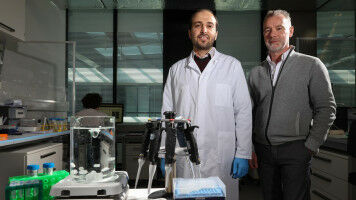
EPFL engineers have discovered that increasing the temperature of cartilage in the knee during physical exertion could prevent the cartilage from degenerating. "There is currently no treatment for knee arthritis; we can offer only palliative care to reduce the symptoms,- says Prof. Dominique Pioletti, head of the Laboratory of Biomechanical Orthopedics within EPFL's School of Engineering.
Life Sciences - Environment - 18.03.2022

Two scientists are putting their expertise in coral reefs to work in Mauritius and Seychelles. The pair has joined a United Nations program that aims to restore reefs affected by human and environmental pressure using a method known as seascape genomics.
Materials Science - Electroengineering - 14.03.2022

Researchers have discovered that gadolinium-doped cerium oxide, a compound they created in the lab, could be a promising alternative to certain piezoelectric materials: it has the same proprieties yet may be 100 times more effective. It's also lead-free, unlike the best piezoelectric materials, which means that it could be employed in bio-compatible medical applications.
Life Sciences - Computer Science - 11.03.2022

Deep learning models are becoming increasingly common in bioimage analysis. Yet a lack of standardization and the use of these algorithms by non-experts are potential sources of bias. Scientists from EPFL and the European Bioinformatics Institute (EMBL-EBI) offer practical tips and guidance in a paper recently published in the journal IEEE.
Life Sciences - Social Sciences - 09.03.2022
Connecting stress, weight, and social anxiety in early adolescence
Scientists at EPFL have found a biological connection explaining why there is an increased predisposition to develop obesity and being less sociable in individuals that have experienced stress during early puberty. Between the end of childhood and the beginning of adolescence, there is a critical window of time referred to as -peripuberty-.
Innovation - Life Sciences - 04.03.2022

EPFL spin-off Leman Biotech has developed a protein that can improve the effectiveness of immunotherapy drugs used to treat some types of cancer. The firm has just completed its first funding round, in the amount of $11 million. Immunotherapy is a promising new weapon in the fight against some types of cancer.
Physics - 02.03.2022
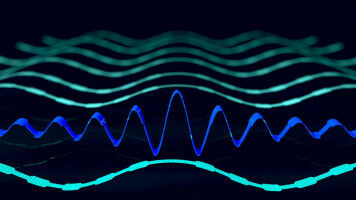
A team of scientists engineer nanoscale guitar strings that vibrate tens of billions of times when plucked at cryogenic temperatures, with a material originally developed for electronic transistors. Tightening a string, e.g. when tuning a guitar, makes it vibrate faster. But when strings are nano-sized, increased tension also reduces, or -dilutes-, the loss of the string's vibrational modes.
Environment - Chemistry - 01.03.2022
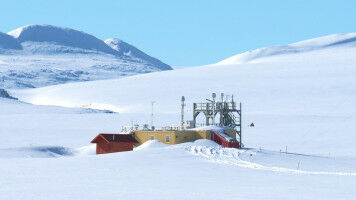
Scientists at EPFL and the Paul Scherrer Institute (PSI) have studied the chemical composition and origin - whether natural or anthropogenic - of aerosols in a region spanning from Russia to Canada. Their findings provide unique insights for helping researchers better understand climate change in the Arctic and design effective pollution-mitigation measures.
Health - 28.02.2022
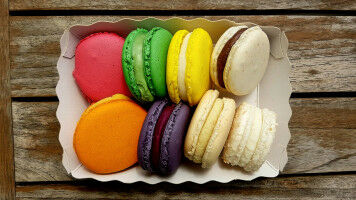
A new global study by researchers from EPFL, the University of Fribourg, and Microsoft Research has found there was an overall surge in high calorie foods such as pastries, bread and pies during the first wave of the COVID-19 pandemic, with potential implications for public health. The COVID-19 pandemic has altered people's lives around the world.
Astronomy & Space - Chemistry - 25.02.2022

The shape of galaxies and how they evolve depend on a web of cosmological filaments that run across the Universe. According to a recent study headed by EPFL's Laboratory of Astrophysics, this cosmic web plays a much bigger role than previously thought. Across the Universe, galaxies are distributed along what's called the cosmic web, a complex network of filaments made up of ordinary and dark matter.
Physics - Innovation - 16.02.2022

Scientists at EPFL's Swiss Plasma Center and DeepMind have jointly developed a new method for controlling plasma configurations for use in nuclear fusion research. EPFL's Swiss Plasma Center (SPC) has decades of experience in plasma physics and plasma control methods. DeepMind is a scientific discovery company acquired by Google in 2014 that's committed to 'solving intelligence to advance science and humanity.
Life Sciences - Chemistry - 14.02.2022
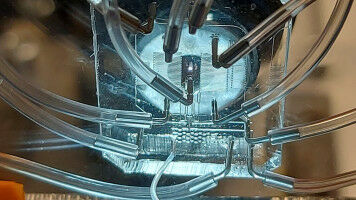
Bioengineers at EPFL have found a way to radically increase the efficiency of single-cell RNA-sequencing, a powerful tool that can -read- the genetic profile of an individual cell. Single-cell RNA sequencing, or -scRNA-seq- for short, is a technique that allows scientists to study the expression of genes in an individual cell within a mixed population - which is virtually how all cells exist in the body's tissues.


