






news
Swiss Federal Institute of Technology Lausanne, EPFL
Results 461 - 480 of 1376.
Environment - Earth Sciences - 11.02.2022

An international team of scientists conducted CALISHTO, a large-scale air measurement campaign in Greece last fall, with the goal of surveying, counting and characterizing the tiny particles and their impact on cloud formation. The goal is to incorporate this information in climate models for improved predictions of clouds, precipitation and climate.
Environment - Computer Science - 09.02.2022

A team of experts in artificial intelligence and animal ecology have put forth a new, cross-disciplinary approach intended to enhance research on wildlife species and make more effective use of the vast amounts of data now being collected thanks to new technology. Their study appears today. The field of animal ecology has entered the era of big data and the Internet of Things.
Innovation - Environment - 07.02.2022

EPFL spin-off nu glass has successfully tested a portable system that makes the window panes on railcars permeable to mobile communications. This can bring significant environmental and cost benefits to railway companies and mobile-phone operators, since they'll no longer have to install signal boosters to provide wireless connectivity for passengers.
Materials Science - 03.02.2022

Researchers have developed a new type of printing process that involves removing material rather than depositing it.
Life Sciences - Pharmacology - 01.02.2022
Localis-rex: a new tool for studying electrophile signaling
A team of researchers led by Professor Yimon Aye at EPFL's School of Basic Sciences has developed a new screening method to explore an important biological process known as electrophile signaling. In general, an electrophile is a highly reactive compound that -seeks- to bond with atoms or other molecules that have an available electron pair.
Life Sciences - Health - 28.01.2022
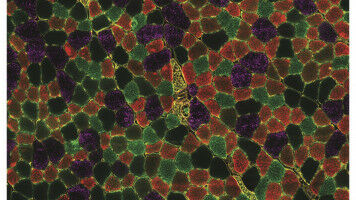
Scientists have made the first link between muscular dystrophy and a group of bioactive fats, the sphingolipids, which are involved in numerous cell functions and other diseases. In a new study, the group of Johan Auwerx at EPFL's School of Life Sciences has made the first connection between muscular dystrophy and sphingolipids, a group of bioactive lipids.
Chemistry - Environment - 26.01.2022
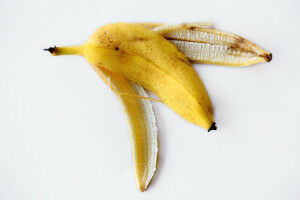
Scientists at EPFL have developed a way to maximize hydrogen yields from biowaste, within few milliseconds. The method uses rapid photo-pyrolysis to produce hydrogen gas and solid conductive carbon from banana peels. As the world's energy demands increase, so does our consumption of fossil fuels. The result is a massive rise in greenhouse gases emissions with severely adverse environmental effects.
Environment - 24.01.2022
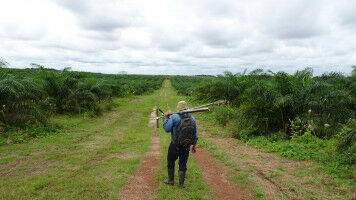
A team of scientists from EPFL and Switzerland's WSL research institute has studied the conversion of savannas into oil palm plantations as a deforestation-free way of growing these plantations. What's more, if improved management practices are adopted at the plantation scale, then the net carbon balance could be enhanced and a great leap could be made towards reducing the environmental impact of palm oil.
Physics - Materials Science - 21.01.2022

Scientists at EPFL have boosted the efficiency and scalability of perovskite solar cells by replacing their electron-transport layers with a thin layer of quantum dots. Perovskites are hybrid compounds made from metal halides and organic constituents. They show great potential in a range of applications, e.g. LED lights, lasers, and photodetectors, but their major contribution is in solar cells, where they are poised to overtake the market from their silicon counterparts.
Health - Life Sciences - 20.01.2022
Scientists at EPFL and the University Hospital of Lausanne (CHUV) have found the biological mechanism behind the inflammation seen in COVID-19 infections that involve a rise in interferons in the lungs and skin. As the COVID-19 pandemic rages on, scientists across the world are looking at the pathology of the SARS-CoV-2 virus in an effort to find effective treatments for patients.
Health - Life Sciences - 18.01.2022
Neutral mutants can prevail in gut microbiota, enhancing diversity
Scientists at EPFL and Sorbonne propose a new model of the diversity and evolution of gut bacteria that shows how the gut environment helps neutral mutations become prevalent, with significant potential implications on health and metabolic diseases. -We are used to thinking of evolution as a very slow process, and this is definitely the case for large mammals etc,- says Professor Anne-Florence Bitbol at EPFL's School of Life Sciences.
Chemistry - Physics - 14.01.2022
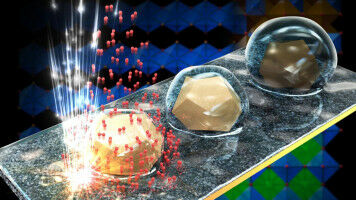
Scientists have observed how catalysts behave at the particle level during water electrolysis. Catalysts play a crucial role in this reaction, in which water splits into hydrogen and oxygen. By shedding light on the underlying mechanism of the functional role of catalysts during the reaction, the scientists have made an important discovery for the design of renewable-energy storage systems.
Life Sciences - Chemistry - 12.01.2022
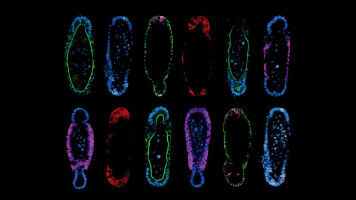
Organoids are miniature lab-grown tissue structures that can mimic real organs. But guiding stem cells to grow an organoid of defined shape and size is difficult. Now, EPFL bioengineers have developed new methods for successfully guiding the stem cells to grow into intestinal tissues with real-life 3D structure and function.
Chemistry - Physics - 11.01.2022
Increasing efficiency in artificial photosynthesis
Chemical engineers at EPFL have developed a new approach to artificial photosynthesis, a method for harvesting solar energy that produces hydrogen as a clean fuel from water. -Artificial photosynthesis is the holy grail of all chemists,- says Astrid Olaya, a chemical engineer at EPFL's Institute of Chemical Sciences and Engineering (ISIC).
Life Sciences - Pharmacology - 10.01.2022
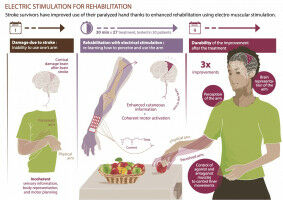
Stroke survivors have improved recovery of hand and arm function with the help a new rehabilitation protocol thanks to finely tuned electrostimulation of target muscles in the arm. After lying for a while in a way that puts pressure on a nerve in your arm, it may happen that you no longer feel your arm anymore.
Architecture & Buildings - History & Archeology - 07.01.2022

Scientists have studied the unique features of the decorative vaulting known as muqarnas in Spain's Alhambra palace and fortress complex. Muqarnas are commonly found in Islamic architecture, yet they are poorly understood by the architectural community and the little data that exist on them have been simplified over time.
Physics - 07.01.2022
At EPFL, a team of scientists created and observed a new physical phenomenon on an optical chip using modified lights. Technology is increasingly moving towards miniaturization and energy efficiency. This also applies to electronic chips. Light, and optics more broadly, are functional in making compact and portable chips.
Computer Science - Physics - 06.01.2022

Engineers at EPFL have developed a method for reading several qubits - the smallest unit of quantum data - at the same time. Their discovery paves the way to a new generation of even more powerful quantum computers. -IBM and Google currently have the world's most powerful quantum computers,- says Prof. Edoardo Charbon, head of the Advanced Quantum Architecture Laboratory (AQUA Lab) in EPFL's School of Engineering.
Pharmacology - Life Sciences - 29.12.2021

Thanks to the high-power electron microscopes at the Dubochet Center for Imaging (DCI), scientists were able to observe the configuration of the Omicron variant's spike protein at a near-atomic scale. This should provide fresh insight into the mechanisms the variant uses to evade vaccines and antibodies.
Physics - Chemistry - 23.12.2021

Scientists in Switzerland and Germany have achieved efficient electron-beam modulation using integrated photonics - circuits that guide light on a chip. The experiments could lead to entirely new quantum measurement schemes in electron microscopy. The transmission electron microscope (TEM) can image molecular structures at the atomic scale by using electrons instead of light, and has revolutionized materials science and structural biology.


