





news
University of Basel
Results 1 - 20 of 447.
Health - 24.03.2026
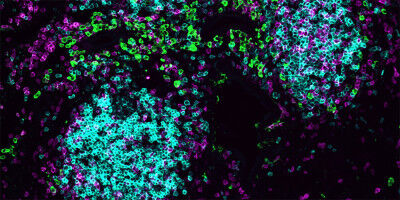
When a virus enters the lungs, the immune system has to react fast. The lung maintains its own community of immune cells capable of mounting a local defense on the spot. Researchers from the University of Basel now describe the role of a specialized group of cells that orchestrates this local response, directing neighboring immune cells to work together.
Health - Pharmacology - 19.03.2026
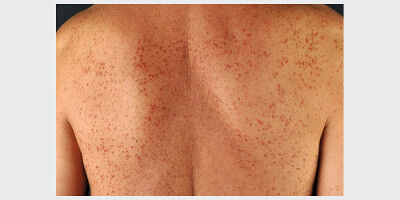
There is a promising new drug for the rare disease mastocytosis, which is associated with skin lesions, among other things. Researchers at the University of Basel have now been able to use artificial intelligence to quantitatively measure for the first time the extent to which it reduces skin lesions.
Life Sciences - Innovation - 12.03.2026

How does a tiny cluster of cells become an embryo with a head, trunk, and tail? And how do thousands of genes coordinate this development? A new imaging method makes it possible to visualize the activity of thousands of genes simultaneously throughout the entire zebrafish embryo. Using this technology, a research team at the University of Basel has created an atlas of all genes and cells involved in turning a cluster of cells into an embryo.
Pharmacology - Health - 09.03.2026

Many people find it difficult to take their medication correctly as prescribed. This has significant health implications and economic consequences. Digital health apps are designed to help people take their medication correctly. However, a study by the University of Basel shows that digital assistants do not replace the need for personalized professional support.
Health - 09.03.2026

Why do many people say they are so exhausted in the spring? Researchers at the Center for Chronobiology at the University of Basel, the University Psychiatric Clinics Basel (UPK) and the Inselspital in Bern investigated this question. The study reveals that spring fatigue appears to be more of a cultural phenomenon than a measurable biological one.
Health - Life Sciences - 26.02.2026

Researchers at the University of Basel have developed a gene therapy that could potentially treat a rare and currently fatal muscle disease in children. The study shows in animal models that a single treatment is sufficient to stabilize muscles and nerves and to halt disease progression. The challenge now is to bring this promising therapy into the clinic.
Health - Innovation - 26.02.2026

Lasers cut precisely and without contact - ideal for surgery. The problem is that, in hard tissues such as bone, they are too slow and do not cut deep enough. Researchers at the University of Basel have now demonstrated a way to cut much deeper and faster with a surgical laser than with previous laser systems.
Life Sciences - Physics - 17.02.2026
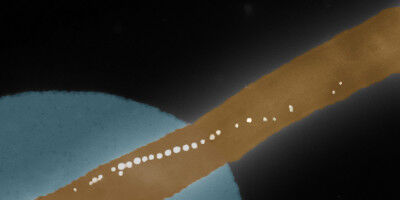
Some bacteria are miniature masters of navigation: A built-in "compass" made of magnetic nanoparticles helps them to reliably find the optimal habitat. Researchers at the University of Basel have now unlocked the magnetic properties of individual bacteria - an important step toward harnessing the potential for technology, environmental research and medical applications.
Health - Pharmacology - 12.02.2026
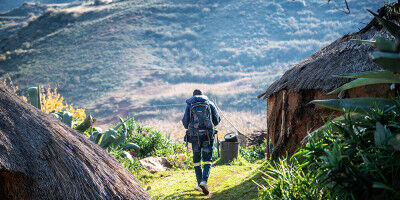
In rural regions of Africa, high blood pressure often goes untreated because health centres are far away and there is a shortage of health professionals. A study in Lesotho shows that, with the help of a tablet app, villagers who have received training achieve better blood pressure control in their village community compared to normal treatment in healthcare facilities.
Physics - 22.01.2026
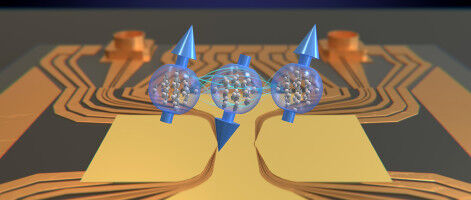
Researchers at the University of Basel and the Laboratoire Kastler Brossel have demonstrated how quantum mechanical entanglement can be used to measure several physical parameters simultaneously with greater precision. Entanglement is probably the most puzzling phenomenon observed in quantum systems.
Health - 21.01.2026

Fluoride is used worldwide to prevent tooth decay - for example, in dental care products, table salt, and, in some countries, in drinking water. However, health concerns are raised, particularly in places where fluoride is added to drinking water. An international research team involving the University of Basel has evaluated data from over 11 million births and reached a clear conclusion.
Agronomy & Food Science - History & Archeology - 21.01.2026
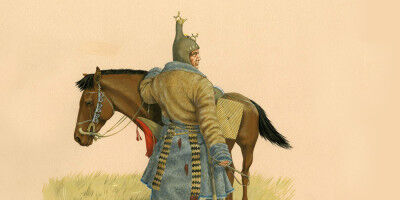
Researchers have deciphered the diet of an important nomadic people in Eastern European history. By analyzing dental calculus, they have provided the first direct evidence that the diet of the Scythians included milk from various ruminants and horses. For centuries, the Scythians have been regarded as a nomadic horsemen people who roamed the vast steppes of Eurasia during the Iron Age.
Physics - 19.01.2026

For the first time and with unprecedented accuracy, a team of researchers from the University of Basel has observed unique energy flow mechanisms in a semiconductor material following excitation by extremely short laser pulses. Gaining a better understanding of these energy flow is vital for improving the efficiency of electronic devices and computer chips.
Social Sciences - Sport - 13.01.2026

Short exercise sessions can help children build social relationships. This has been demonstrated by researchers from the Department of Sport, Exercise and Health at the University of Basel. An "active" short break could be a fun way to integrate these findings into everyday school life. Exercise is good for many things - including making it easier to establish social relationships.
Health - Life Sciences - 13.01.2026

Autoimmune diseases such as multiple sclerosis arise when the immune system turns against the body itself. Yet for most of them, it remains unclear why this process begins. Researchers have now identified how the Epstein-Barr virus can, under specific conditions, initiate early multiple sclerosis-like damage in the brain.
Pharmacology - Health - 09.01.2026
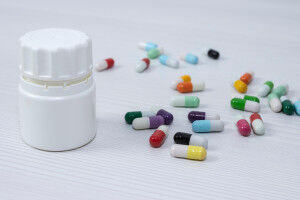
Drugs that act against bacteria are mainly assessed based on how well they inhibit bacterial growth under laboratory conditions. A critical factor, however, is whether the active substances actually kill the pathogens in the body. Researchers at the University of Basel have presented a new method for measuring how effectively antibiotics kill bacteria.
Psychology - Politics - 06.01.2026

Researchers at the University of Basel have developed a tool that measures when people engage in dialog across political divides. The results show that personal factors play a greater role in people's willingness to engage in dialog than the controversial nature of a topic. "Democracy thrives on political discourse," says Dr Melissa Jauch, a research associate in the Department of Social Psychology at the University of Basel.
Health - 05.01.2026
When ovarian cancer alters the abdominal cavity
Ovarian cancer often forms secondary tumors, especially in a certain tissue in the abdominal cavity known as the omentum. Researchers from the University of Basel and University Hospital Basel have investigated what happens when the cancer "hijacks" this organ. It is hoped their findings will lead to more successful treatments.
Health - Life Sciences - 17.12.2025
Individual genetic differences render some therapies ineffective
The genome differs from person to person in thousands of positions. In some cases, this means that proteins have a different building block in certain regions, rendering some antibody-based therapies ineffective, report researchers from the University of Basel. Antibody-based therapies are used to treat numerous diseases, from cancer to rheumatic disorders and multiple sclerosis.
Health - Life Sciences - 15.12.2025
A fatal mix-up: how certain gut bacteria drive multiple sclerosis
If gut bacteria are too similar to the protective layer of nerves, they can misdirect the immune system and cause it to attack its own nervous system. This mechanism can accelerate the progression of multiple sclerosis, as researchers at the University of Basel have shown in trials with mice. However, their results also open up opportunities for treatments that make use of the microbiome.


