









news
University of Geneva
Results 1 - 20 of 449.
Life Sciences - Environment - 26.03.2026
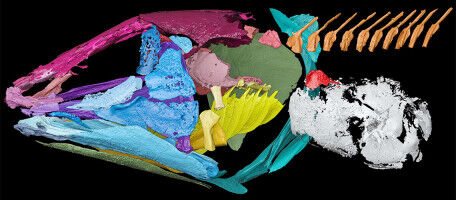
A study by UNIGE and MHNG shows that 240-million-year-old coelacanths could hear underwater using an ossified lung. How did ancient fish perceive their environment in the deep-sea? An international team led by scientists from the Natural History Museum of Geneva (MHNG) and the University of Geneva reveals that some coelacanths - fish living 240 million years ago - used their lung to detect sounds underwater.
Life Sciences - 23.03.2026
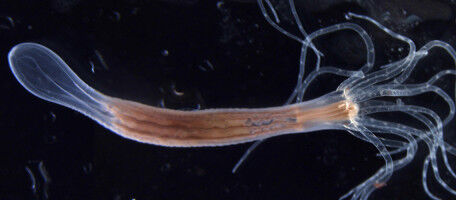
A study by UNIGE and EMBL shows how differences in tissue mechanical properties shape the diversity of forms across species. Why do animals display such a wide range of shapes, even within the same group? By studying corals, jellyfish, and sea anemones, scientists from the University of Geneva and the European Molecular Biology Laboratory (EMBL) show that this diversity is partly explained by the physical properties of tissues, such as their ability to contract, stretch, or resist deformation.
Life Sciences - Health - 16.03.2026
A team from the University of Geneva shows that early alterations in the brain's clearance system could contribute to vulnerability to psychosis. How can we explain the onset of psychotic symptoms characteristic of schizophrenia? Despite their major and often irreversible impact on intellectual abilities and autonomy, the biological mechanisms that precede their emergence remain poorly understood.
Health - Psychology - 10.03.2026

A UNIGE study shows that connected devices can gather valuable data to help prevent neurological and mental disorders. Can smartphones or smartwatches help detect early signs of neurological or mental illness? Researchers at the University of Geneva monitored a group of participants wearing connected devices, and used artificial intelligence to analyse data such as heart rate, physical activity, sleep and air pollution.
Health - Life Sciences - 05.03.2026

A team from the University of Geneva and the HUG reviewed 900 scientific articles to better understand the impact of viruses on memory, attention, and concentration. What impact does a viral infection have on our memory, attention, and concentration? The COVID-19 pandemic has reignited interest in this question, which has now been extended to other infections such as HIV, herpes, and hepatitis.
Life Sciences - Health - 24.02.2026

The 'Swiss 100' study has identified 37 proteins in centenarians' blood whose profile appears linked to slower ageing.
Health - Life Sciences - 23.02.2026
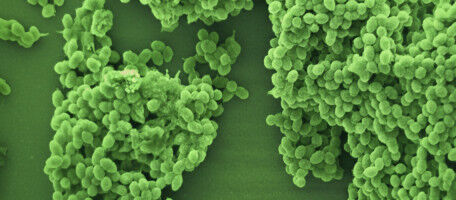
In infectious disease research, disrupting bacterial communication is widely considered beneficial. A study by UNIGE and NTU Singapore shows this is not always true. Is blocking bacterial communication always beneficial? A team from the University of Geneva and Nanyang Technological University, Singapore (NTU Singapore) challenges a widely held assumption in infectious disease research.
Pharmacology - Life Sciences - 10.02.2026
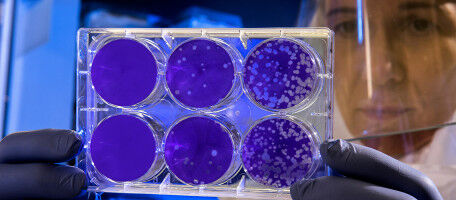
A team from the University of Geneva has shown that certain antibodies to seasonal flu can also target avian flu. Stimulating these antibodies could strengthen protection in the event of a pandemic. Are seasonal flu antibodies also effective against avian flu? A team from the University of Geneva has shown that a specific type of antibody associated with the former virus-already present throughout the population-may offer baseline protection against the latter.
Health - Life Sciences - 05.02.2026
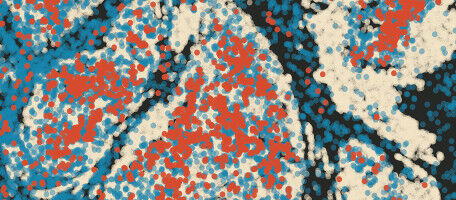
A team from the University of Geneva reveals how the 'hijacking' of neutrophils, a type of immune cell, promotes cancer growth and could provide insights into disease progression. Predicting tumour progression is one of the major challenges in oncology. Scientists at the University of Geneva and the Ludwig Institute for Cancer Research have discovered that neutrophils, a type of immune cell, undergo reprogramming when they come into contact with the tumour ecosystem and contribute to its progression.
Life Sciences - Health - 26.01.2026
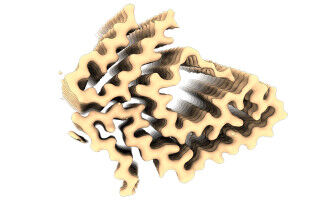
By determining the structure of the deposits responsible for transthyretin amyloidosis through a simple skin biopsy, scientists from the University of Geneva are paving the way for a new diagnostic method for neurodegenerative diseases. Transthyretin amyloidosis (ATTR) is a rare, progressive and highly aggressive degenerative disease.
Health - Life Sciences - 22.01.2026

A study shows how napping improves the brain's learning capacity. Even a short afternoon nap can help the brain recover and improve its ability to learn. In a study published on January 22, 2026, in the journal NeuroImage , researchers at the Medical Center - University of Freiburg , Geneva University Hospitals (HUG) and University of Geneva , show that even a nap is enough to reorganize connections between nerve cells so that new information can be stored more effectively.
Health - Pharmacology - 22.01.2026
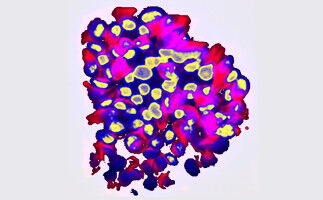
Scientists developed an algorithm able to anticipate the risk of cancer metastasis and recurrence. Why do some tumours spread while others remain localised? The mechanisms governing the metastatic potential of tumour cells remain largely unknown - yet understanding this is crucial for optimising patient care.
Physics - 20.01.2026

A team from the University of Geneva shows that it is possible to determine the state of a quantum system from indirect measurements when it is coupled to its environment. What is the state of a quantum system? Answering this question is essential for exploiting quantum properties and developing new technologies.
Life Sciences - 16.01.2026
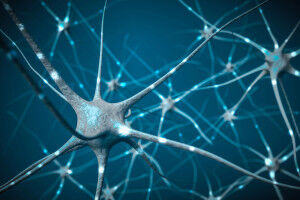
A team from the University of Geneva has shown that neurons positioned in the wrong place can still perform their function without disrupting the brain's overall operation. Can the brain keep working when its architecture changes? Researchers at the University of Geneva have discovered that neurons located in the wrong place can still carry out their normal function - challenging long-held assumptions about how the brain is organized.
Health - Life Sciences - 16.01.2026
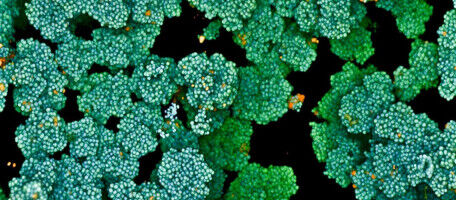
Scientists from NTU Singapore and the University of Geneva have discovered a new way to neutralise antibiotic-resistant bacteria, helping chronic wounds heal more effectively. Treating chronic wounds represents a major public health challenge, starting with diabetic foot ulcers, which affect an estimated 18.6 million people worldwide each year.
Environment - Computer Science - 15.01.2026

Which vinegrowing practices should be adopted to anticipate climate change? A team from the University of Geneva and Agroscope provides clues using climate analogues. What will the climate of a given region be like in 20, 30 or 50 years? Climate analogues provide a robust methodological framework to address this question by identifying regions whose current climate matches the future climate of another area.
Health - Life Sciences - 13.01.2026
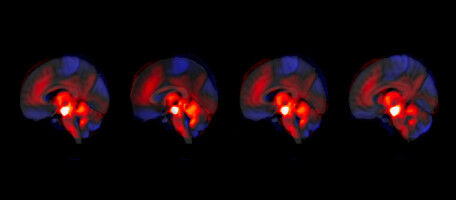
A UNIGE and HUG team has, for the first time, described the interaction between the cerebellum and the brain's reward system in people with schizophrenia. Apathy, social withdrawal, and loss of motivation - the so-called ''negative'' symptoms of schizophrenia - are among the most disabling and hardest to treat.
Life Sciences - Health - 08.01.2026
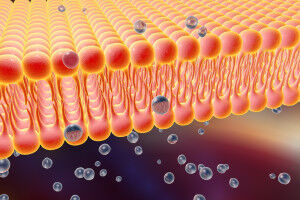
A landmark atlas shows lipids rely on specialised transporters to reach their cellular targets. In addition to providing energy, lipids are also essential building blocks of our cell membranes. However, despite their importance, they remain poorly understood. A team from the University of Geneva has revealed for the first time the secrets of their transport within cells.
Health - Life Sciences - 07.01.2026

An international team has provided the first direct evidence of the beneficial effects of scheduled daylight as compared to artificial light in people with type 2 diabetes. Metabolic diseases have reached epidemic proportions in our society, driven by a sedentary lifestyle coupled with circadian misalignment - a desynchrony between our intrinsic biological clocks and environmental signals.
Astronomy & Space - Physics - 10.12.2025

Thanks to the space telescope, a team of astronomers detected with unprecedented precision two helium tails escaping from the exoplanet WASP-121b. Astronomers from the University of Geneva , the National Centre of Competence in Research PlanetS, and the Trottier Institute for Research on Exoplanets (IREx) at the University of Montreal (UdeM) have made a striking discovery using the James Webb Space Telescope (JWST).


