


Engineering sciences - Electroengineering
Data-driven modelling of residual flows

Estimates as to how much more electricity could be generated from hydropower in the absence of residual flow requirements vary widely, and they have previously been based on inadequate data. A team of researchers from WSL, the University of Bern and Eawag has now used a new database and simulations to show that, between now and 2050, the additional decrease in production due to residual flow requirements - amounting to barely 2% - is likely to be much lower than feared.
Light changes a magnet’s polarity
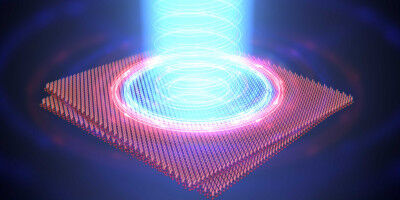
Researchers at ETH Zurich and the University of Basel have succeeded in changing the polarity of a special ferromagnet using a laser beam. In the future, this method could be used to create adaptable electronic circuits with light.
The twisted nanotubes that tell a story
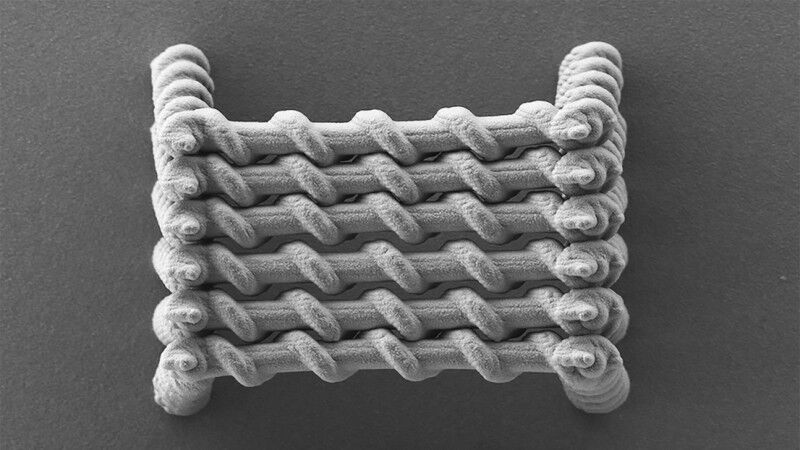
In collaboration with scientists in Germany, researchers have demonstrated that the spiral geometry of tiny, twisted magnetic tubes can be leveraged to transmit data based on quasiparticles called magnons, rather than electrons.
An electronic fiber for stretchable sensing
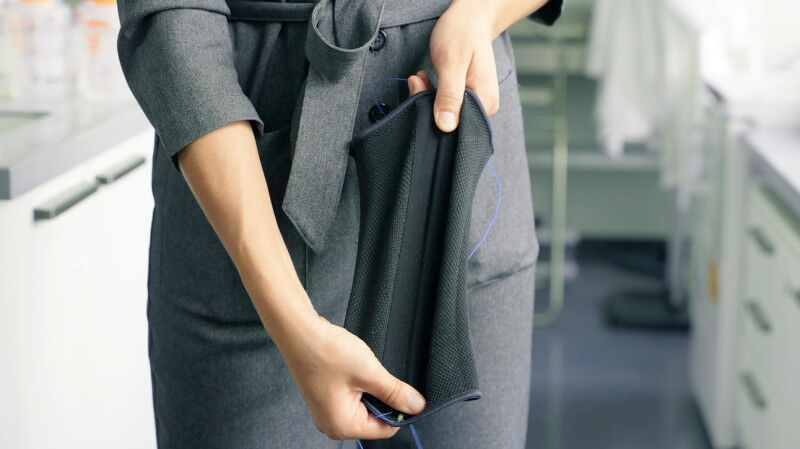
Researchers have engineered a fiber-based electronic sensor that remains functional even when stretched to over 10 times its original length. The device holds promise for smart textiles, physical rehabilitation devices, and soft robotics.
ReFuel.ch and Oman to join forces

An important step for moving forward in developing a sustainable fuel production: The SWEET consortium reFuel.ch and the Port of Sohar and Freezone in Oman are joining forces for launching a research and production facility. Their commitment to collaborate in upscaling sustainable fuel production is marked by a letter of intent, signed at the Green Hydrogen Summit in Oman in December 2025.
Fast and easy charging of electric cars without cables
Automatic charging instead of plugging in cables: In a cooperative project, researchers investigated inductive charging of electric cars. This is not only similarly efficient to cable-based charging, but could also simplify the integration of vehicle batteries as flexible storage devices into the electricity grid. The first cars in Switzerland to be converted for inductive charging have already been approved for road use.
Bridging light, microwaves and electrons for precision calibration
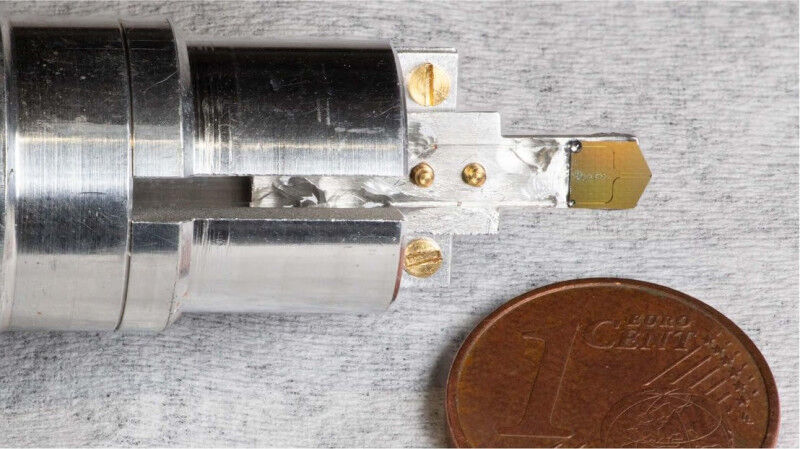
Researchers have developed a method to calibrate electron spectrometers with extreme accuracy by linking microwave, optical, and free-electron frequencies.
Selected Jobs
PhD position in Precision metrology of millimeterwave signals using integrated photonics EPFL, Lausanne


