


Natural Sciences - Astronomy & Space
AI helps marine scientists track floating debris from space

Under the EPFL-led ADOPT project, researchers are combining AI satellite-image recognition with drift prediction models to improve the collection of plastic debris in the ocean. The technology has passed the proof-of-concept stage and is ready for field testing.
If alien signals reached Earth, why haven't we seen them?

For decades, scientists have searched the skies for signs of extraterrestrial technology. A study from EPFL asks a sharp question: if alien signals have already reached Earth without us noticing, what should we realistically expect to detect today?
Why only a small number of planets are suitable for life

Researchers have demonstrated why only a small number of planets have the chemical requirements for life - and why the Earth is so fortunate. Their findings may have consequences for the search for life elsewhere in the universe.
Life Beyond Earth: significant federal funding for IRSOL and NCCR Genesis
Istituto ricerche solari Aldo e Cele Daccò (IRSOL) wins a Swiss federal funding to search for life beyond Earth using polarimetry, as a partner of the National Centres of Competence in Research (NCCR) Genesis.
CHEOPS detects a new planetary ’disorder’
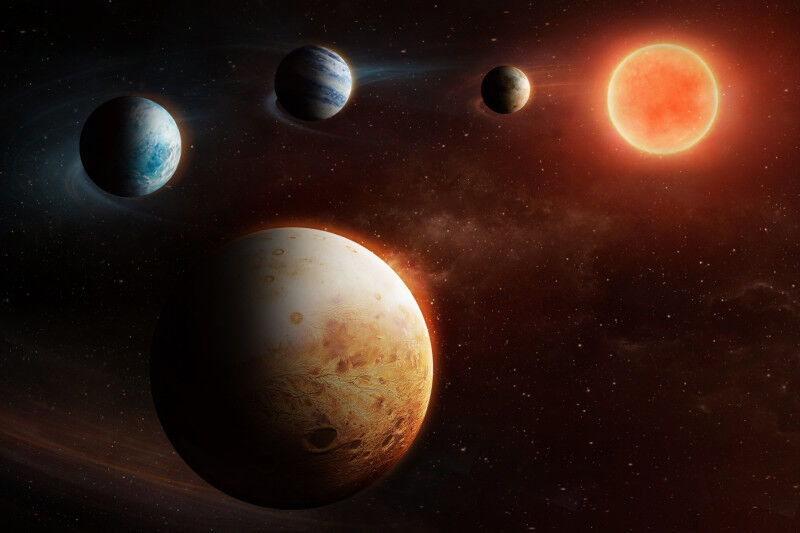
First the rocky planets, very close to their star, then the gas giants: this is the order in which scientists have hitherto conceived of the hierarchy of planets.
Empa experiments aboard the ISS
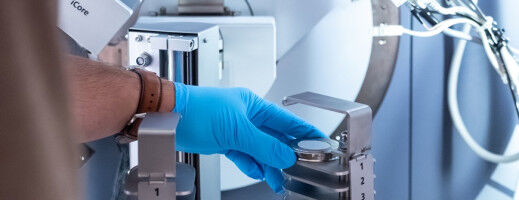
Metallic glasses are novel materials with applications in space technology, but also in medicine and the watch industry. To better understand their properties and improve their production, researchers are conducting various experiments on board the International Space Station (ISS) in collaboration with the European Space Agency (ESA).
Mercury is not a "dead planet"
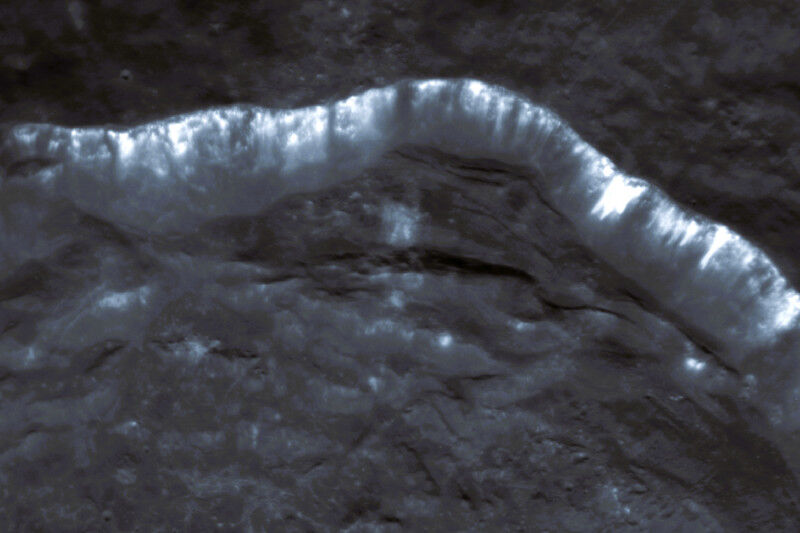
A new study led by the University of Bern has discovered a large number of bright streaks, also known as "lineae", on Mercury, which are presumably caused by the outgassing of volatile material from the planet's interior.
Selected Jobs
PhD Position in Search for Earth-Sized Planets Transiting Nearby Ultra-Cool Dwarf Stars (DUET Project) Eidgenossische Technische Hochschule Zürich, ETHZ, Zurich
Phd position in extreme-precision radial velocity instrumentation for earth-like exoplanets (harvy project) Eidgenossische Technische Hochschule Zürich, ETHZ, Zurich


