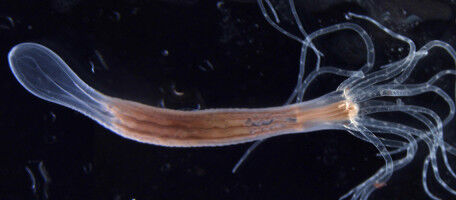
Aeromonas hydrophila pathogenic bacteria (blue) secrete aerolysin toxin (green). At the surface of its target cell, the protein undergoes major changes that lead to the formation of a pore in the host cell plasma membrane. The host cell thereby gets leaky and dies.
Molecular biologists at the University of Bern have discovered a mechanism which enables a deadly toxin to penetrate and destroy human cells. Their findings can serve a rational framework for the design and development of new anti-toxin drugs. Pathogenic bacteria produce a variety of toxins in order to attack their hosts. Some of these toxins have also been classified as potential bioterrorism weapons. A particularly efficient and deadly type of toxin punches holes in the membrane of host cells, and thereby kills them. This type of toxin, called pore forming toxins, is found in a very large number of bacteria. Aeromonas hydrophila is a bacterium that produces a pore forming toxin called aerolysin.
POUR LIRE CET ARTICLE, CRÉEZ VOTRE COMPTE
Et prolongez votre lecture, gratuitement et sans engagement.
Vos avantages
- Accès à l'ensemble du contenu
- Recevoir des alertes pour les nouvelles et les offres d'emploi
- Publier des annonces