During the eruption of Mount Pinatubo in June 1991, large quantities of ash particles were ejected into the stratosphere. The eruption’s impact on the climate lasted for years. (Bild: Dave Harlow, USGS)
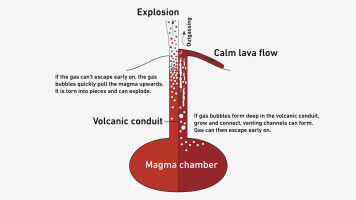
During the eruption of Mount Pinatubo in June 1991, large quantities of ash particles were ejected into the stratosphere. The eruption's impact on the climate lasted for years. (Bild: Dave Harlow, USGS) - The more water is dissolved in the magma, the greater the risk that a volcano will explode. A new ETH study now shows that this simple rule is only partially true. Paradoxically, high water content significantly reduces the risk of explosion. Volcanologists have long been troubled by two questions: When exactly will a volcano erupt next? And how will that eruption unfold? Will the lava flow down the mountain as a viscous paste, or will the volcano explosively drive a cloud of ash kilometres up into the atmosphere? The first question of "when" can now be answered relatively precisely, explains Olivier Bachmann, Professor of Magmatic Petrology at ETH Zurich. He points to monitoring data from the Canary Island of La Palma, where the Cumbre Vieja volcano recently emitted a lava flow that poured down to the sea.
TO READ THIS ARTICLE, CREATE YOUR ACCOUNT
And extend your reading, free of charge and with no commitment.