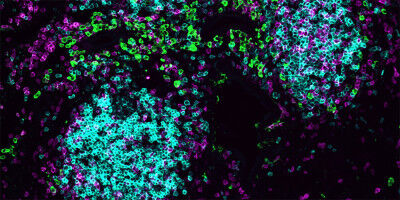


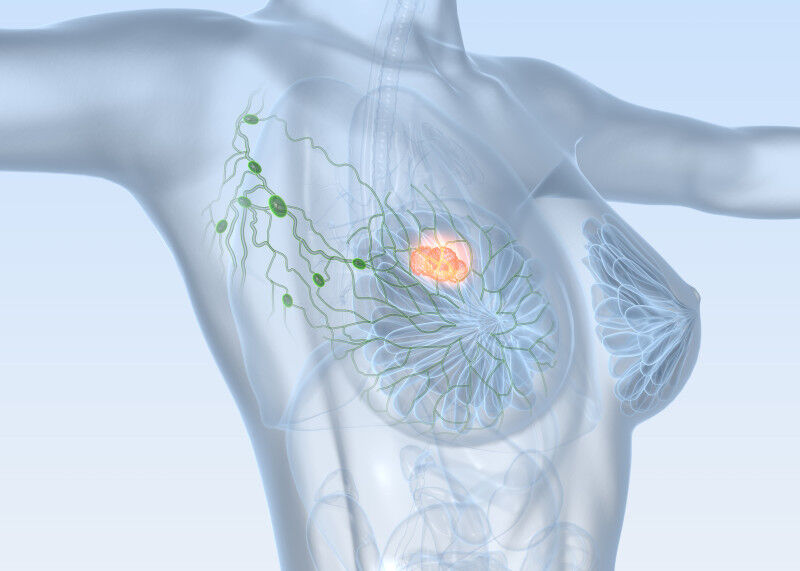
Cancer cells that have detached from the original tumor often spread to other organs. There they can either form metastases or remain ’dormant’ for years until they wake up. A team of scientists at the University of Freiburg has discovered a mechanism by which cancer cells can be kept dormant by stimulating the immune response. These findings have now been published in the journal NPJ Breast Cancer and could contribute to better care for women suffering from breast cancer
Thanks to early detection and modern treatment methods, most breast cancer patients today have a very good chance of recovery. However, some patients do develop metastases, which are unfortunately still difficult to treat. Finding ways to suppress these metastases would open up new therapeutic perspectives
The immune system plays a central role in the fight against cancer: it can prevent the formation of tumors, keep cancer cells in a ’dormant’ state and inhibit their growth. A better understanding of how cancer cells enter this dormant state, remain there and later wake up is therefore of great clinical importance.
CXCL10: A ’sleeping pill’ molecule that stimulates the immune system
In experiments on mouse models, Alev Ylmaz, a postdoctoral researcher in Curzio Rüegg’s team at the University of Fribourg, together with Qiang Lan, a research fellow at the University of Bristol, discovered that a molecule produced by dormant cancer cells can keep cancer cells dormant in triple-negative breast cancer - a particularly aggressive form
This molecule, called CXCL10, belongs to the chemokines, a well-known family of molecules capable of attracting immune cells. CXCL10 can attract immune cells to the tumor site, where they fight the tumor. This prevents the cancer cells from spreading. However, if CXCL10 or its receptor CXCR3 is blocked, the immune cells cannot reach the tumor: Cancer cells awaken from their lethargy, start to grow again and can spread to other organs such as the lungs
Building on these results, the researchers have identified a ’sleep signature’ associated with CXCL10 that is detectable in the patients’ tumors. ’This signal shows that the cancer cells are dormant rather than active,’ explains Alev Ylmaz. ’It is particularly noteworthy that patients with this signature have a better prognosis on average.
Consequences for patients
The findings shed new light on the central role of the immune system in the progression of breast cancer and open up new treatment perspectives. On the one hand, they suggest that targeting the CXCL10/CXCR3 pathway could improve the care of patients with triple-negative breast cancer. Secondly, the CXCL10-based sleep signature could help to identify patients who are at increased risk of metastasis and could therefore benefit most from new treatment strategies.
Yilmaz, A., Haerri, L., Estrella Granda, M., Coquoz, O., Lan, Q., & Rüegg, C. (2026). The CXCL10/CXCR3 axis is essential for sustaining immunological dormancy in triple-negative breast cancer. npj Breast Cancer. https://doi.org/10.1038/s41523-026-00903-6