







news
University of Geneva
Results 121 - 140 of 449.
Health - Pharmacology - 16.05.2024
At the right time for tumours
By examining the immune modulations of tumours during the day, scientists from the University of Geneva and the LMU Munich are demonstrating their impact on the diagnosis and management of patients. The currently most promising anti-tumour treatments are immunotherapies, which aim to boost the action of the patients' immune system to fight cancer.
Astronomy & Space - 14.05.2024
Discovery of a planet around an ultra-cool star
Artist's concept of the exoplanet SPECULOOS-3 b orbiting its ultra-cool red dwarf star. The planet is as big as Earth, while its star is slightly larger than Jupiter, but much more massive. Credit: NASA/JPL-Caltech An international team of astronomers - including members of the NCCR PlanetS , the University of Geneva and the University of Bern (UNIBE) - has discovered, for only the second time, an Earth-sized exoplanet (SPECULOOS-3 b) around an ultra-cool Red Dwarf star.
Health - Chemistry - 30.04.2024
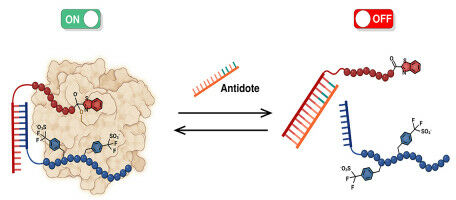
A team from the University of Geneva, in collaboration with the University of Sydney, has developed a new type of anticoagulant whose action can be rapidly stopped. Anticoagulant treatments are crucial for managing many conditions, such as heart disease, stroke and venous thrombosis. Current options, however, carry an inherent risk of serious bleeding due to trauma or unforeseen events.
Astronomy & Space - Physics - 24.04.2024

Thanks to ESA satellites, an international team including researchers has detected a giant eruption coming from a magnetar, an extremely magnetic neutron star. While ESA's satellite INTEGRAL was observing the sky, it spotted a burst of gamma-rays - high-energy photons - coming from the nearby galaxy M82.
Astronomy & Space - Physics - 16.04.2024

A high-mass stellar black hole has been discovered in preliminary data from the Gaia satellite by an international team led by astronomers from the University of Geneva. Wading through the inestimable wealth of data from ESA's Gaia mission, a team of scientists, including astronomers from the University of Geneva , uncovered a ''sleeping'' giant.
Life Sciences - Health - 10.04.2024
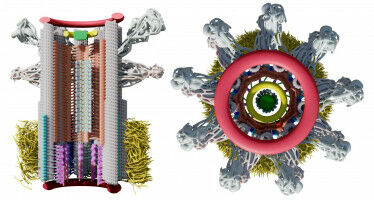
Scientists have reconstructed for the first time a film of the assembly of the human centriole, one of the essential structures that constitute our cells. Cells contain various specialised structures - such as the nucleus, mitochondria or peroxisomes - known as "organelles''. Tracing their genesis and determining their structure is fundamental to understanding cell function and the pathologies linked to their dysfunction.
Astronomy & Space - Earth Sciences - 05.04.2024
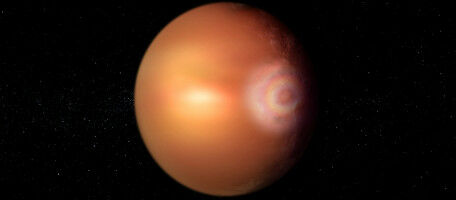
New observations from the space telescope point to the existence of a 'glory' in the atmosphere of WASP-76b, a luminous phenomenon like a rainbow. The CHEOPS space telescope, whose scientific operations centre is based at the University of Geneva , is providing new information on the mysterious exoplanet WASP-76b.
Health - Life Sciences - 04.04.2024
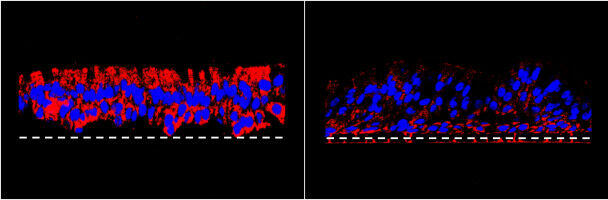
A team from the University of Geneva discovered that treatment for cystic fibrosis does not eliminate the docking stations of bacteria responsible for respiratory infections. Cystic fibrosis is a genetic and hereditary disease affecting specific cells - epithelial cells - lining certain organs, including the respiratory epithelium in our lungs (inset).
Life Sciences - Health - 20.03.2024
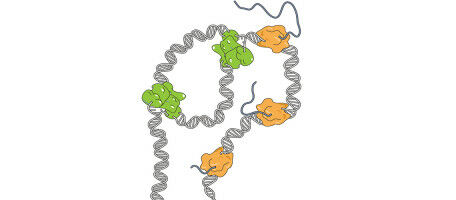
By showing how a type of anticancer drug kills cancer cells and damages healthy cells, a team from the University of Geneva is paving the way for improved treatments. Some anti-cancer treatments not only target tumour cells but also healthy cells. If their effects on the latter are too strong, their use can become limiting.
Life Sciences - Innovation - 18.03.2024

A team from the University of Geneva has developed an AI capable of learning a task solely on the basis of verbal instructions. And to do the same with a 'sister' AI. Performing a new task based solely on verbal or written instructions, and then describing it to others so that they can reproduce it, is a cornerstone of human communication that still resists artificial intelligence (AI).
Health - Life Sciences - 12.03.2024

A team from the University of Geneva and the HUG has revealed the role of the microbiota in the increased risk of developing liver disease in the offspring of mothers suffering from obesity. Obesity, which could reach 50% of the population in certain developed countries by 2030, is a major public health concern.
Mathematics - Pedagogy - 07.03.2024

Scientists show that our mental representations of mathematical problems influence our strategies for solving them. Solving arithmetic problems, even simple subtractions, involves mental representations whose influence remains to be clarified. Visualizing these representations would enable us to better understand our reasoning and adapt our teaching methods.
Life Sciences - Health - 04.03.2024

A team from the University of Geneva shows that our ability to produce dopamine - the 'happiness hormone' - is not correlated with increased vulnerability to drugs. Why do some people who try drugs struggle with substance abuse while others don't? This question has long puzzled scientists. A team from the University of Geneva explored the complex interplay between personality traits and brain chemistry.
Astronomy & Space - Earth Sciences - 09.02.2024
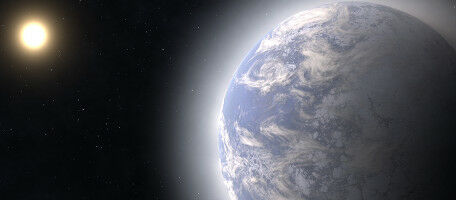
Exoplanets with a radius twice that of the Earth are rare. A team from MPIA, UNIGE and UNIBE has come up with new explanations. Why are so few exoplanets about twice the size of Earth detected? On the basis of computer simulations, a team from the Max Planck Institute for Astronomy (MPIA) and the Universities of Geneva (UNIGE) and Bern (UNIBE) has confirmed that the migration of sub-Neptunes planets - water-worlds - could explain this absence.
Health - 31.01.2024

Based on data from Geneva, Switzerland, a team from the University of Geneva and the HUG assessed the effectiveness of contact tracing in controlling the pandemic. During the COVID-19 pandemic, Switzerland, like many other countries, relied on contact tracing to identify people likely to have been contaminated by an infected acquaintance.
Campus - Health - 11.01.2024
How does social attention develop in autistic children?
A team from the University of Geneva shows how visual social skills develop in a unique way in children with autistic disorders. As they grow, children increasingly focus their attention on social elements in their environment, such as faces or social interactions. However, children with autism are often more interested in non-social stimuli, such as textures or geometric shapes.
Health - Pharmacology - 08.01.2024
Cultivating lung tumours to personalise treatments
A team from the University of Geneva and HUG has described, for the first time, a precise methodology for developing lung tumor spheroids. A team from the Geneva University Hospitals (HUG) and the University of Geneva has described, for the first time, a precise methodology for developing lung tumor spheroids.
Life Sciences - 19.12.2023

A team from the University of Geneva shows that the human brain is capable of identifying the vocalisations of certain primate species, if they are close to us and if the frequencies used are also close to our own. Are we able to differentiate between the vocal emissions of certain primates? A team from the University of Geneva asked volunteers to categorise the vocalisations of three species of great apes ( Hominidae ) and humans.
Chemistry - Agronomy & Food Science - 05.12.2023

A team of researchers has revealed how to find the exact origin of a wine based solely on its chemical components. Does every wine carry its own chemical signature and, if so, can this be used to identify its origin? Many specialists have tried to solve this mystery, without fully succeeding.
Health - Pharmacology - 04.12.2023

By analysing the lipid profiles of dozens of people, UNIGE and HUG scientists have highlighted the importance of fat in the detection and treatment of type 2 diabetes. While sugar is the most frequently named culprit in the development of type 2 diabetes, a better understanding of the role of fats is also essential.


