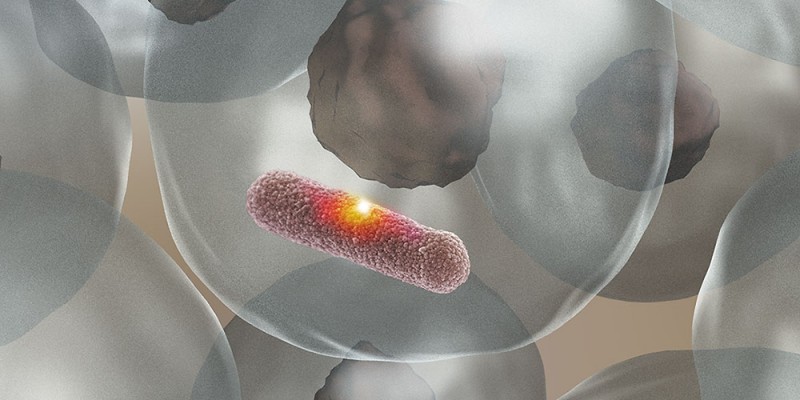
The enzyme MPO produces an aggressive acid which burns a hole into the bacterial cell envelope and kills the bacterium without damaging the surrounding tissue. (Image: University of Basel, Biozentrum)
Researchers from the University of Basel in Switzerland have clarified the role of the enzyme MPO. In fighting infections, this enzyme, which gives pus its greenish color, produces a highly aggressive acid that can kill pathogens without damaging the surrounding tissue. In the human body's fight against bacterial pathogens, white blood cells are in the front line. They identify and ingest the invaders, and render them harmless using highly toxic substances. It is important that these substances only destroy bacteria but cause as little collateral damage as possible to the surrounding tissue. The research groups headed by Prof. Dirk Bumann from the Biozentrum and Dr. Nina Khanna from the Department of Biomedicine at the University and the University Hospital Basel discovered how white blood cells solve this difficult task. The enzyme myeloperoxidase (MPO) attaches directly to the surface of the bacterium where it produces an extremely aggressive acid.
TO READ THIS ARTICLE, CREATE YOUR ACCOUNT
And extend your reading, free of charge and with no commitment.