

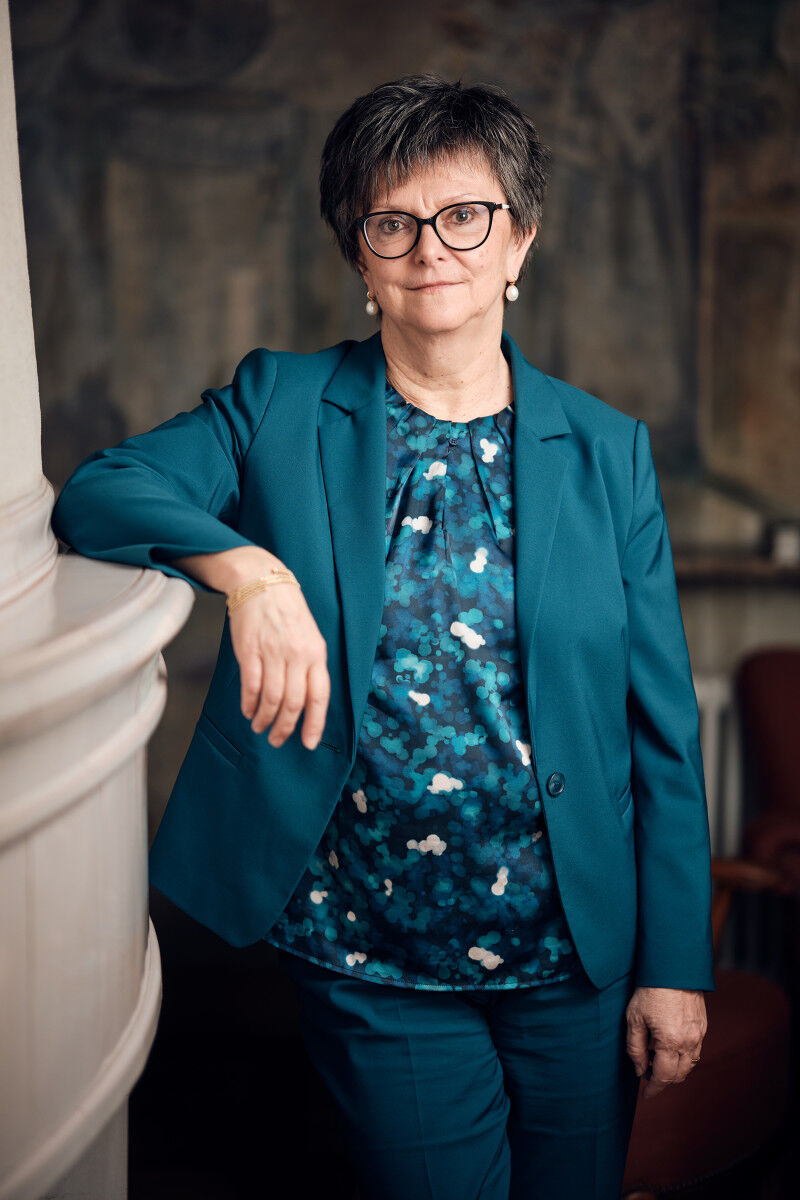
Neuroimmunologist Britta Engelhardt from the Theodor Kocher Institute at the University of Bern has been awarded an ERC Advanced Grant by the European Research Council (ERC). As she is conducting her research project at the University of Bern, it is not expected to be funded by the EU, but by the State Secretariat for Education, Research and Innovation (SERI).
In recognition of the progress made in negotiating the new agreement with the EU, researchers from Switzerland were able to participate in the 2024 ERC Advanced Grants call last August. However, if researchers who receive such an ERC grant remain in Switzerland and do not transfer their project to an eligible institution in the EU, they will probably receive the funding from the State Secretariat for Education, Research and Innovation (SERI) rather than from the EU. The ERC is part of the Horizon Europe research and innovation program.
Since mid-December 2024, Switzerland has been an Associated Country in the Horizon Europe research program for calls from the EU budget year 2025, and researchers in Switzerland are therefore only funded directly from Brussels for calls with the budget year 2025. With the Advanced Grants, the ERC supports established, leading researchers who are looking for funding for a ground-breaking project.
Closing knowledge gaps on brain barriers
Britta Engelhardt has been awarded an ERC Advanced Grant for her project CNS-IP (Understanding how the brain barriers orchestrate Central Nervous System Immune Privilege) at the Theodor Kocher Institute of the University of Bern. The project will investigate how different brain barriers divide the central nervous system (CNS) into different areas so that they are differently accessible to the immune system.
"Our project will close gaps in our knowledge of the anatomy of the individual blood-brain barriers and their cellular and molecular structure," says Britta Engelhardt. "We are thus laying the foundation for the development of completely new diagnostic, imaging and therapeutic methods for neurological diseases of the CNS such as multiple sclerosis or brain tumors that specifically address the blood-brain barriers," continues Engelhardt.
"I am delighted about this award and congratulate Britta Engelhardt. This shows that the University of Bern has internationally highly respected researchers working on outstanding projects here," says Hugues Abriel, Vice-Rector for Research and Innovation. "The fact that Switzerland is now considered an associated country by the European Commission in EU research programs is highly pleasing. Research is dependent on networking and international cooperation."