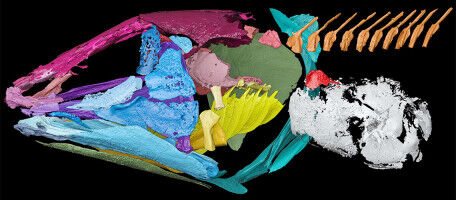
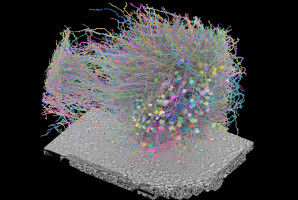
Digital reconstruction of SARS-CoV-2 virus in the lung environment
Digital reconstruction of SARS-CoV-2 virus in the lung environment © Blue Brain Project - Why do some people get sick and die from COVID-19 while others seem to be completely unaffected? EPFL's Blue Brain Project deployed its powerful brain simulation technology and expertise in cellular and molecular biology to try and answer this question. A group in the Blue Brain assembled an AI tool that could read hundreds of thousands of scientific papers, extract the knowledge and assemble the answer - A machine-generated view of the role of blood glucose levels in the severity of COVID-19 was published today by Frontiers in Public Health, Clinical Diabetes. In response to the COVID-19 pandemic, the COVID-19 Open Research Dataset (CORD-19) of over 400,000 scholarly articles was made open access, including over 150,000 with full text papers related to COVID-19, SARS-CoV-2, and other coronaviruses. The CORD-19 dataset is the most extensive coronavirus literature collection available for data mining to date and the coalition behind it has challenged AI experts to apply their skills in natural language processing and other machine learning techniques in order to generate new insights that may help in the ongoing fight against COVID-19. "Since early 2020, Blue Brain has been proactively contributing to the fight against COVID-19," explains Prof. Henry Markram, Founder and Director of the Blue Brain Project. "With this call to action, we realized we could use our Machine Learning technologies and Data and Knowledge Engineering expertise to develop text and data mining tools required to try and help the medical community.
TO READ THIS ARTICLE, CREATE YOUR ACCOUNT
And extend your reading, free of charge and with no commitment.
Your Benefits
- Access to all content
- Receive newsmails for news and jobs
- Post ads