










news
Swiss Federal Institute of Technology Lausanne, EPFL
Results 701 - 720 of 1376.
Life Sciences - Health - 13.07.2020
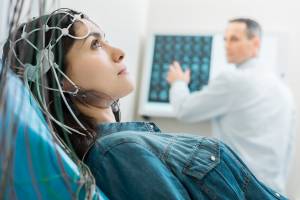
People with schizophrenia and their healthy siblings share patterns of brain activity that are different from those seen in individuals with no family history of the disorder, scientists from EPFL have found. Because the siblings do not show schizophrenia symptoms, this brain 'signature' could serve as a marker for the early diagnosis of the disorder.
Health - Life Sciences - 10.07.2020
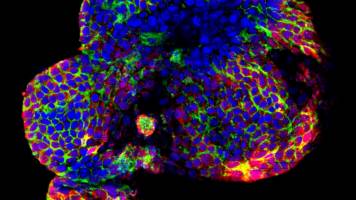
A liver organoid developed at EPFL offers new promise in transplantation and the study of liver disease. Biologists and bioengineers at EPFL have designed a new method for growing simplified human mini-livers. Their process is a potentially important breakthrough in the quest for transplantable lab-grown tissues.
Computer Science - 26.06.2020

An EPFL lab, has come up with a new type of logic diagram and related optimization methods, that can be used to design computer chips with a nearly 20% gain in energy efficiency, speed or size. The lab has just entered into a license agreement with Synopsys, a global leader in electronic design automation and chip fabrication software.
Health - Computer Science - 24.06.2020

SwissCovid - a tracing app developed in part by EPFL - is being made available today to the general public, one month after the pilot tests began. The app will be a useful tool in stemming the spread of the disease as the number of cases in Switzerland is back on the rise. The World Health Organization was clear in its warning: the COVID-19 pandemic is not over, and in some places it's just as strong as ever.
Life Sciences - 23.06.2020
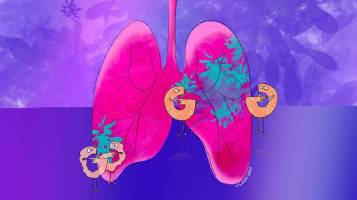
Treatments that block two sugar-transporting proteins could help slow the growth of lung tumours, new research from EPFL suggests. Blocking a pair of sugar-transporting proteins may be a useful treatment approach for lung cancer, suggests a new study in mice and human cells published today in eLife .
Physics - Life Sciences - 22.06.2020
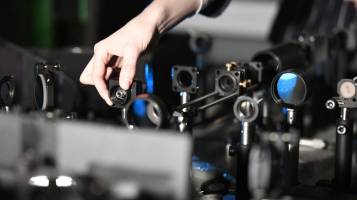
EPFL biophysicists have developed a high-throughput super-resolution microscope to probe nanoscale structures and dynamics of mammalian cells, showing in unprecedented detail the twists and turns of an organelle important for cell division. If you want to understand the underlying mechanisms of cellular motility and division, then the centriole is the organelle of interest.
Physics - Chemistry - 19.06.2020

EPFL researchers have developed a high-precision technology that enables them to carve nanometric patterns into two-dimensional materials. With their pioneering nanotechnology, EPFL researchers have achieved the impossible. They can now use heat to break the links between atoms with a miniature scalpel.
Physics - Materials Science - 19.06.2020
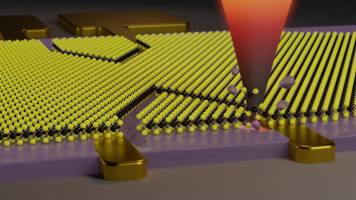
EPFL researchers have developed a high-precision technology that enables them to carve nanometric patterns into two-dimensional materials. With their pioneering nanotechnology, EPFL researchers have achieved the impossible. They can now use heat to break the links between atoms with a miniature scalpel.
Physics - 18.06.2020

Researchers at EPFL's Advanced Quantum Architecture Laboratory and the University of Wisconsin-Madison have developed a technique for building crystal-clear images of moving subjects. The team will present its paper at the prestigious SIGGRAPH 2020 conference in August. In 2019, Edoardo Charbon, a professor at EPFL's School of Engineering (STI), was attending a workshop in Canada.
Physics - Life Sciences - 16.06.2020
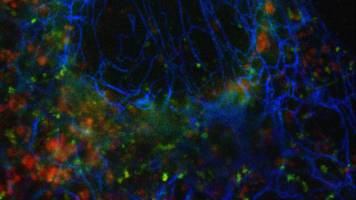
Scientists at EPFL have developed robust and easy-to-implement multicolor super-resolution imaging. The approach is based on the simultaneous acquisition of two spectral channels followed by spectral cross-cumulant analysis and unmixing. They exploit fluorophore blinking and spectral crosstalk for the generation of additional color channels with super-resolved images.
Physics - 15.06.2020
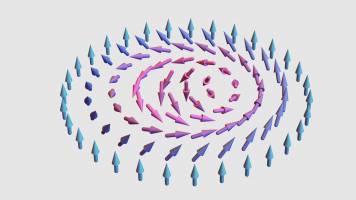
Physicists at EPFL have successfully melted a very thin crystal of magnetic quasi-particles controllably, as turning ice into water. Novel phases of matter have been discovered and a new model system for fundamental physics studies has been established. The introduction of topology, a branch of mathematics focusing on the properties of "knots", into physics has inspired revolutionary concepts such as topological phases of matter and topological phase transitions, which results in the Nobel Prize in Physics in 2016.
Physics - Chemistry - 12.06.2020

While conducting experiments on a layered metal, EPFL researchers witnessed something very surprising. The unexpected electron behavior they discovered could open up possibilities in the field of quantum computing. In the world of materials science, sometimes main discoveries can be found in unexpected places.
Pharmacology - Life Sciences - 11.06.2020
Solving a Parkinson's disease puzzle through protein design
EPFL researchers, in collaboration with UTSW and UCSD scientists, have developed a computational protein design approach, and used it to obtain the first ever high-resolution structure of an activated dopamine receptor in its natural cell membrane environment. The breakthrough will open up a new dimension in drug discovery for Parkinson's disease and perhaps other disorders.
Life Sciences - Health - 09.06.2020
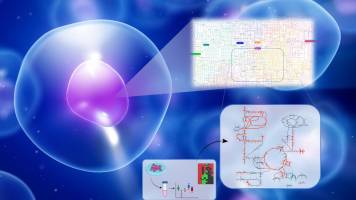
Scientists at EPFL have developed a new method that simplifies the processing of genetic-metabolic data by picking up changes in metabolism, a hallmark of numerous diseases like cancer and Alzheimer's. The new method, named redHUMAN, is robust and features guaranteed predictability. In the last two decades, the life sciences have seen a growing partnership with information technology.
Chemistry - Health - 08.06.2020
Standardizing organoid growth through controlled guidance systems
A recent innovation from an EPFL laboratory will enable, for the first time, mass production of standardized organoids. This breakthrough was achieved thanks to a customized guidance system that ensures homogenous cell culturing. Described in an article published today in Nature Biomedical Engineering, the technique paves the way for industrial uses, such as screening new drugs.
Chemistry - Health - 08.06.2020
Standardizing organoid growth through controlled cell culturing
A recent innovation from an EPFL laboratory will enable, for the first time, mass production of standardized organoids. This breakthrough was achieved thanks to a customized guidance system that ensures homogenous cell culturing. Described in an article published today in Nature Biomedical Engineering, the technique paves the way for industrial uses, such as screening new drugs.
Environment - 03.06.2020

EPFL scientists just published an open tool for predicting the dynamics of ground beetle populations - important bioindicators for sustainable park management and for monitoring ecosystems - in Italy's Gran Paradiso National Park. The tool incorporates satellite and other remote sensing data. Ground beetles may be creepy, but their presence is usually a sign of a healthy ecosystem and is appreciated for pest control in agriculture.
Life Sciences - 02.06.2020
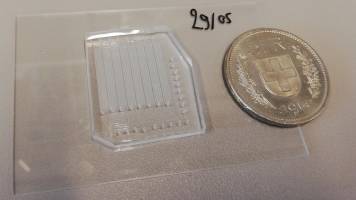
EPFL scientists have developed FloChip, a new microfluidic take on the widely used chromatin immunoprecipitation (ChIP) technique. By automating and cutting the cost of ChIP and sequential-ChIP, FloChIP has the potential to become a widely used tool for the study of chromatin biology and gene regulation.
Health - Life Sciences - 02.06.2020
A better model for neutrophil-related diseases
Neutrophils are critical immune cells for antimicrobial defense, but they can exacerbate a number of diseases, perhaps including COVID-19. The traditional approaches to study neutrophils in animal models are limited in specificity and effectiveness. EPFL scientists have now identified the problem and have developed a new, optimized model for studying the role of neutrophils in the context of disease.
Materials Science - Electroengineering - 01.06.2020

EPFL researchers have developed electronic fibers that, when embedded in textiles, can collect a wealth of information about our bodies by measuring subtle and complex fabrics deformations. Their technology relies on transmission line theory and offers a host of applications, such as in health care and robotics.


