










news
University of Bern
Results 1 - 20 of 341.
Environment - Agronomy & Food Science - 24.03.2026

To increase the biodiversity of meadows, less intensive management is not always enough. Sometimes meadows also need to be actively resown. As part of a research project on the Swiss Plateau, researchers from the University of Bern tested various methods for restoring plant diversity in meadows and demonstrated their effectiveness: After four years, all the methods used had led to effective restoration, with an average increase of 29 percent in the number of plant species present.
Life Sciences - Environment - 19.03.2026
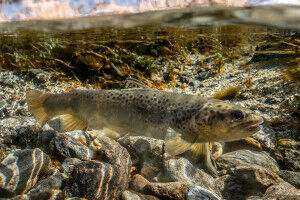
For the first time, researchers at the University of Bern have studied the immune system of brown trout cell by cell and compiled an overview of the gene activity in each cell. The study shows the diversity of the immune system of this ecologically important fish species, which is protected in Switzerland, and demonstrates that rearing conditions can leave measurable traces in the immune cells.
Media - 19.03.2026
Consumption of misogynistic media content increases negative reactions towards women
Scientific research has consistently demonstrated that the consumption of misogynistic media content is associated with increased hostility towards women. While it was previously unclear whether men and women exhibit similar negative reactions, recent findings indicate that when media content contains explicit violence against women, it is primarily men - rather than women - who display negative responses.
Environment - Earth Sciences - 18.03.2026

An international research group involving the University of Bern has shown in the beaver lake near Marthalen that wetlands created by beavers store up to ten times more carbon than comparable landscapes without beavers. By damming rivers and retaining sediment, beavers transform streams into natural carbon reservoirs - with the potential to contribute to climate protection.
Environment - Life Sciences - 26.02.2026

Researchers at the University of Bern have investigated the influence of siblings on the development of lifelong social competence in African cichlids. In an experiment, they show for the first time that two factors must work together for this effect to occur: Both the number of siblings present during early life and the quality of their interactions with them are crucial.
Life Sciences - Health - 19.02.2026
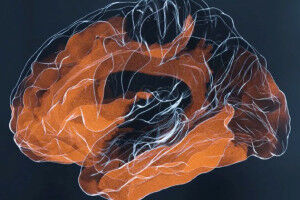
Researchers at the Inselspital, Bern University Hospital, and the University of Bern have, for the first time, directly measured how the human brain exchanges probing signals when asleep and when awake. Using electrodes temporarily implanted in the brain for clinical reasons, they were able to track the flow of signals between deep brain regions and the cerebral cortex with millisecond accuracy over a period of 24 hours.
Health - Life Sciences - 19.02.2026
An international research team, with participation of the University of Bern, has conducted the world's first comprehensive genetic study of cancer in domestic cats. The study shows that some of the genetic changes in cat tumors closely resemble those found in human cancers. These parallels open up new perspectives for developing targeted cancer therapies, particularly for breast cancer.
Astronomy & Space - 12.02.2026

First the rocky planets, very close to their star, then the gas giants: this is the order in which scientists have hitherto conceived of the hierarchy of planets. A conception that corresponds to our Solar System but also to most of the planetary systems identified to date. However, the recent discovery of a new planet around the star LHS 1903 by the CHEOPS space telescope is now challenging this theory.
Health - Life Sciences - 10.02.2026

For the first time, researchers at the University of Bern and Inselspital, Bern University Hospital, have shown that temperature signals from the skin are processed in the brain, influencing REM sleep and sleep-related disorders. These new findings enhance our understanding of brain-body interactions that regulate sleep and provide novel therapeutic strategies for sleep-wake rhythm disorders, such as narcolepsy.
Environment - Life Sciences - 09.02.2026

Researchers at the University of Bern have been able to show that simple measures to promote biodiversity, such as the installation of branch and stone piles, boost stoat populations in agricultural areas in Switzerland. This is particularly true if the measures are professionally supervised, planned and coordinated.
Physics - 28.01.2026

An old puzzle in particle physics has been solved by a research group involving TU Wien, the University of the Pacific, and the University of Bern: How can quantum field theories be best formulated on a lattice to optimally simulate them on a computer? The answer comes from AI. Quantum field theories are the foundation of modern physics.
Astronomy & Space - Earth Sciences - 27.01.2026
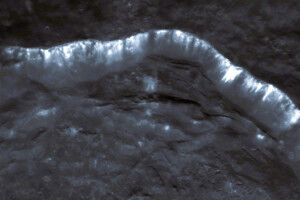
A new study led by the University of Bern has discovered a large number of bright streaks, also known as "lineae", on Mercury, which are presumably caused by the outgassing of volatile material from the planet's interior. This indicates that Mercury is not a dead planet, as previously assumed, but might in fact be geologically active.
Astronomy & Space - Earth Sciences - 12.01.2026

Using images from cameras on Mars orbiters, an international research team led by the University of Bern has discovered structures on Mars that are very similar to classic river deltas on Earth. These are traces of rivers that have deposited their sediments into an ocean. This shows that Mars was a "blue planet" around three billion years ago.
Physics - Astronomy & Space - 03.12.2025

There is no evidence for the existence of sterile neutrinos - a fourth type of the elementary neutrino particle. This is shown by the international MicroBooNE collaboration at the US research center Fermilab with the participation of the University of Bern. The results confirm the standard model of particle physics and rule out the possibility that sterile neutrinos are the explanation for certain anomalies in earlier physics experiments.
Health - Innovation - 27.11.2025

Low blood sugar (hypoglycemia) is a critical diabetes-related condition. Researchers at the Inselspital, Bern University Hospital and the University of Bern have now shown for the first time that the human voice can even reveal early signs of hypoglycemia. Recordings made with the microphone of an ordinary smartphone and analyzed using artificial intelligence could make diabetes management safer and easier in the future.
Life Sciences - Health - 25.11.2025

An international research team has identified a previously unknown function of the intestinal nervous system. The study reveals that the intestinal nervous system plays a key role in regulating both the composition and stability of the intestinal barrier. Disruption of this protective mechanism can lead to the development of allergies.
Health - Life Sciences - 04.11.2025
’Atlas’ of mouse microbiome strengthens reproducibility of animal testing
Researchers from the University of Bern and Inselspital, Bern University Hospital, in collaboration with over 50 global institutions, have launched the first comprehensive atlas of the mouse gut microbiome. This landmark study synthesizes data from mouse microbiomes across six continents, revealing that metabolic functions remain relatively stable despite microbial diversity.
Environment - Life Sciences - 23.10.2025
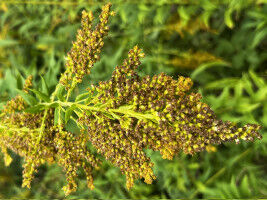
A study from the University of Bern and international collaborators shows for the first time that biological invasions don't change ecosystems in a single, uniform way. Some impacts, most notably losses of native plant diversity caused by invasive plant species, are persistent and intensify with time, while others, such as shifts in soil carbon and nutrients, often fade as invasions age.
Health - Life Sciences - 16.10.2025
For the first time, gene therapy corrects a life-threatening cardiac arrhythmia in an animal model
Researchers at the Inselspital, Bern University Hospital, and the University of Bern, in collaboration with researchers at the Mayo Clinic, Rochester, USA, have developed and tested a novel gene therapy that successfully corrects a life-threatening genetic cardiac arrhythmia in an animal model. The procedure restores the normal function of the affected cardiac ion channel and opens up new perspectives for the future treatment of both rare and common cardiac arrhythmias.
Environment - Life Sciences - 15.10.2025

A simple change in species composition can impact the course of evolution: A research team from the University of Bern and the University of British Columbia in Canada shows that the presence of just one other fish species is enough to drive the emergence of new species in sticklebacks. It has long been assumed that adaptation to different habitats plays an important role in the evolution of new species.


