


Social Sciences - Mar 26
"It would be naive to believe that a social media ban will solve all problems"
"It would be naive to believe that a social media ban will solve all problems"

Health - Mar 25
Cortical thickness, schizophrenia, and causality in psychiatry: when the trace is mistaken for the cause
Cortical thickness, schizophrenia, and causality in psychiatry: when the trace is mistaken for the cause



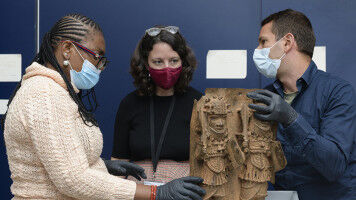
wire - news in brief
University of Geneva
Results 1 - 50 of 108.
Astronomy & Space - Physics - 17.03.2026
Event - History & Archeology - 03.02.2026

Campus - Computer Science - 18.12.2025

Health - Pharmacology - 16.12.2025
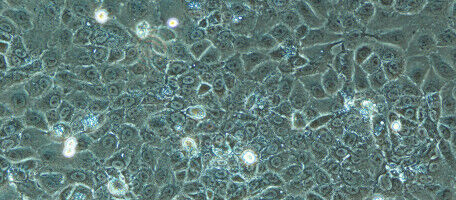
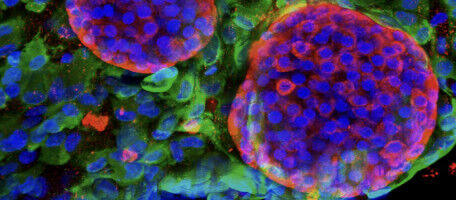
A team from the University of Geneva has developed in vitro organ models to test their sensitivity to novel cancer therapies. Overcoming acquired treatment resistance is one of the major challenges in the fight against cancer. While combination therapies hold promise, their toxicity to healthy tissue remains a major hurdle.
Health - Innovation - 09.12.2025
Health - Campus - 24.11.2025

Life Sciences - 17.11.2025
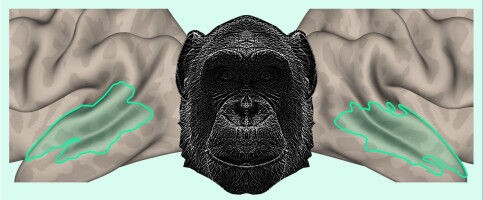
A team from the University of Geneva shows that certain vocal processing skills are shared between humans and great apes. The brain doesn't just recognise the human voice. A study by the University of Geneva shows that certain areas of our auditory cortex respond specifically to the vocalisations of chimpanzees, our closest cousins both phylogenetically and acoustically.
Physics - Innovation - 14.10.2025
Psychology - Campus - 01.10.2025

A UNIGE study shows that reducing smartphone use in the evening significantly increases teenagers' sleep and improves their academic performance.
Pedagogy - Psychology - 10.07.2025

A team from the University of Geneva has shown that memories are more strongly triggered by the deeper meaning of a situation than by its form. If memories are the black box of our past, they can also shed light on the present by giving meaning to new situations.
History & Archeology - 09.07.2025

A recent excavation campaign led by a Swiss-Greek team has unearthed several fragments of the largest ancient shipwreck ever discovered in Greece.
Health - Psychology - 07.07.2025

A team from the University of Geneva and HUG has shown that the side on which the first symptoms of the disease appear - left or right - influences patients' cognitive and emotional symptoms. Parkinson's disease often begins asymmetrically, affecting either the right or left side of the body first. Researchers from the University of Geneva and the Geneva University Hospitals (HUG) have demonstrated that this initial side of onset influences the progression of non-motor symptoms.
Environment - Architecture & Buildings - 03.07.2025

Health - Chemistry - 04.06.2025

Campus - 03.06.2025
UNIGE redefines the framework of its international collaborations
Psychology - 22.05.2025
Could AI understand emotions better than we do?
A UNIGE and UniBE team shows that generative AI can outperform humans in emotional intelligence tests. Is artificial intelligence (AI) capable of suggesting appropriate behaviour in emotionally charged situations? A team from the University of Geneva and the University of Bern (UniBE) put six generative AIs - including ChatGPT - to the test using emotional intelligence (EI) assessments typically designed for humans.
Pedagogy - 19.05.2025

Environment - Earth Sciences - 07.04.2025

An international team, including researchers from UNIGE, has revealed that the Arabian Peninsula's desert was once home to a vast lake and rivers that shaped its landscape. The Empty Quarter (Rub' al-Khali), the vast desert of the Arabian Peninsula, was not always an arid landscape.
Campus - 07.04.2025
Plagiarism in the Scientific Committee’s Report
Health - Pharmacology - 06.03.2025
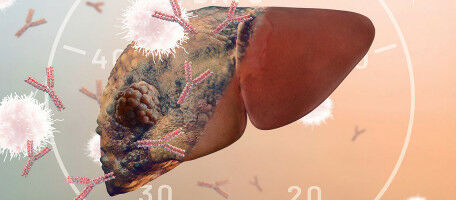
A study led by the University of Geneva and the HUG shows that an interval of at least 50 days between stopping immunotherapy and liver transplantation significantly reduces the risk of rejection. Hepatocellular carcinoma (HCC) is the most common type of liver cancer in Switzerland and worldwide. Immunotherapy through immune checkpoint inhibitors (ICI) combined with a liver transplant (see below) could constitute a solution for treating even advanced stages.
Astronomy & Space - Environment - 18.02.2025

By combining the four giant telescopes of the Very Large Telescope, an international team has observed the exoplanet WASP-121b with unprecedented precision, revealing one of the most extreme climates in the Galaxy. WASP-121b is one of the most studied exoplanets. Known for its extreme conditions-such as clouds of metal vapor-it belongs to the category of ultra-hot Jupiters.
Health - Pharmacology - 07.01.2025

Astronomy & Space - Physics - 07.01.2025

The University of Geneva coordinates the participation of Swiss institutions in the CTAO project, which addresses the most fascinating questions of high-energy astrophysics.
Politics - 28.11.2024

Health - 27.11.2024

A team from the University of Geneva and the HUG has revealed that the majority of tweets published about obesity between 2019 and 2022 convey negative feelings.
Life Sciences - Paleontology - 12.11.2024
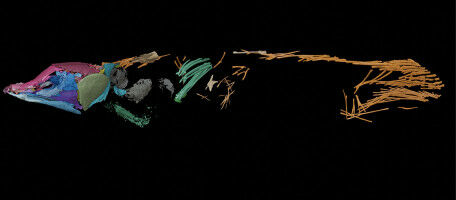
Using a particle accelerator, a scientific team has identified a new species of these fish, considered to be 'living fossils'.
Life Sciences - Campus - 06.11.2024

A cell division resembling that of an animal embryo has been observed in a prehistoric unicellular organism, suggesting that embryonic development might have existed prior to the evolution of animals. Chromosphaera perkinsii is a single-celled species discovered in 2017 in marine sediments around Hawaii.
Health - Pharmacology - 05.11.2024
New criteria to avoid the over-diagnosis of Alzheimer’s Disease
A global expert panel led by HUG, UNIGE and the Salpêtrière Hospital advocate that clinical signs as well as biomarkers must be taken into account.
Health - Social Sciences - 18.06.2024
Social inequalities widen after a breast cancer
A French-Swiss team has highlighted the long-term impact of socioeconomic inequalities on the quality of life of women who have had breast cancer.
Life Sciences - Health - 05.06.2024
3R Prize: human skin cultures to study psoriasis
Astronomy & Space - Physics - 05.06.2024

Campus - 21.05.2024
Israel-Hamas War: Position of the University fo Geneva
Economics - Campus - 30.04.2024
Campus - Pedagogy - 16.04.2024

Health - 11.04.2024

A team from UNIGE, together with ETH Zurich and NCHU in Taiwan, has developed a rice line that has enhanced vitamin B1 content.
Health - Life Sciences - 28.03.2024
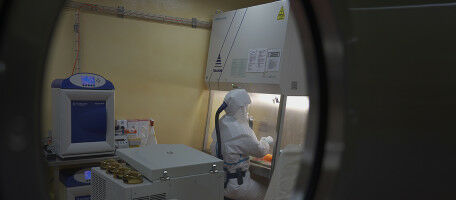
A Swiss collaboration has been designated a member of the WHO's CoViNet network for the detection and surveillance of coronaviruses.
Campus - Law - 05.03.2024
Luc Thévenoz named Dean of the Faculty of Law
Health - Pharmacology - 15.02.2024
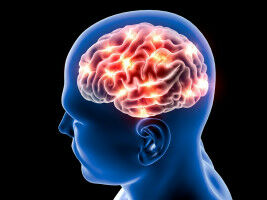
A team from the University of Geneva, the HUG and the IRCCS has drawn up recommendations for the effective and individualised use of biomarkers in memory clinics for the diagnosis of Alzheimer's disease.
Health - Materials Science - 15.02.2024
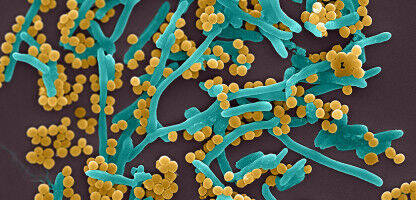
A team from the University of Geneva is developing new alloys with bactericidal properties to combat antibiotic-resistant germs. While crucial to biotechnology, bacteria can also cause severe disease, exacerbated by their increasing resistance to antibiotics. This duality between economic benefits and infectious risks underlines the importance of finding ways to control their development.
Campus - 29.11.2023
Audrey Leuba named Rector of the University of Geneva
Campus - 22.11.2023

Health - Life Sciences - 08.06.2023
Centre for emerging viral diseases designated WHO collaborating centre
Life Sciences - Health - 07.06.2023

Health - Pharmacology - 09.05.2023

A team from the University of Geneva, in collaboration with the CHUV, has developed a new method of encapsulating fecal bacteria to treat a serious intestinal infection.
Campus - 28.02.2023
War in Ukraine: 100 academics welcomed
Health - Life Sciences - 31.01.2023
An action plan to prevent Alzheimer’s disease
As the population ages, the number of people with Alzheimer's disease in Europe will double by 2050.
Innovation - 22.12.2022

Environment - 19.12.2022

The University of Geneva is putting a platform online to monitor variations in the composition and carbon emissions of the electricity mix consumed by the Swiss population. Where does the electricity we use come from? And what is its impact on the environment? It all depends on the time of day and the season.
Physics - Innovation - 30.11.2022

Health - Pharmacology - 28.11.2022

An international team highlights the importance of localising BRCA gene mutations for the treatment of ovarian cancer. Mutations of BRCA1 and BRCA2 genes, which are inherited by 1 in 400 and 1 in 800 people respectively, significantly increase the risk of certain cancers such as ovarian, breast, pancreatic and prostate cancer.


Social Sciences - Mar 26
"It would be naive to believe that a social media ban will solve all problems"
"It would be naive to believe that a social media ban will solve all problems"
Health - Mar 25
Cortical thickness, schizophrenia, and causality in psychiatry: when the trace is mistaken for the cause
Cortical thickness, schizophrenia, and causality in psychiatry: when the trace is mistaken for the cause