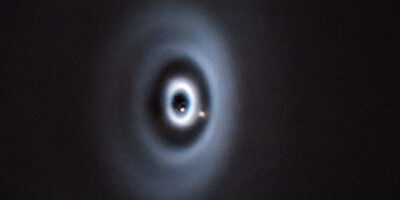
How Jupiter was formed? Data collected from meteorites had indicated that the growth of the giant planet had been delayed for two million years. Now the researchers have found an explanation: Collisions with kilometer-sized blocks generated high energy, which meant that in this phase hardly any accretion of gas could take place and the planet could only grow slowly. With an equator diameter of around 143,000 kilometers, Jupiter is the largest planet in the solar system and has 300 times the mass of the Earth. The formation mechanism of giant planets like Jupiter has been a hotly debated topic for several decades. Now, astrophysicists of the Swiss National Centre of Competence in Research (NCCR) PlanetS of the Universities of Bern and Zürich and ETH Zürich have joined forces to explain previous puzzles about how Jupiter was formed and new measurements. The research results were published in the magazine "Nature Astronomy". "We could show that Jupiter grew in different, distinct phases," explains Julia Venturini, postdoc at the University of Zürich.
PER LEGGERE QUESTO ARTICOLO, CREA IL TUO ACCOUNT
Ed estendere la vostra lettura, gratuitamente e senza alcun impegno.
I vostri vantaggi
- Accesso a tutti i contenuti
- Ricevere newsmail per le novità e le offerte di lavoro
- Pubblicare annunci