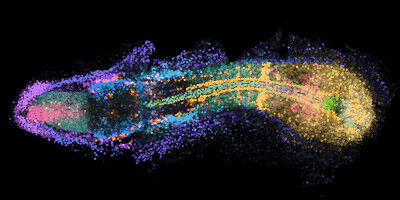
In a mouse with a functioning stem cell niche, the large intestine consists of numerous villi and crypts. (Image: Bahar Degirmenci, UZH)
The human intestine constantly renews itself. Alone in the colon - the last 1.5 meters of the gastrointestinal tract - 10 billion epithelial cells are replaced each day. The intestinal epithelium is the layer of cells that forms the lining of both the small and large intestine and is responsible for absorbing nutrients. The regeneration process is driven by stem cells that are found in small folds of the epithelium (crypts), where they are in contact with other cells that produce the signals needed to drive regeneration. The key activating signal that sustains the stem cells is called "Wnt". Colon stem cells perish without signaling. A group of UZH researchers, including Konrad Basler from the Institute of Molecular Life Sciences, have now discovered the cells responsible for providing the activating signal to the stem cells.
PER LEGGERE QUESTO ARTICOLO, CREA IL TUO ACCOUNT
Ed estendere la vostra lettura, gratuitamente e senza alcun impegno.