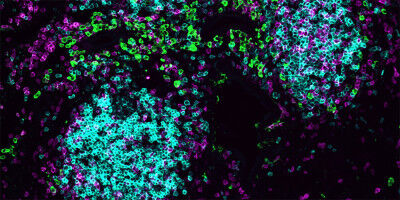
Circadian clocks in human pancreatic islets control the lipid membrane fluidity. Right, human pancreatic islet cells with compromised clocks bear decreased membrane lipid fluidity, as compared to the islet cells with functional clocks (left)
A team from Geneva, Switzerland, shows that the disruption of lipid temporal profiles in type 2 diabetes stiffens the membrane of pancreatic endocrine cells, which could alter their function. Circadian clocks in human pancreatic islets control the lipid membrane fluidity. Right , human pancreatic islet cells with compromised clocks bear decreased membrane lipid fluidity, as compared to the islet cells with functional clocks ( left ) © 2022. Petrenko et al. Like all living beings, human physiological processes are influenced by circadian rhythms. The disruption of our internal clocks due to an increasingly unbalanced lifestyle is directly linked to the explosion in cases of type 2 diabetes. By what mechanism? A team from the University of Geneva and the University Hospitals of Geneva (HUG), in Switzerland, is lifting part of the veil: this disturbance disrupts the metabolism of lipids in the cells that secrete glucose-regulating hormones.
TO READ THIS ARTICLE, CREATE YOUR ACCOUNT
And extend your reading, free of charge and with no commitment.
Your Benefits
- Access to all content
- Receive newsmails for news and jobs
- Post ads