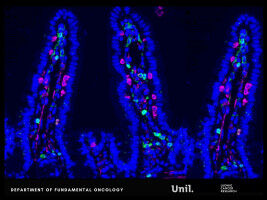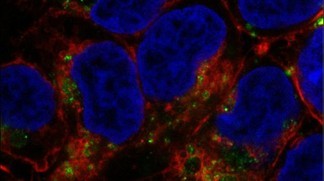
Selective neutralization of APP-C99 with monoclonal antibodies reduces the production of Alzheimer's Aβ peptides. The toxic amyloid-beta (Abeta) peptides involved in Alzheimer's disease (AD) are produced after processing of the amyloid precursor protein-C-terminal fragment APP-C99 by gamma-secretase. Thus, major therapeutic efforts have been focused on inhibiting the activity of this enzyme. However, recent human phase 3 clinical trials testing gamma-secretase inhibitors revealed adverse side effects attributed to impaired processing of the Notch-1 receptor, a gamma-secretase substrate critically involved in cell fate decisions. Here, the group of Patrick Fraering (CMSN - Molecular and Cellular Biology of Alzheimer's Disease ) report an innovative approach to selectively target the gamma-secretase-mediated processing of APP-C99 with monoclonal antibodies neutralizing this substrate. Generated by immunizing mice with natively folded APP-C99, these antibodies bind native epitopes of this substrate, and by steric hindrance significantly reduce Abeta production in cells as well as in a mouse model of AD. Together, these findings support APP-C99 substrate-targeting antibodies as new immunotherapeutic and Notch-sparing agents to lower the levels of Abeta peptides implicated in AD.
PER LEGGERE QUESTO ARTICOLO, CREA IL TUO ACCOUNT
Ed estendere la vostra lettura, gratuitamente e senza alcun impegno.
I vostri vantaggi
- Accesso a tutti i contenuti
- Ricevere newsmail per le novità e le offerte di lavoro
- Pubblicare annunci