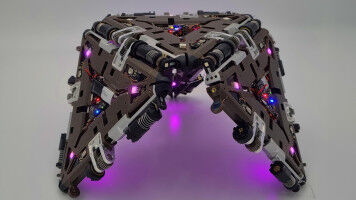
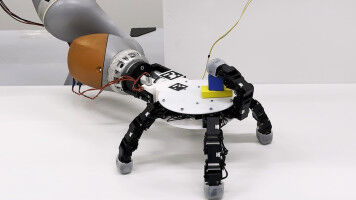
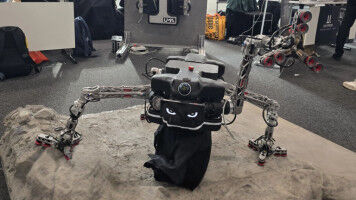
Collaborative medical robots should enable collision-free, intuitive and easy operation even of heavy equipment even over long periods of time. Georg Rauter demonstrates a project of his team members Murali Karnam and Dr. Nicolas Gerig.
Collaborative medical robots should enable collision-free, intuitive and easy operation even of heavy equipment even over long periods of time. Georg Rauter demonstrates a project of his team members Murali Karnam and Dr. Nicolas Gerig. Georg Rauter develops micro robots as tools for brain surgeons and dentists, and for operations on bones. He wants to establish Basel as a hub for medical robotics thanks to his collaborations with researchers in Switzerland and around the world. Professor Rauter, what would be the perfect robot that you would like to develop in the course of your research career? I'd like to answer that with an anecdote. I had a pivotal moment while I was studying for my doctorate at ETH Zurich. At the time, I developed a robotic rowing simulator for people to learn rowing.
TO READ THIS ARTICLE, CREATE YOUR ACCOUNT
And extend your reading, free of charge and with no commitment.