

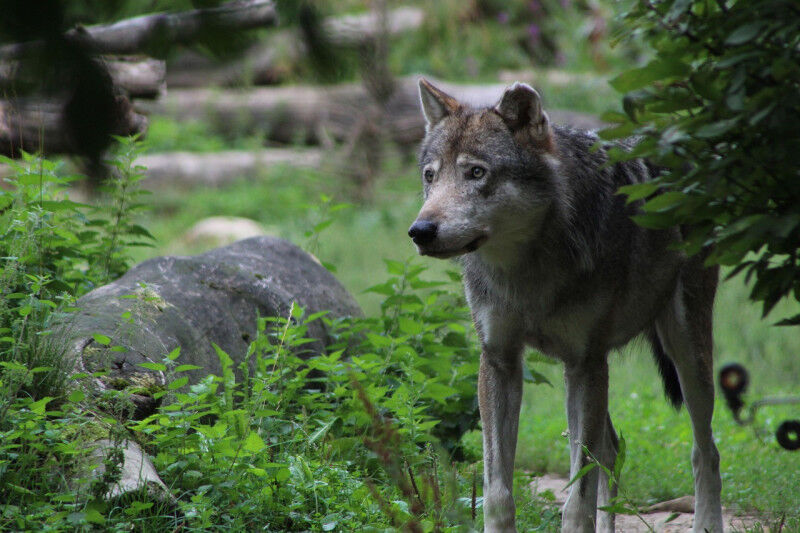
In Switzerland, 88.3% of wolves’ diet consists of wild animals, particularly deer, and 11.7% of livestock, mainly sheep. It also varies according to season, region and social status. These are the findings of biologists from the KORA Foundation (Carnivore Ecology and Wildlife Management) and the University of Lausanne.
A study by the Department of Ecology and Evolution (DEE) of the Faculty of Biology and Medicine at the University of Lausanne and the KORA Foundation, publishede on October 6, 2025 in the journal Wildlife Biology, provides the first detailed analysis of the diet of wolves in the Northern Alps and Jura. By identifying the DNA of prey in wolf droppings, the scientists show that these large carnivores eat mainly wild ungulates (red deer, roe deer and chamois). Livestock such as sheep, goats and cattle play a secondary role. Research also reveals differences in diet according to region, season and social status.
Differences according to social status
The study examined whether wolves’ diets differ according to whether they live in packs or alone. It appears that social status has an influence on feeding behaviour: lone wolves eat proportionally more deer. In order to reliably assess other differences, however, more data would be needed, and a more precise distinction would have to be made between dispersing and territorial lone wolves, the study points out
Seasonal differences
In addition to social status, the season also plays a role. For example, roe deer are eaten more often in winter, while chamois are more important in summer and autumn, particularly in the eastern Swiss Alps and Valais. The proportion of livestock increases in summer, which the authors believe is due to their greater presence on pasture during the summer season. No seasonal differences were observed in deer consumption
Regional differences
Regional differences were also studied. In the Valais Alps, unlike in other areas, roe deer and chamois account for a greater proportion of wolf diet than deer. This may be due in part to higher occurrence rates. In the southern Jura, cattle were eaten more often than in other regions.
Analysis method
The analysis is based on the DNA metabarcoding method, which makes it possible to simultaneously identify several animal species present in the same sample by means of high-throughput DNA sequencing. Between 2017 and 2024, 698 fecal samples from 250 different wolves were collected and included in the study. In 653 of these, DNA fragments from vertebrate prey were detected by the Laboratoire de biologie de la conservation at the University of Lausanne. "When interpreting the results, it’s important to bear in mind that these are poop samples that have been analyzed, which implies certain limitations. Our work shows what the wolves ate, which includes, in addition to the animals they killed themselves, those they consumed in the form of carrion," explains Florin Kunz , first author of the study and doctoral student at KORA and DEE.
"The place where the samples were taken also played an important role: unsurprisingly, the proportion of farm animals is higher when we focus solely on droppings collected in the vicinity of farm animal corpses, than when they come from the vicinity of farm animal carcasses.luca Fumagalli , Director of the LBC and Associate Professor at the Faculty of Biology and Medicine.
Collaboration
This analysis was carried out as part of the KORA "Integrated Monitoring and Management" project, funded by a private foundation. It is part of Florin Kunz’s PhD project, co-supervised by Nina Gerber (KORA) and Philippe Christe (DEE-Unil). The samples were mainly collected and sent in by cantonal wildlife wardens, as part of the routine genetic analyses that the LBC has been carrying out for many years, with financial support from the Swiss Federal Office for the Environment.