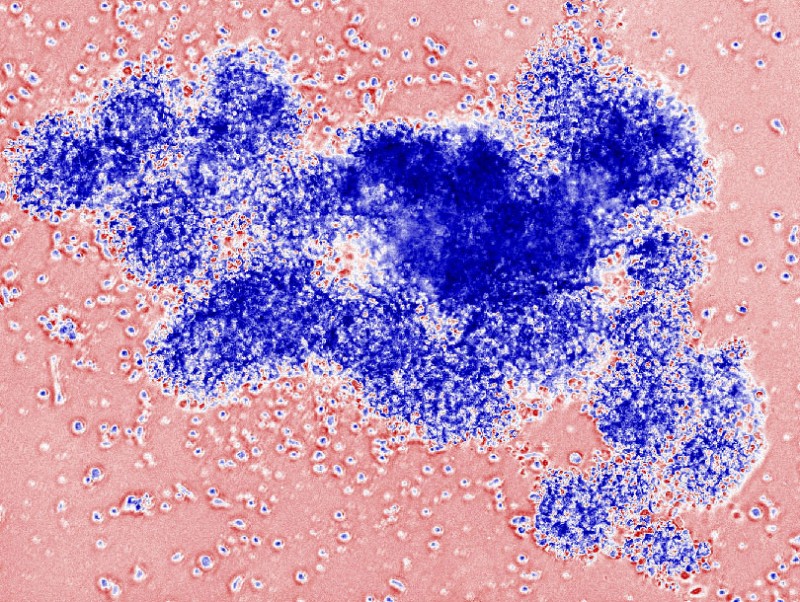
BK Polyomavirus-specific CD8-Killer-Lymphocytes (blue) in cell culture. (Image: University of Basel, Department of Biomedicine)
Certain white blood cells play an important role in bringing a harmful virus under control after kidney transplantations. The results of a research group at the Department of Biomedicine at the University of Basel and University Hospital Basel could contribute to improving control of immunosuppression, avoiding transplant rejection and developing relevant vaccines. Céline Leboeuf and Sabrina Wilk, from Professor Hans H. Hirsch's research group, reported the results of a collaboration between Swiss transplant centers in the latest issue of the American Journal of Transplantation . The researchers investigated the blood of 96 patients immediately after a kidney transplant, and then six and twelve months afterwards. The virus was active in 28 patients; the remaining patients formed the control group. BK polyomavirus infection occurs following a kidney transplant in up to 15% of cases, often leading to serious problems for the patients. The complications can cause a deterioration in function or even the loss of the new kidney.
PER LEGGERE QUESTO ARTICOLO, CREA IL TUO ACCOUNT
Ed estendere la vostra lettura, gratuitamente e senza alcun impegno.