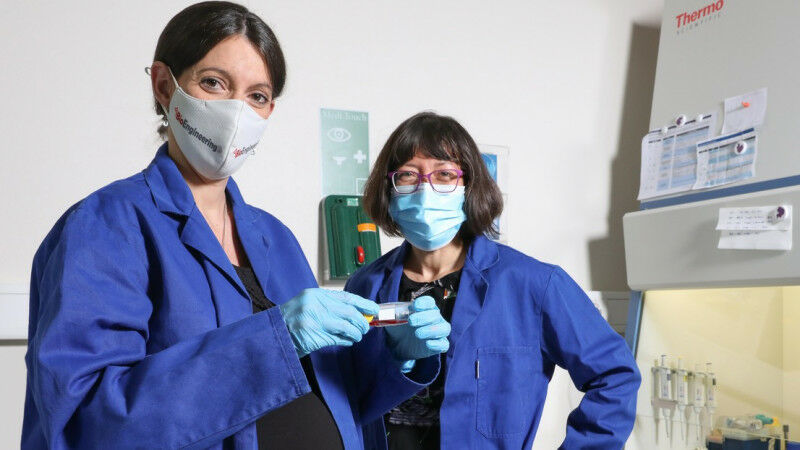
© 2021 EPFL With the help of their custom-built super-resolution microscope, EPFL biophysicists have discovered where and why mitochondria divide, putting to rest controversy about the underlying molecular machinery of mitochondrial fission. Mitochondria either split in half or cut off their ends to self-regulate. The results are published in Nature. Mitochondria either split in half to multiply within the cell, or cut off their ends to get rid of damaged material. That's the take-away message from EPFL biophysicists in their latest research investigating mitochondrial fission. It's a major departure from the classical textbook explanation of the life cycle of this well-known organelle, the powerhouse of the cell. The results are published in Nature . "Until this study, it was poorly understood how mitochondria decide where and when to divide," says EPFL biophysicist Suliana Manley and senior author of the study. The big question : regulating mitochondrial fission Mitochondrial fission is important for the proliferation of mitochondria, which is fundamental for cellular growth. As a cell gets bigger, and eventually divides, it needs more fuel and therefore more mitochondria. But mitochondria have their own DNA that is separate from the cell's DNA, so mitochondria have their own life cycle. They can only proliferate by replicating their DNA, and dividing themselves. The textbook explanation of mitochondrial fission details the protein machinery that cuts the mitochondrion into two daughter mitochondria, leading to proliferation. But there was mounting evidence in the scientific literature that mitochondrial fission was also a way of getting rid of damaged material. "For me, the big question was how do mitochondria know when to proliferate or when to degrade?
UM DIESEN ARTIKEL ZU LESEN, ERSTELLEN SIE IHR KONTO
Und verlängern Sie Ihre Lektüre, kostenlos und unverbindlich.
Ihre Vorteile
- Zugang zu allen Inhalten
- Erhalten Sie Newsmails für Neuigkeiten und Jobs
- Anzeigen veröffentlichen