




news
Categories
Years
2008 | 2009 | 2010 | 2011 | 2012 | 2013 | 2014 | 2015 | 2016 | 2017 | 2018 | 2019 | 2020 | 2021 | 2022 | 2023 | 2024 | 2025 | 2026 |
2008 | 2009 | 2010 | 2011 | 2012 | 2013 | 2014 | 2015 | 2016 | 2017 | 2018 | 2019 | 2020 | 2021 | 2022 | 2023 | 2024 | 2025 | 2026 |
Last News
Results 141 - 160 of 216.
Life Sciences - Health - 01.12.2025
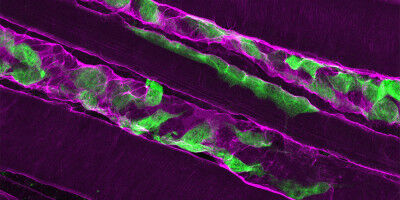
For more than two decades, researchers at the University of Basel have been investigating a severe form of muscular dystrophy in which muscles progressively degenerate. The research team has now discovered that the muscles' ability to regenerate is also impaired. Future therapies should therefore aim not only to strengthen muscles but also to promote their regeneration.
Environment - Earth Sciences - 01.12.2025

Researchers are using machine learning to map nitrate pollution in Swiss groundwater. This allows gaps in the measurement network to be filled and the causes of excessive values to be identified. The study is part of a larger project analysing the nitrogen cycle in Switzerland. Nitrate levels in groundwater exceed the limit of 25 milligrams per litre at 15 percent of all measuring points in Switzerland.
Materials Science - Environment - 01.12.2025

Researchers from Empa, EPFL and CSEM have developed a green smart sensing tag that measures temperature and humidity in real time - and can also detect whether a temperature threshold has been exceeded. In future, this could be used to monitor sensitive shipments such as medicines or food. The sensor tag itself is completely biodegradable.
Materials Science - 01.12.2025
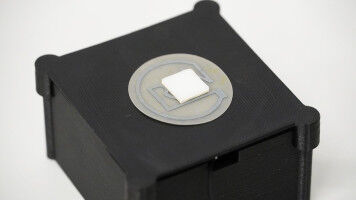
Researchers from EPFL, Empa, and CSEM have developed a sustainable smart sensing tag that can be used to signal when shipments of medicines or food have exceeded a safe threshold temperature.
Health - Pharmacology - 27.11.2025

When you tattoo your skin, you also "tattoo" your immune system. This is the finding of an innovative study conducted by the Infection and Immunity group at the Institute for Research in Biomedicine (IRB), affiliated with Università della Svizzera italiana (USI), led by Prof. Santiago F. González and published today in Proceedings of the National Academy of Sciences (PNAS).
Health - Innovation - 27.11.2025
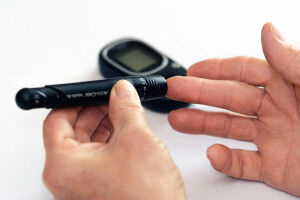
Low blood sugar (hypoglycemia) is a critical diabetes-related condition. Researchers at the Inselspital, Bern University Hospital and the University of Bern have now shown for the first time that the human voice can even reveal early signs of hypoglycemia. Recordings made with the microphone of an ordinary smartphone and analyzed using artificial intelligence could make diabetes management safer and easier in the future.
Life Sciences - 27.11.2025

To ensure their survival in a new environment, insects must be able to change their eating habits depending on the food supply. In collaboration with experts from Switzerland, Portugal and Germany, researchers at the University of Fribourg were able to show that this ability to adapt is also controlled by mechanisms in the brain.
Environment - Life Sciences - 27.11.2025

A new combination of data and statistical algorithms makes it possible for the first time to precisely track the movements of animals deep underwater. An initial study of flapper skate on the seabed around Scotland will help to develop targeted measures to conserve these Critically Endangered animals and designate suitable protected areas.
Health - Innovation - 26.11.2025
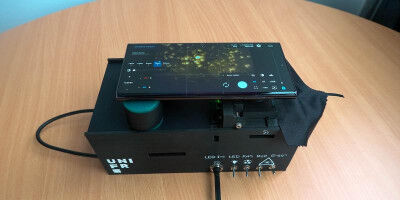
A team of physicists from the University of Fribourg has applied for a patent for a fluorescence microscope that can be operated using a simple smartphone. This very affordable and handy tool enables rapid medical tests, among other things - even outside of hospitals The fluorescence microscope, invented over a century ago, has established itself as an indispensable tool in biology and medicine.
Life Sciences - Health - 25.11.2025

An international research team has identified a previously unknown function of the intestinal nervous system. The study reveals that the intestinal nervous system plays a key role in regulating both the composition and stability of the intestinal barrier. Disruption of this protective mechanism can lead to the development of allergies.
Politics - Social Sciences - 25.11.2025
Online abuse pushes women out of politics
Sexist harassment on online platforms discourages young women from getting involved in politics, as shown by a new study by the University of Basel. The consequences are not only borne by those directly affected, with democracy also being harmed. Insults, threats and hate speech online affect many people in the public eye - including politicians.
Physics - 25.11.2025
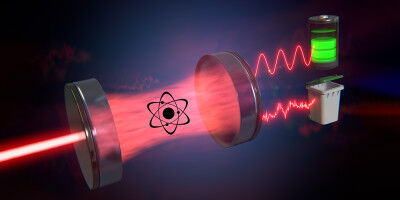
Researchers at the University of Basel have developed a new approach to applying thermodynamics to microscopic quantum systems. In 1798, the officer and physicist Benjamin Thompson (a.k.a. Count Rumford) observed the drilling of cannon barrels in Munich and concluded that heat is not a substance but can be created in unlimited amounts by mechanical friction.
Health - Pharmacology - 24.11.2025
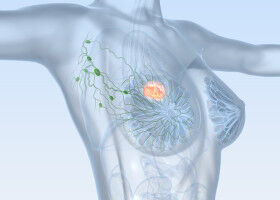
The drug dexamethasone supplements cancer treatments to alleviate side effects of chemotherapy such as nausea or inflammation. Researchers at the University of Basel have now discovered that it also fights metastases in certain types of breast cancer. The active substance dexamethasone is a synthetic signaling substance with a similar effect to the body's own stress hormone cortisol.
Earth Sciences - 21.11.2025
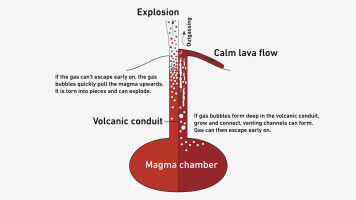
An international team of researchers including a scientist from ETH has shown that friction in magma leads to the formation of bubbles that influence whether a volcano erupts explosively or releases gently flowing lava. The explosiveness of a volcanic eruption depends on how many gas bubbles form in the magma - and when.
Health - Life Sciences - 20.11.2025
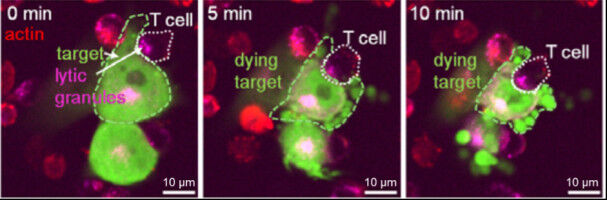
Scientists from the University of Geneva and HUG have created artificial immune cells capable of recognising and destroying glioblastoma cells. With a five-year survival rate of less than 5%, glioblastoma is one of the most aggressive types of brain cancer. Until now, all'available treatments, including immunotherapy - which involves strengthening the immune system to fight cancer- have proved disappointing.
Life Sciences - Health - 20.11.2025
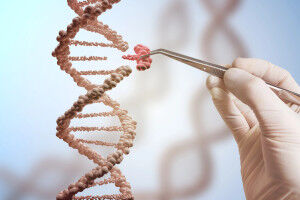
The CRISPR gene scissors are only of limited use to detect cancer-causing genes in animals because the method interferes with their immune system. Researchers at ETH Zurich, however, have now shown that a few tricks can be pulled to render the gene scissors invisible to immune cells. The immune system plays a crucial role in fighting tumours and metastases.
Politics - Social Sciences - 19.11.2025
How people deal with uncertainty influences their political behaviour - and the stability of democracy.
Environment - Chemistry - 18.11.2025
Forever chemicals on the ski trail
When the forever chemicals known as PFAS enter the environment, they remain there for generations and can harm humans and nature. Despite increasing bans, many PFAS are still in circulation - including on Swiss ski slopes and cross-country trails, where the toxins enter the environment through abrasion from ski wax.
Health - Life Sciences - 18.11.2025
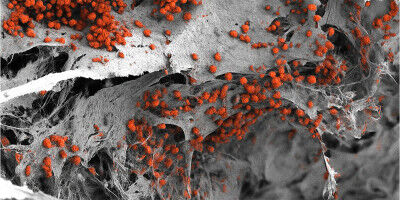
Our body-s -blood factoryconsists of specialized tissue made up of bone cells, blood vessels, nerves and other cell types. Now, researchers have succeeded for the first time in recreating this cellular complexity in the laboratory using only human cells. The novel system could reduce the need for animal experiments for many applications.
Life Sciences - Pharmacology - 17.11.2025

Scientists at EPFL have developed an innovative, non-invasive brain stimulation therapy to significantly improve visual function in stroke patients who have suffered vision loss following a stroke. The approach could offer a more efficient and faster way to regain visual function in such cases. Each year, thousands of stroke survivors are left with hemianopia, a condition that causes loss of half of their visual field (the "vertical midline").


